3 hr 30 min
Munich Evening Beer & Food Experience with Museum Visit
- Entry ticket
- Mobile voucher
- Valid same day
- Free cancellation
Beer and Food Tour Munich — Brewery Visits & Bavarian Tastings
Where centuries-old brewing tradition meets market-fresh Bavarian fare, one tasting at a time
Compare fares, pick the fit — all bookings are mobile-voucher and eligible for free cancellation where shown.
3 hr 30 min
3 hr 30 min
2 hr 30 min
Choosing the right beer and food tour munich experience comes down to two things: how much of the old town you want to cover, and whether a working brewery visit matters to you. Both options start at Viktualienmarkt, Munich's historic culinary hub, but differ in scope and pace.
| Classic Food & Beer Walk (Market-focused) |
Top pick Brewery & Tasting Tour (Extended, most popular) |
|
|---|---|---|
| Duration | ~3 hours | ~4 hours |
| Focus area | Viktualienmarkt & old town | Viktualienmarkt, old town & brewery |
| Tastings included | 4–5 food stops | 5–6 food stops |
| Meal included | Snack-sized portions only | Snack portions plus one sit-down tasting |
| Beer included | 1–2 pours | 3 pours including brewery-fresh beer |
| Museum/brewery visit | — | ✓ working brewery or historic beer hall |
| Group size | Small group (max 12) | Small group (max 12) |
| See tickets & prices |
Verdict: First-time visitors wanting the fuller Munich landmarks experience should book the Brewery & Tasting Tour, while those short on time can opt for the shorter Classic Food & Beer Walk through Viktualienmarkt.
Worth it for curated access and insider knowledge
A beer and food tour munich delivers concentrated value that independent exploration of Viktualienmarkt rarely matches. Guided options range from focused culinary walks through the market with 10+ tastings to evening brewery crawls pairing Bavarian dishes with local beers. The free-entry market at Viktualienmarkt 3 welcomes DIY visitors, but tours unlock vendor backstories, pre-arranged tastings at hidden stalls, and curated pairings you'd miss navigating alone. A typical walking experience runs 3–4 hours and includes samples that would cost €40–60 purchased separately, plus reserved seating in beer halls during peak hours. The value proposition strengthens for first-timers unfamiliar with Munich's brewing traditions or travelers short on time to research standout vendors. Solo exploration works if you speak German and enjoy spontaneous discovery, but beer and food tour munich tickets eliminate guesswork and deliver insider access most visitors cannot replicate independently.
Bottom line: Book if you want curated access and context; skip if you prefer unstructured market wandering and have time to research vendors independently.
Most visitors comparing options find that a guided beer and food tour Munich itinerary delivers more variety and local context, while a solo Hofbräuhaus visit wins on flexibility and spontaneity. If you want curated tastings across multiple stops with a knowledgeable guide, the tour is the stronger pick.
|
Top pick Beer and Food Tour |
Hofbräuhaus Self-Visit | |
|---|---|---|
| What you experience | Guided stops at breweries, beer halls, food vendors | One large historic beer hall only |
| How you get there | Walking route led by guide | Self-navigated, no guide needed |
| Group setting | Small group (8–15 typically) | No group, solo or own party |
| Duration | 2.5–3.5 hours | Open-ended, self-timed |
| Price | From approx. 65–120 EUR per person | Free entry, pay per item ordered |
| Food included | Multiple tastings across stops | Order and pay individually |
| Best for | First-time visitors wanting context and variety | Repeat visitors or those on a budget |
| Booking | Advance reservation required | Walk-in, no booking needed |
| Language/commentary | Guide narrates history and beer culture | No commentary, self-guided experience |
| See tickets & prices |
Verdict: Choose the guided beer and food tour Munich experience for variety and context across multiple venues, and pick the Hofbräuhaus self-visit if you want a free, flexible stop with no reservation.
Hand-picked experiences loved by thousands of travelers
3 - 3.5 hours
Free Cancellation
Savor authentic Bavarian flavors on a culinary walk through Munich's historic center and markets
3 hours
Free Cancellation
Taste your way through Bavaria's culinary heart with authentic local dishes and regional drinks
3 hours 30 minutes
Free Cancellation
Savor authentic Bavarian cuisine on a guided walking tour through Munich's historic center
1 hour
Free Cancellation
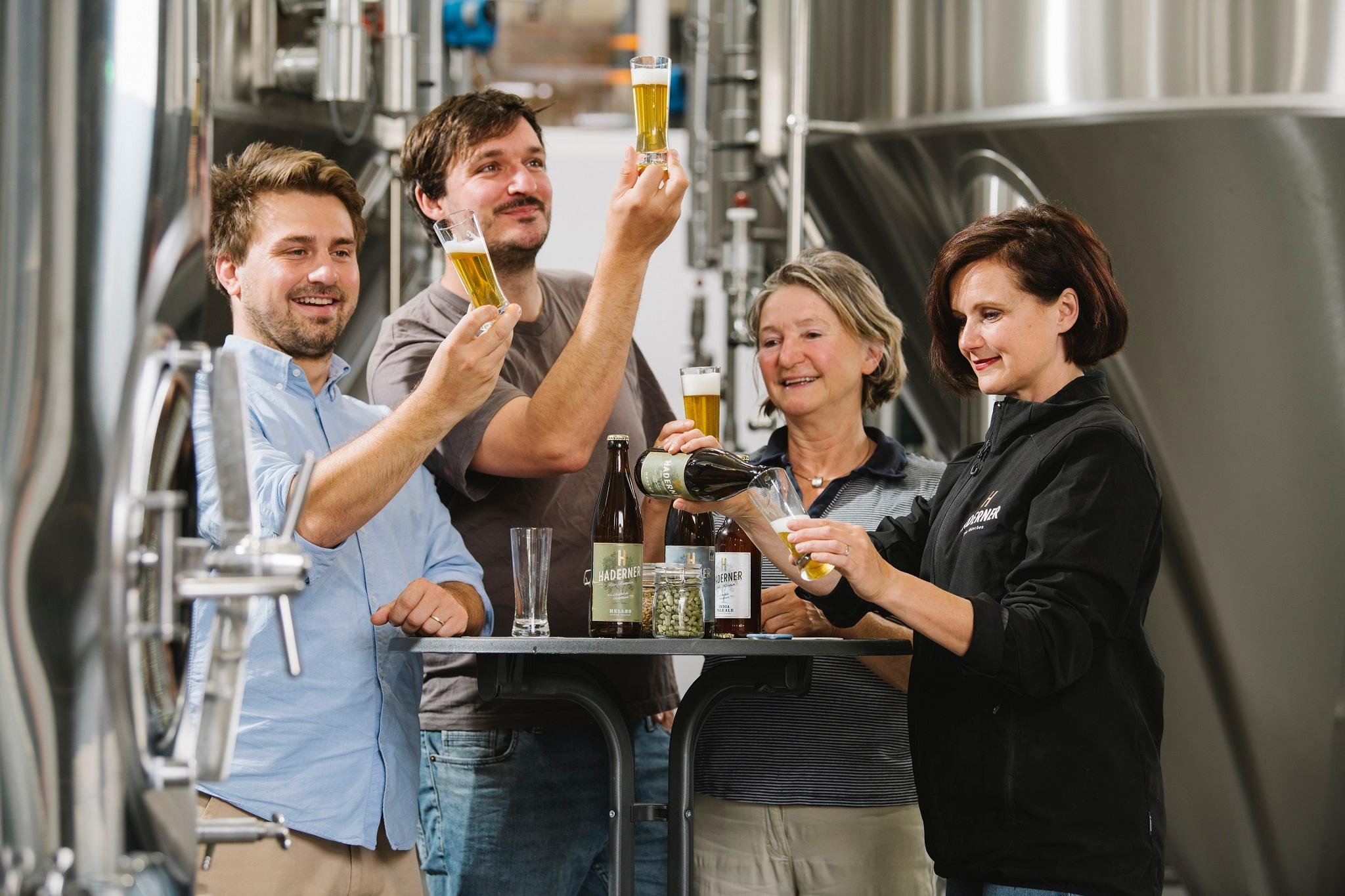
Discover Munich's pioneering certified organic brewery with a hands-on tour and sample four craft beers
2 hours 30 minutes
Free Cancellation
Discover Bavaria's culinary soul on an intimate walking tour with local tastings and city stories
4 hours
Free Cancellation
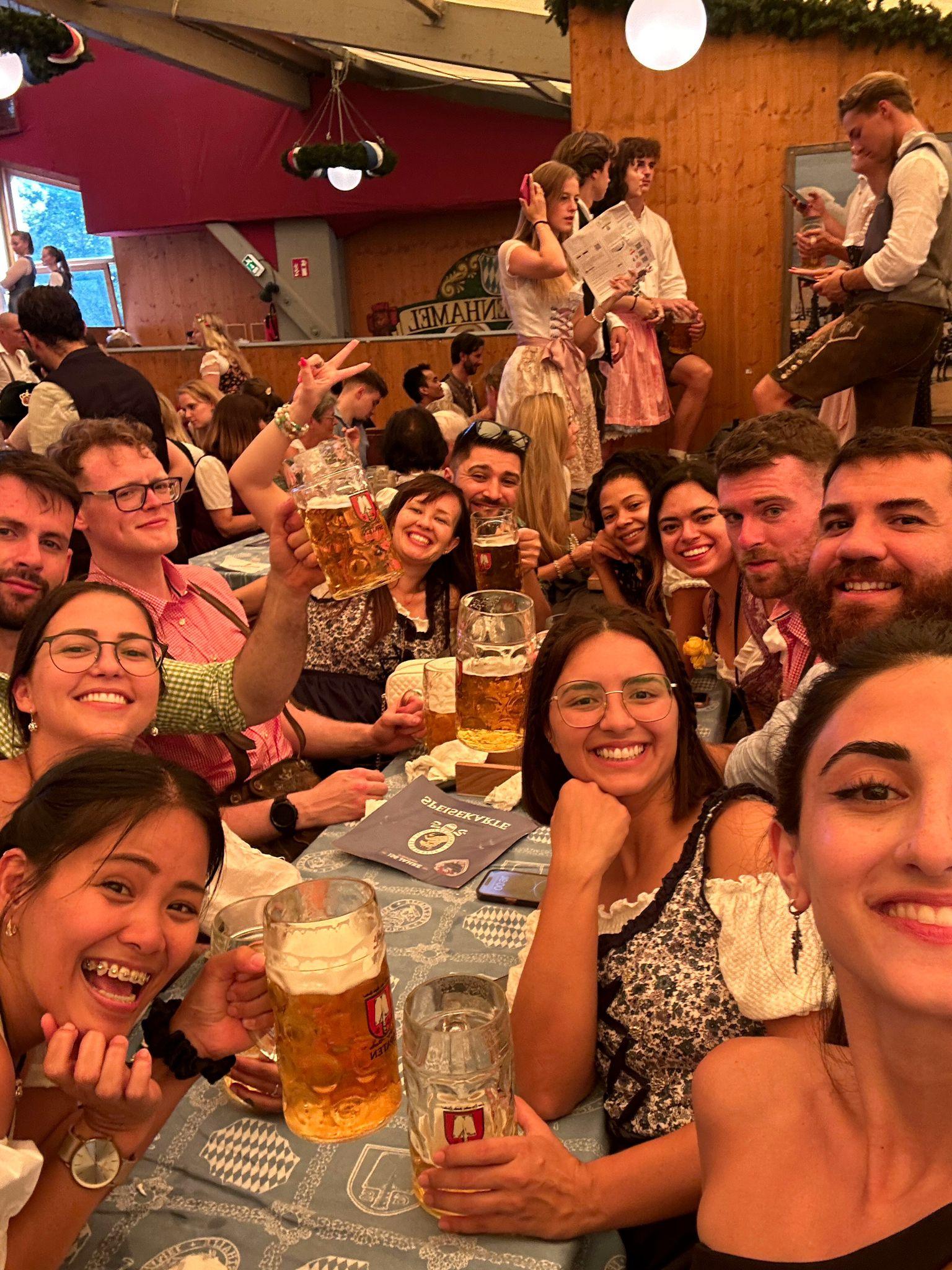
Experience Bavaria's legendary beer festival with expert guides, reserved tent seating, and authentic food
3 - 4 hours
Free Cancellation
Join a certified Munich guide for an insider's tour of the world's most famous beer festival, complete with reserved table and traditional meal
2 hours
Free Cancellation
Discover Munich's historic heart on a personalized 2-hour stroll through Marienplatz, markets, and beer hall culture.
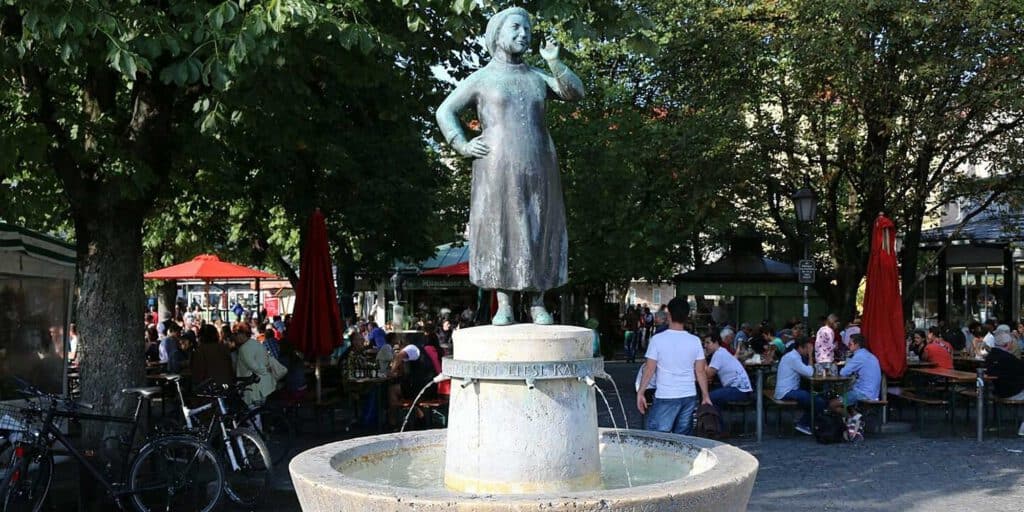
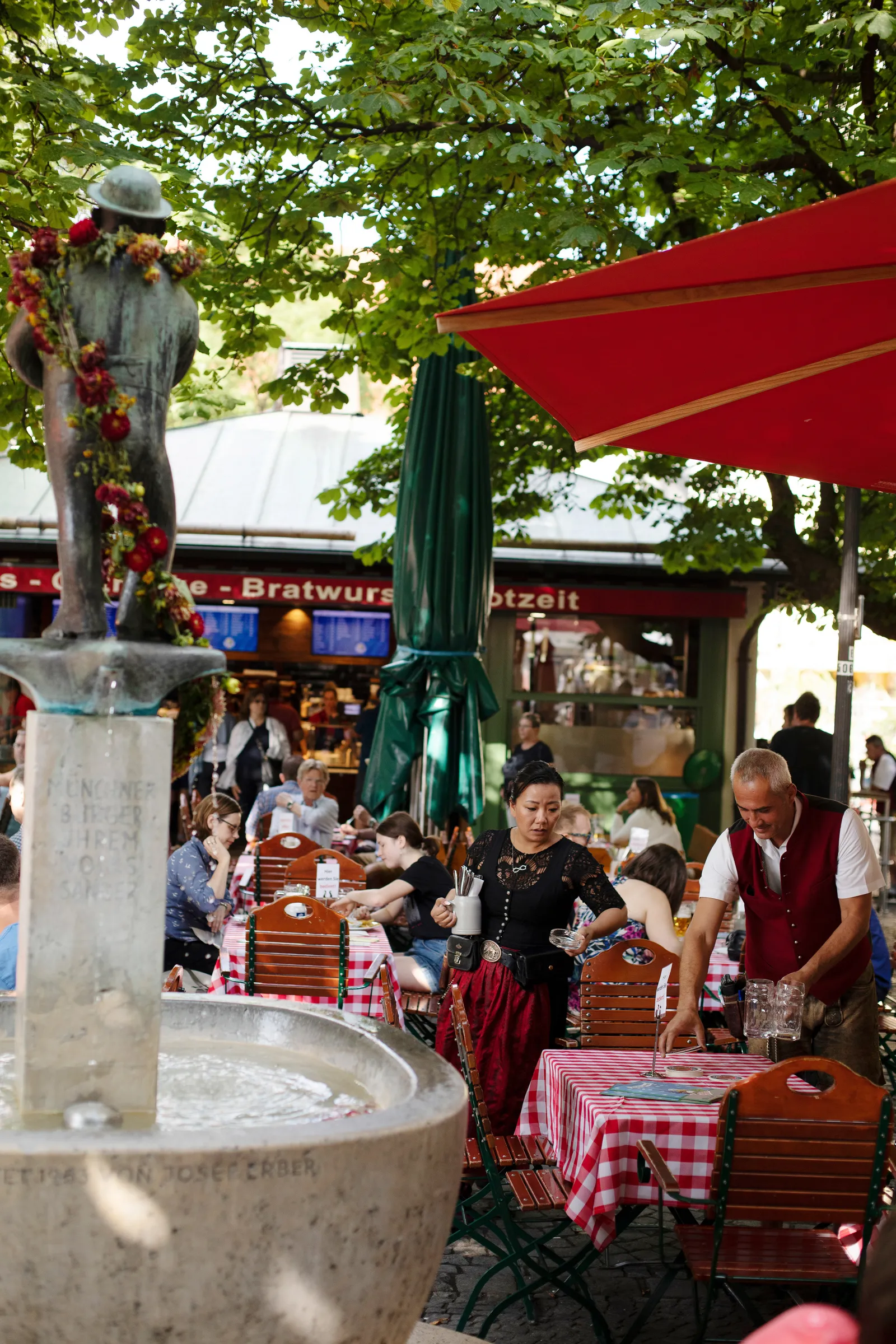
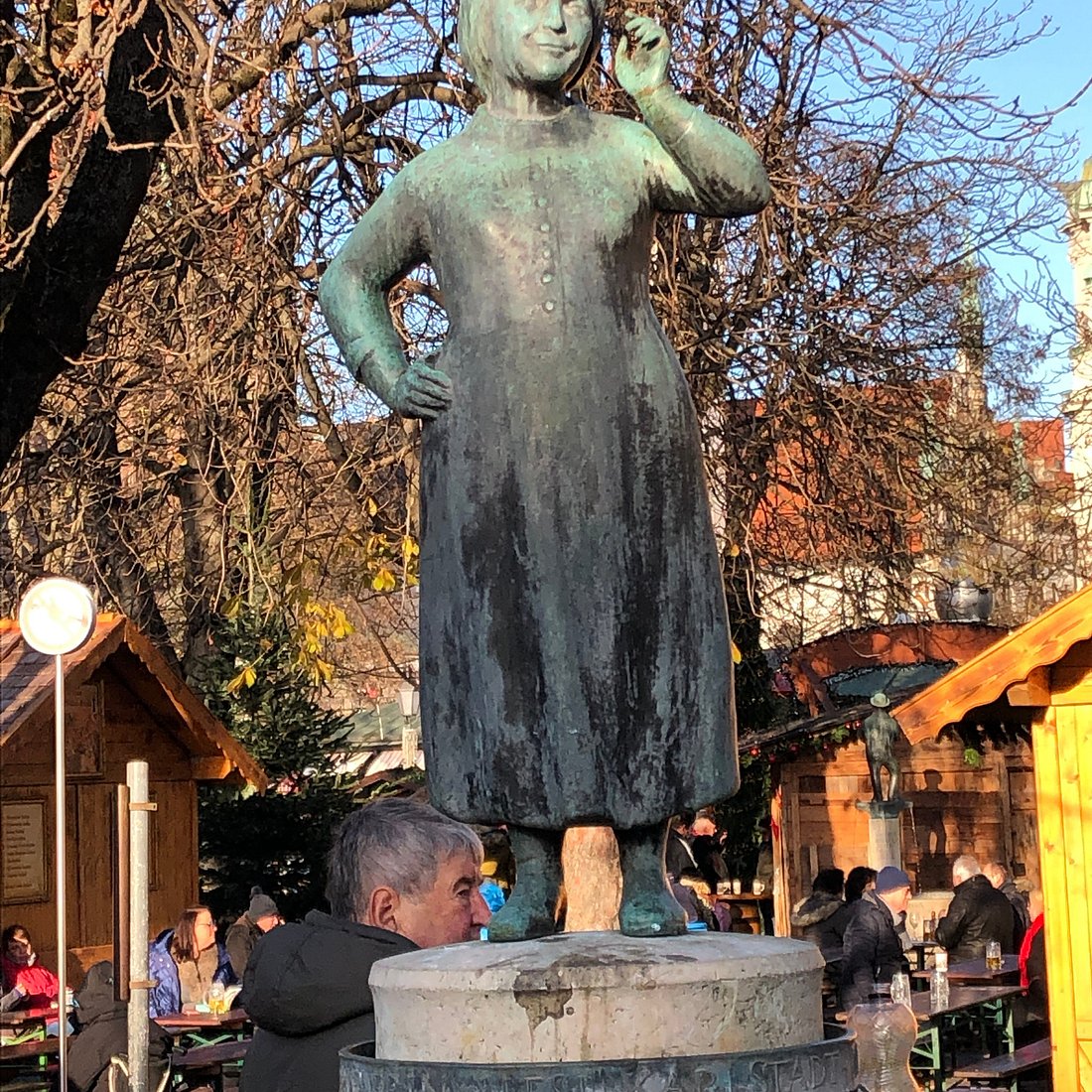
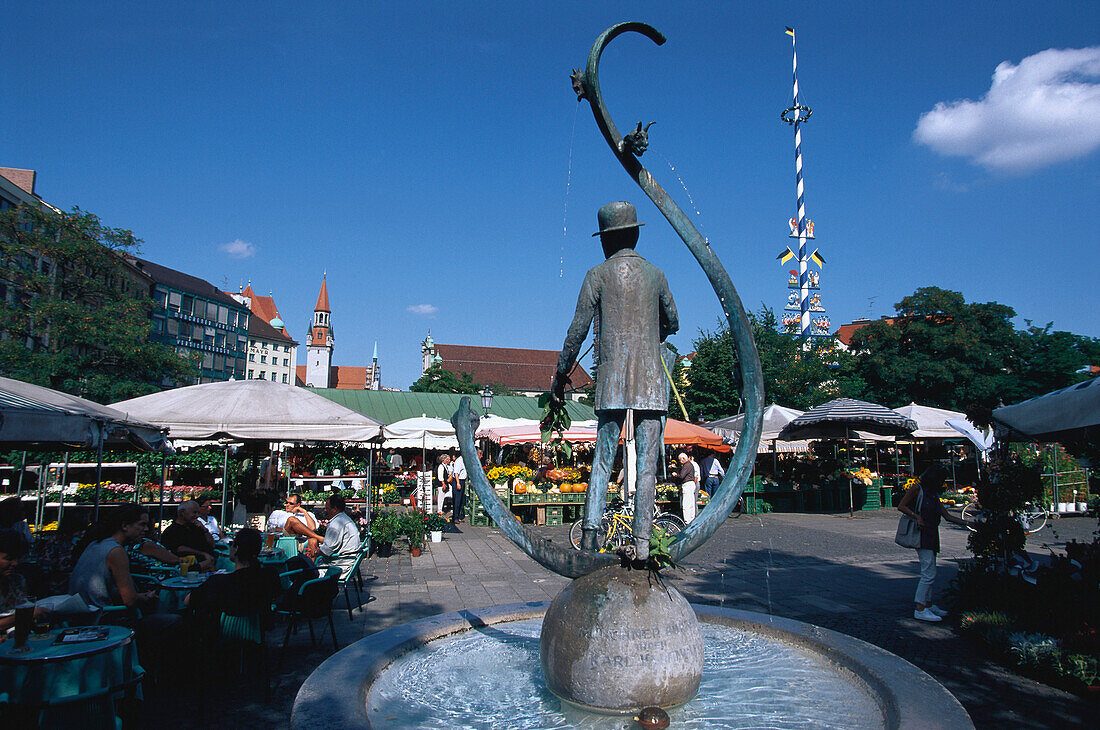
Meet near the Liesl Karlstadt Fountain for an overview
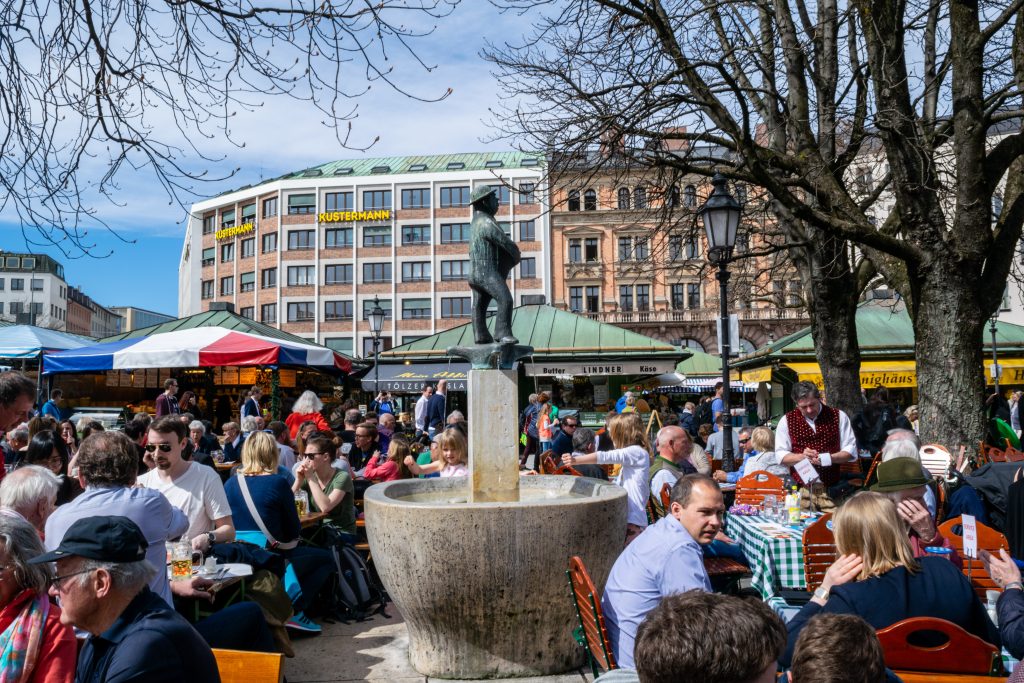
Experience Munich beer in the central garden
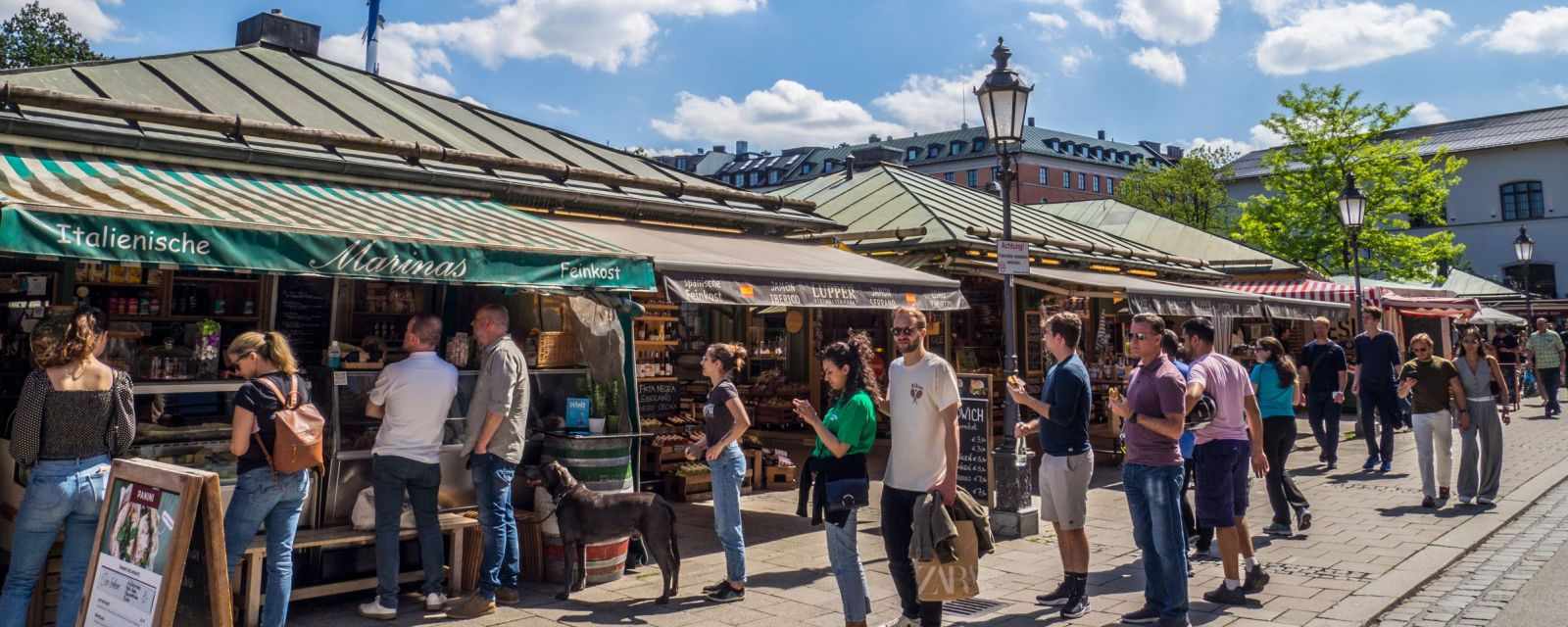
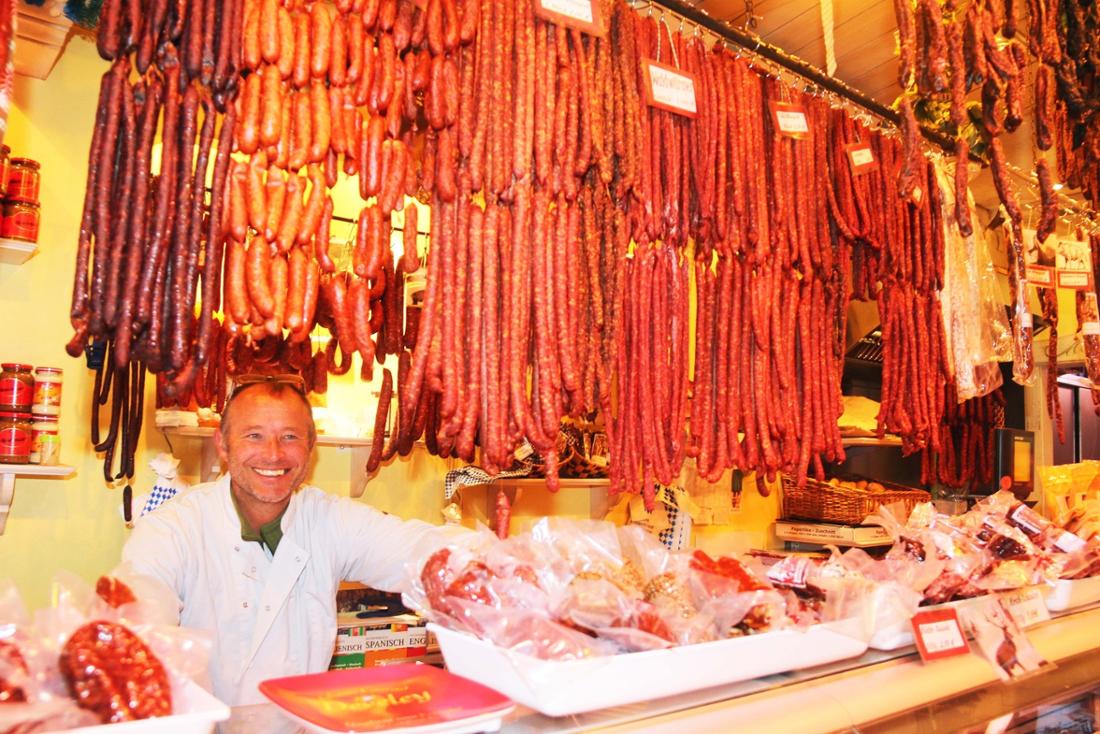
Visit butcher and deli stalls for local specialties
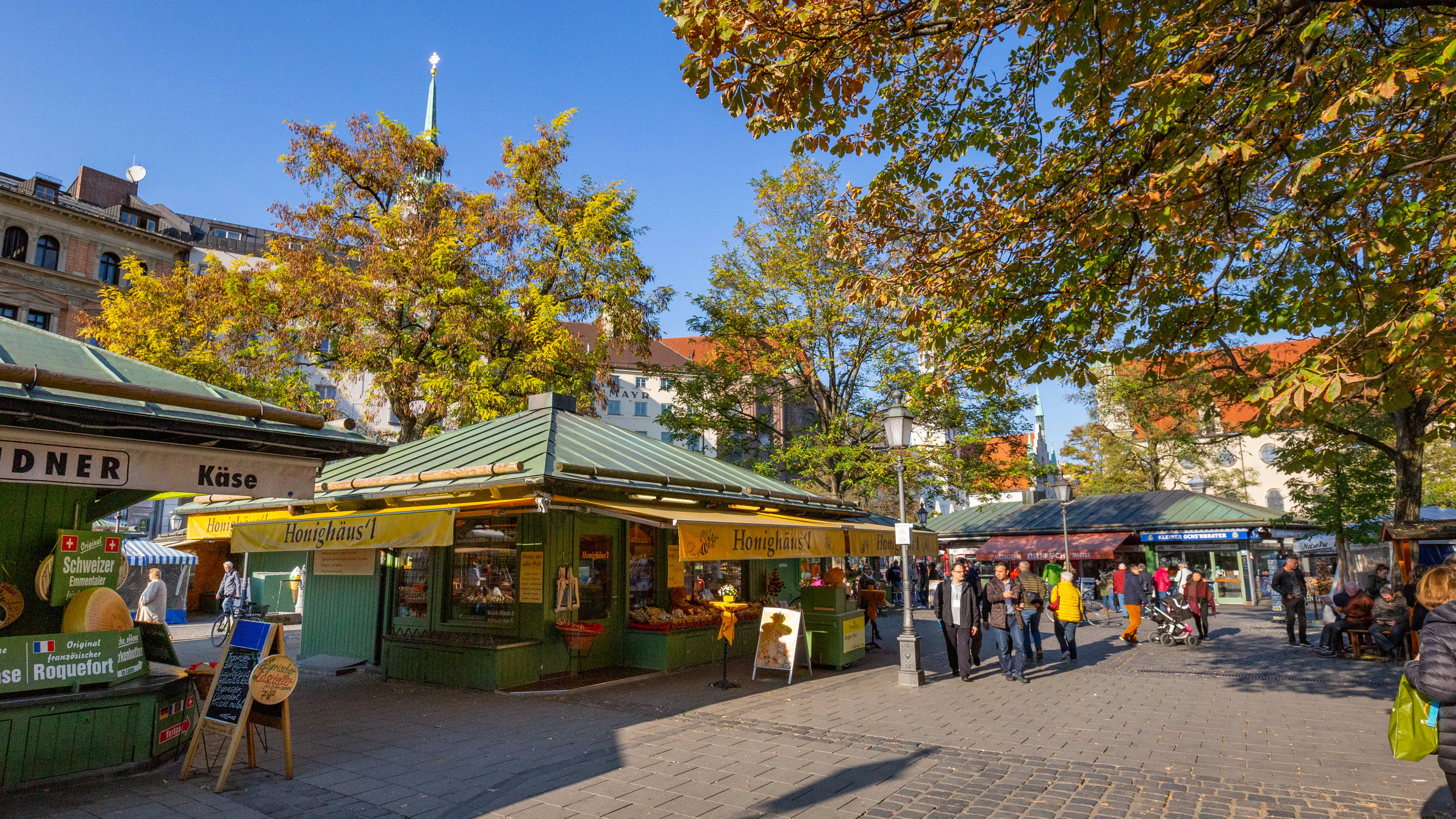
Explore regional goods and handicrafts
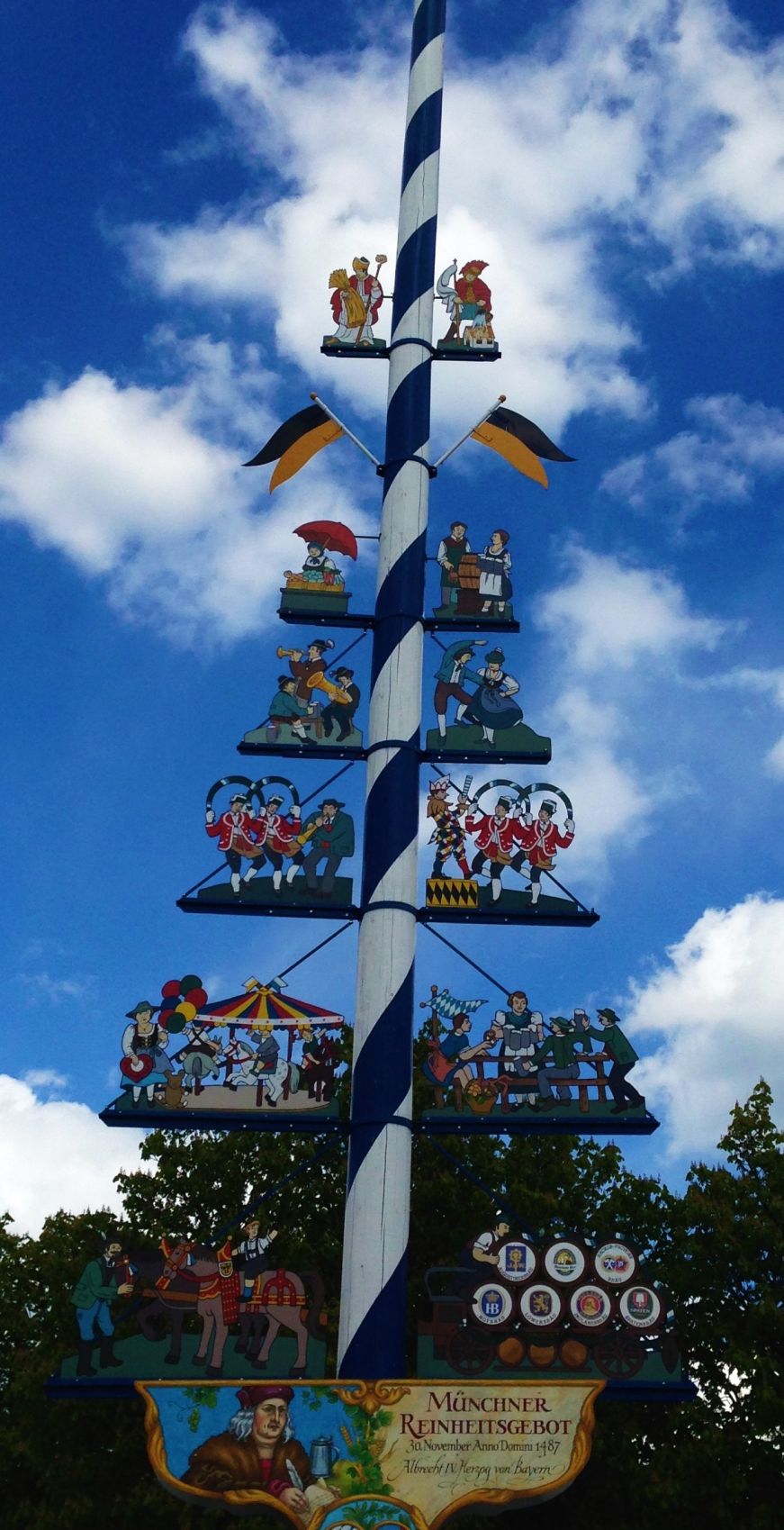
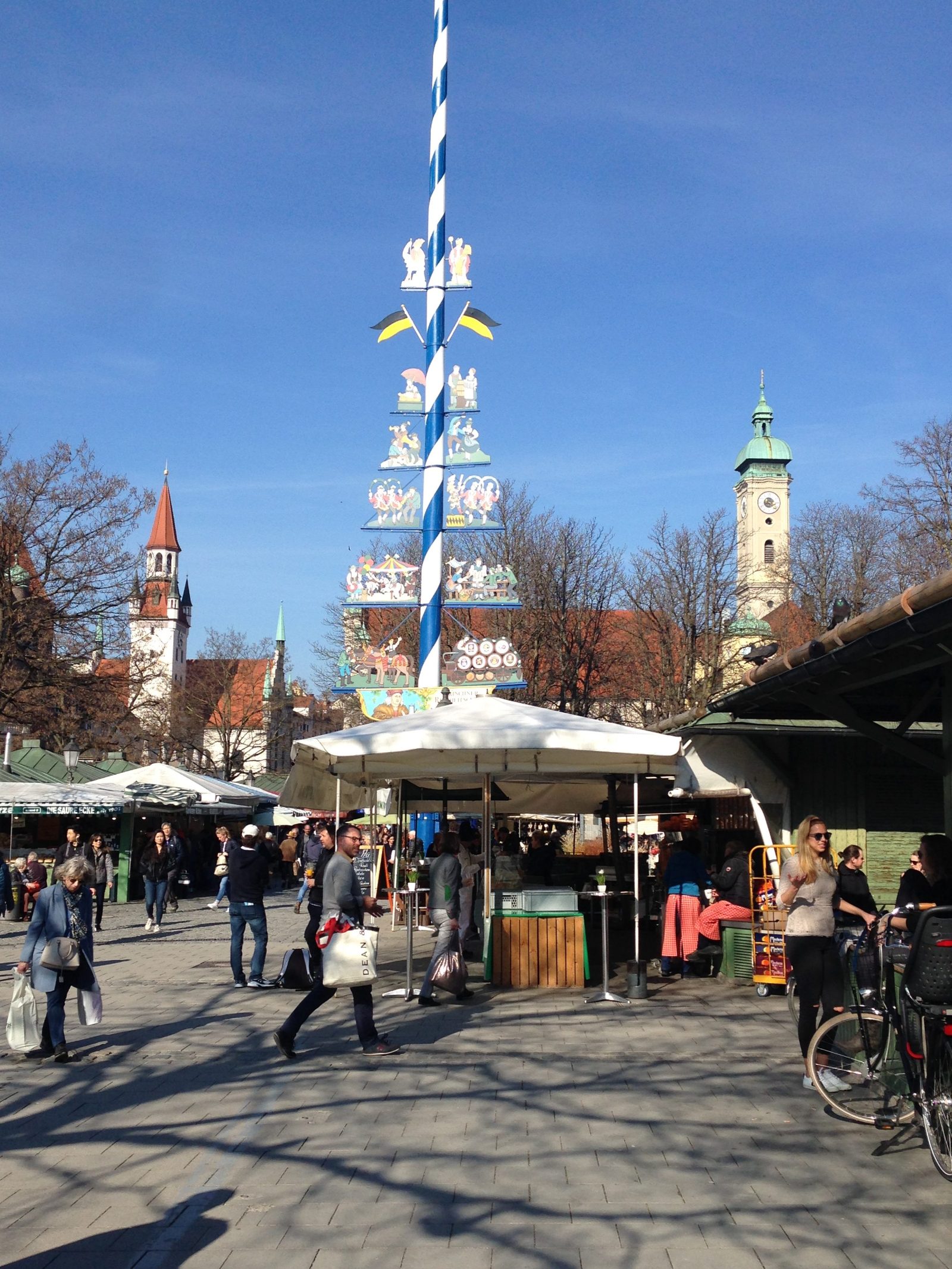
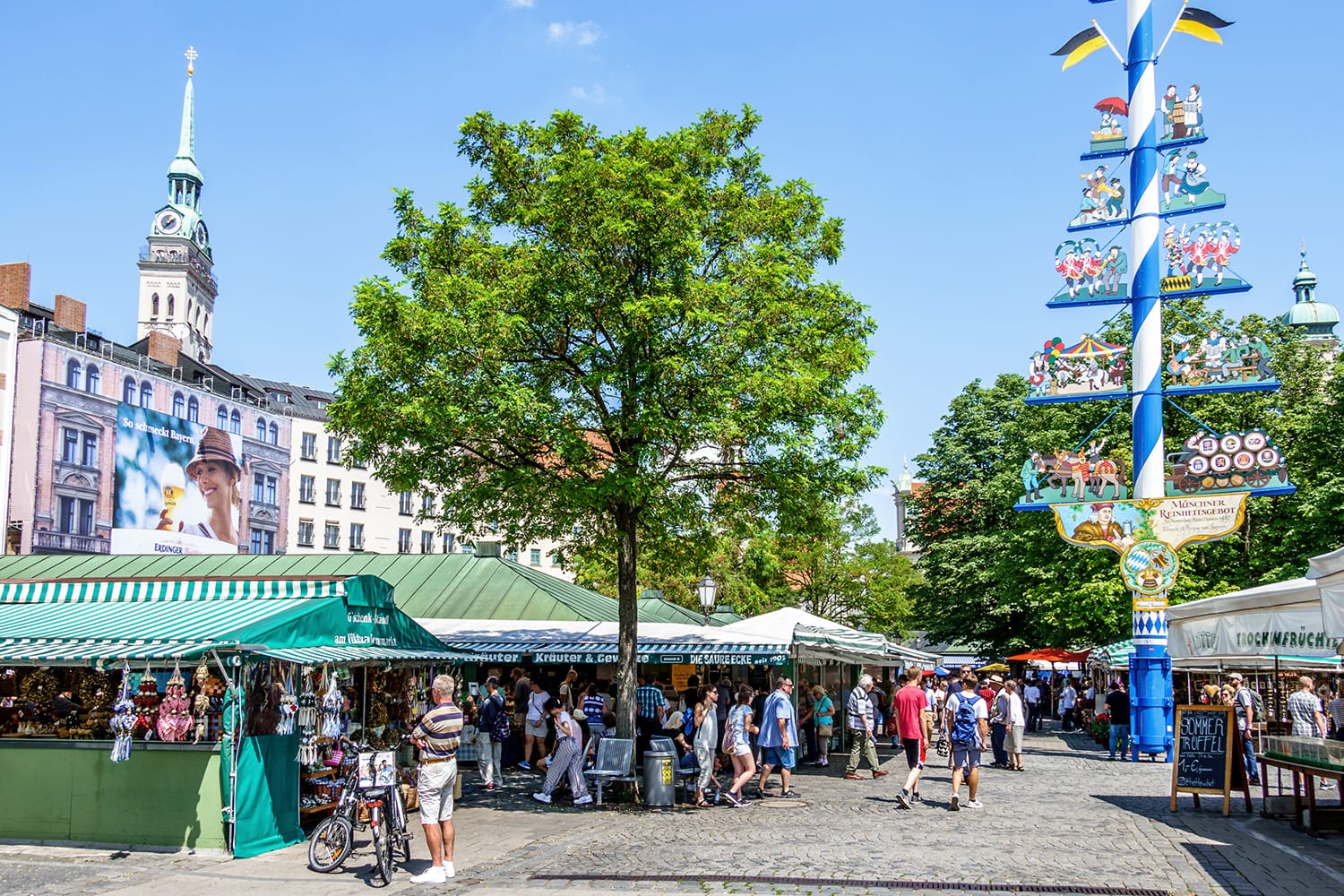
The iconic blue and white striped Maypole was erected by Munich breweries in 1962 to represent city culture.
This fountain commemorates the famous local comedian and is a key meeting landmark.
Located at the heart of the market, this garden rotates beers from all six major Munich breweries.
This specific market row is famous for high-quality local meat and traditional sausage specialties.
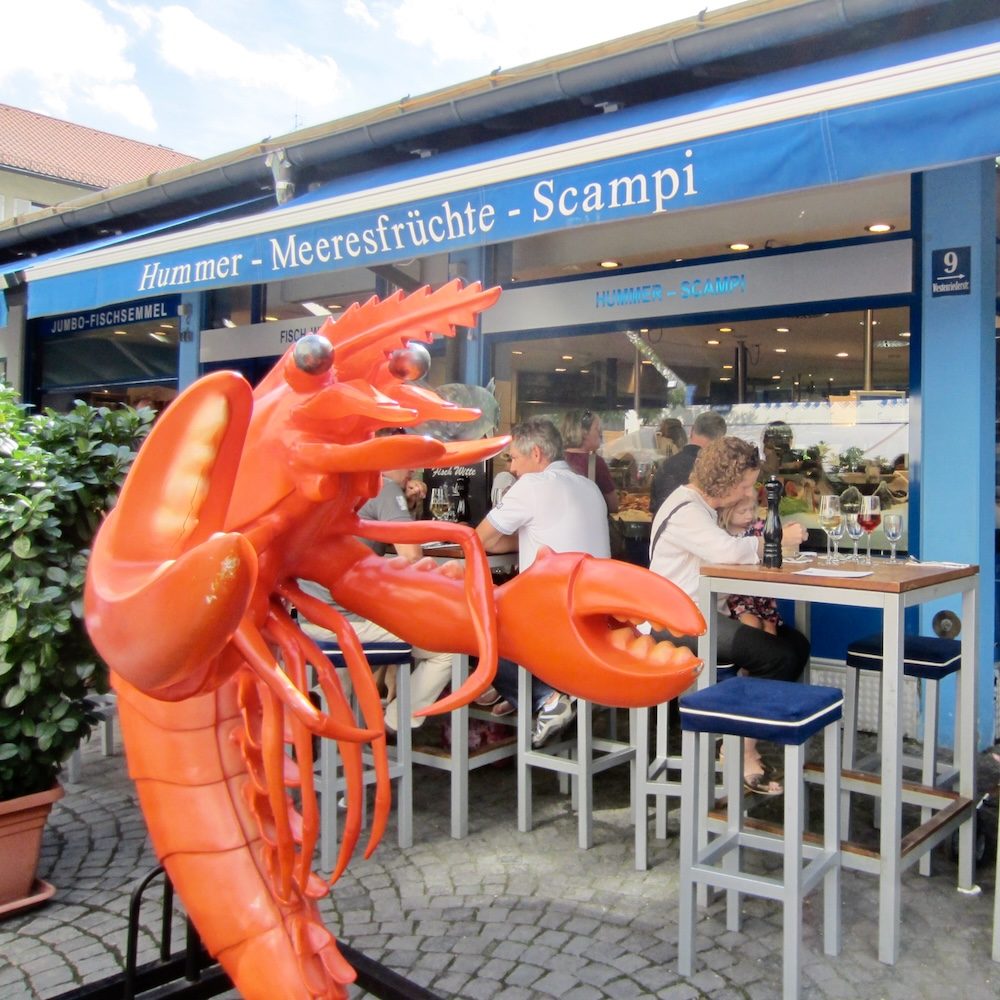
A specialized hall dedicated to fish products, reflecting the market's historical diversity.
You begin at Viktualienmarkt as vendors arrange morning produce, the scent of fresh-baked pretzels drifting across cobblestones.
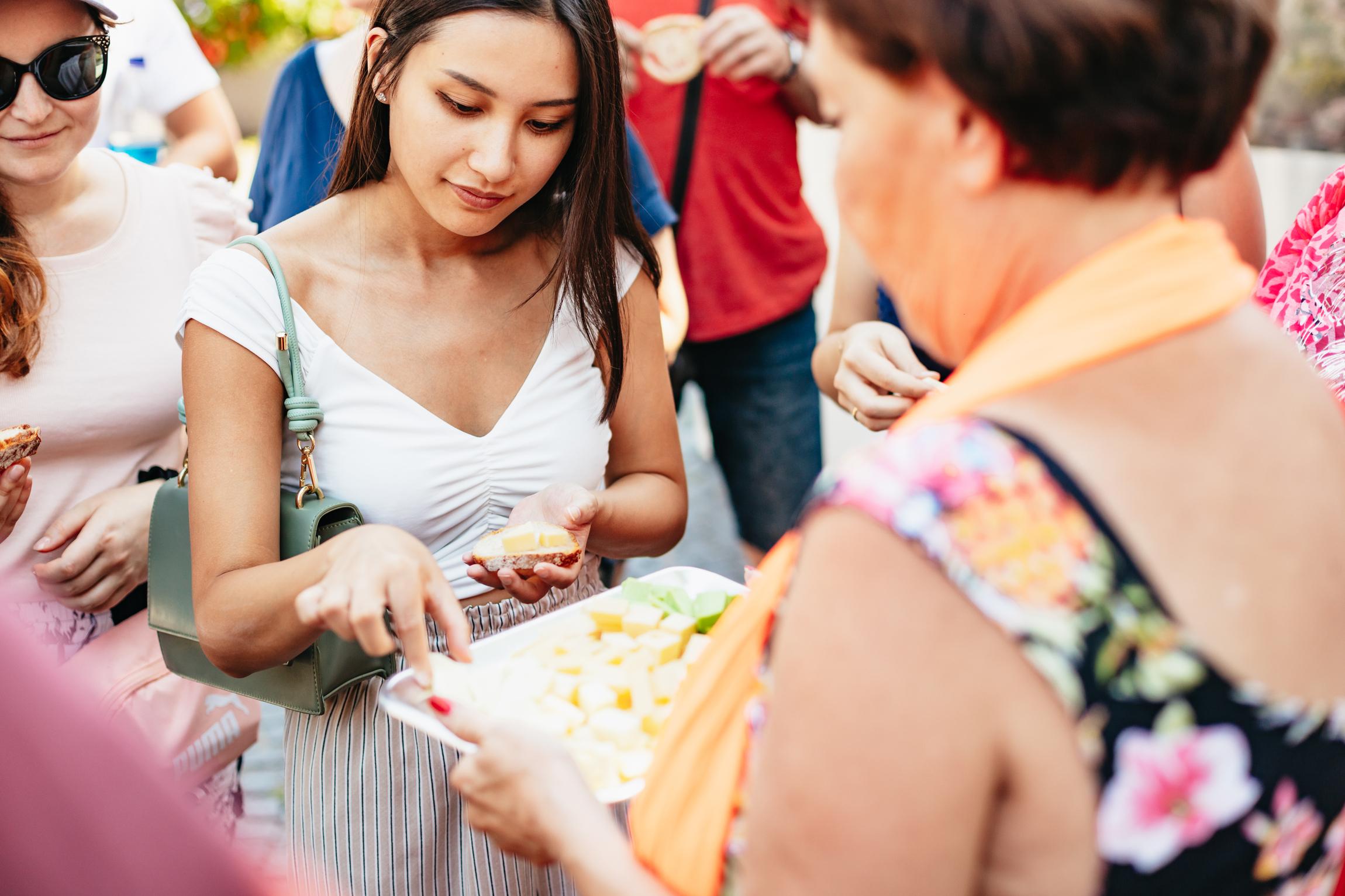
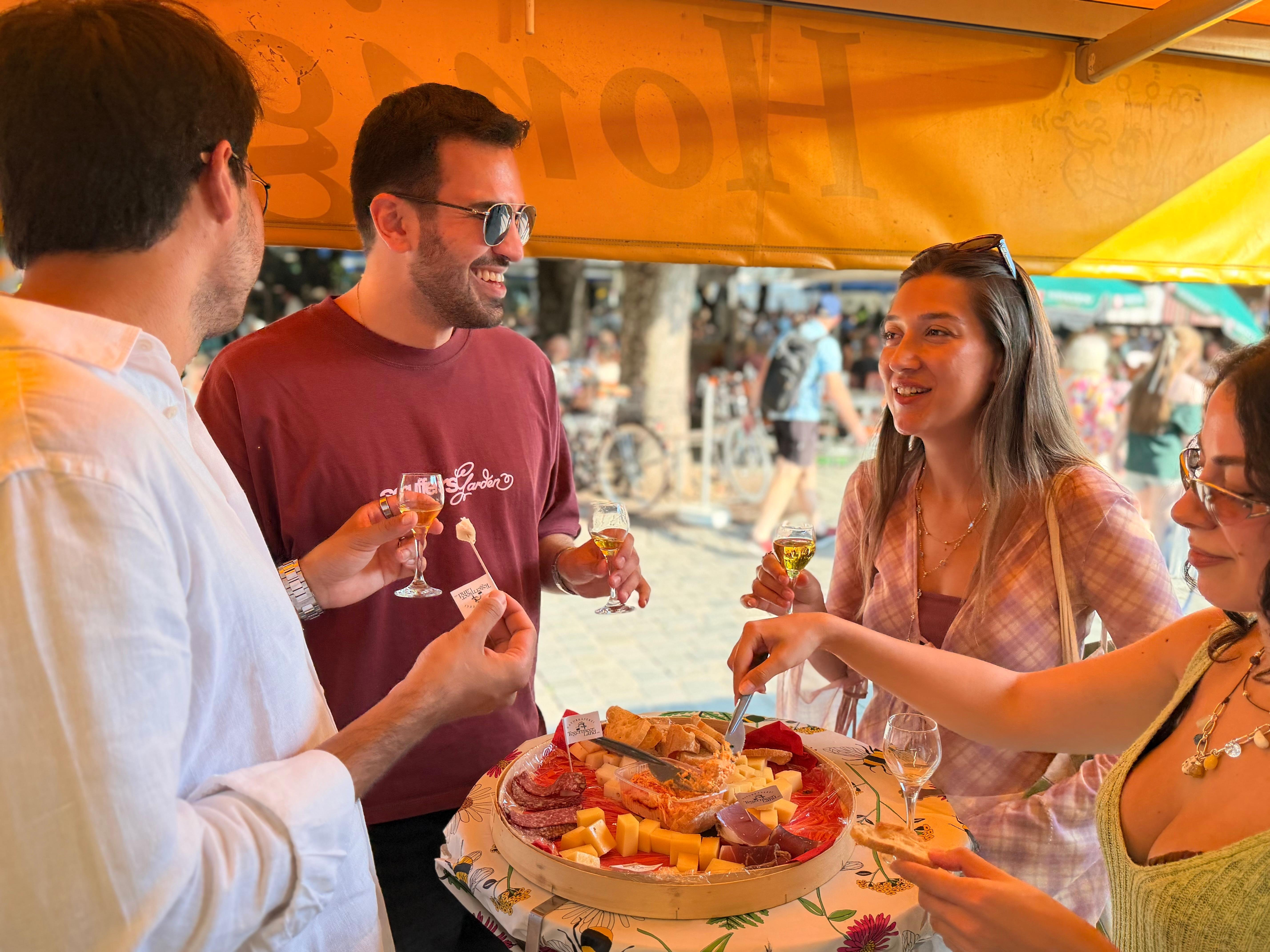
Your guide leads you past the fountain honoring Munich's six breweries, stopping at a cheese stall where you sample three alpine varieties aged in different mountain elevations—each paired with a corresponding bread. The biergarten follows, where you claim a spot under the chestnuts and receive your first half-liter: a crisp helles that tastes faintly of honey and grain.
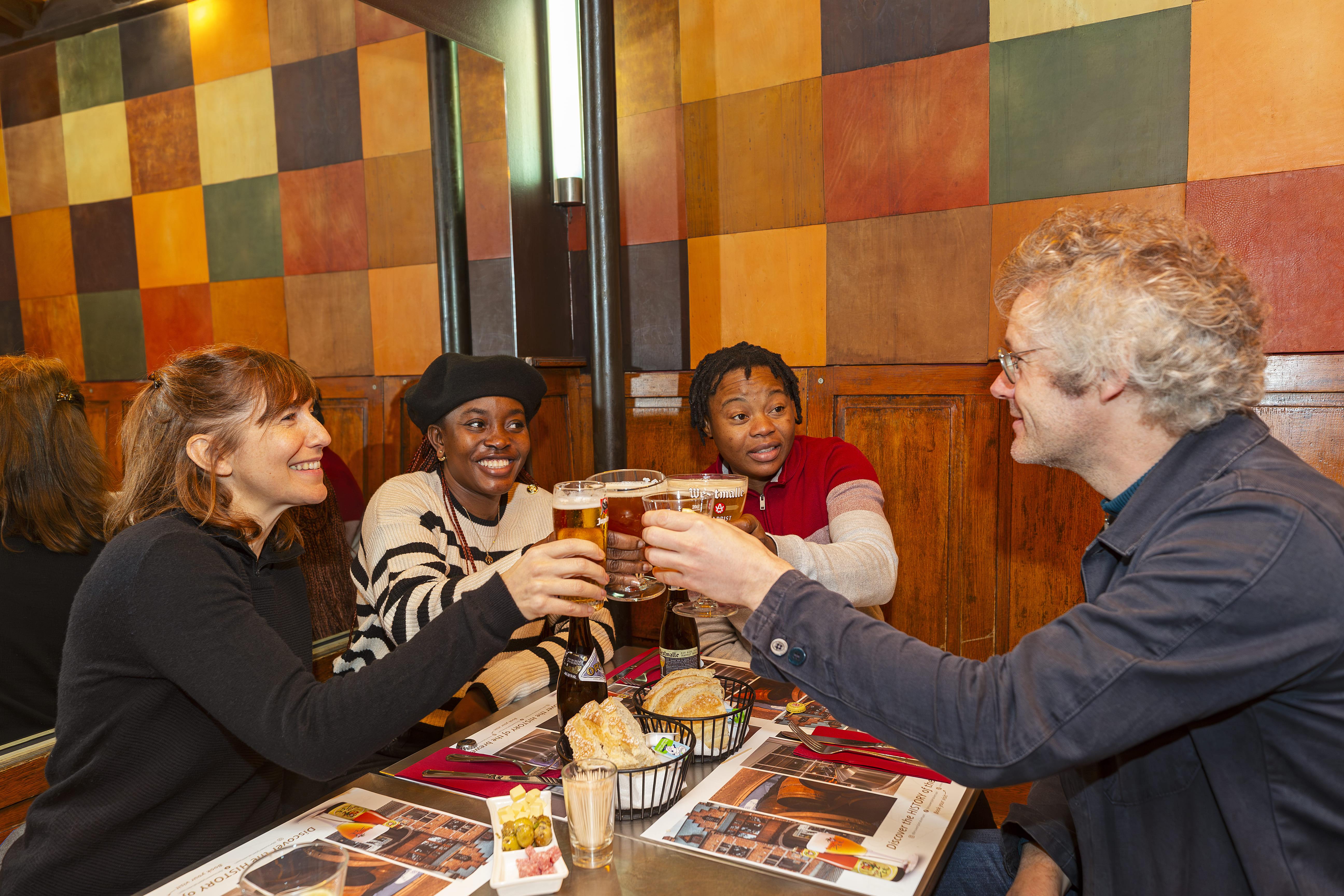
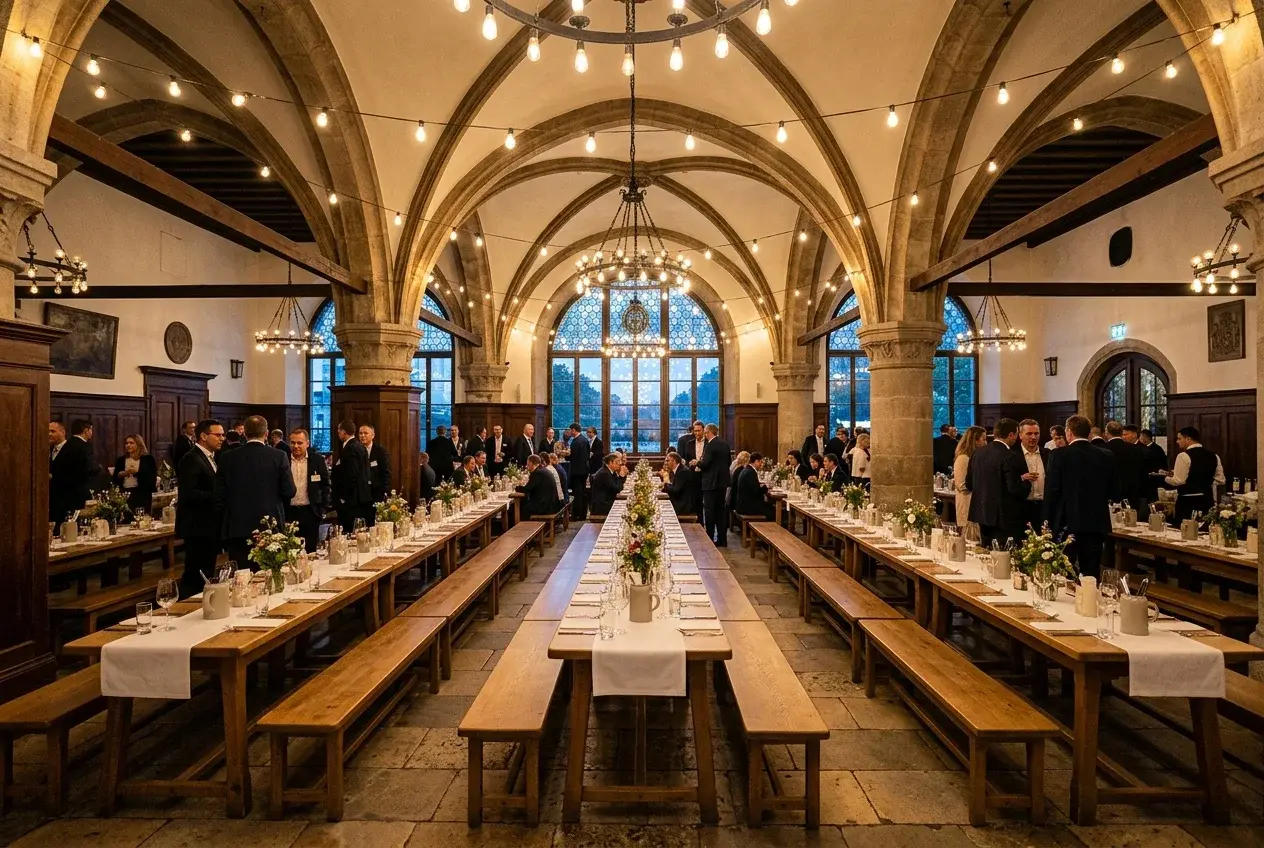
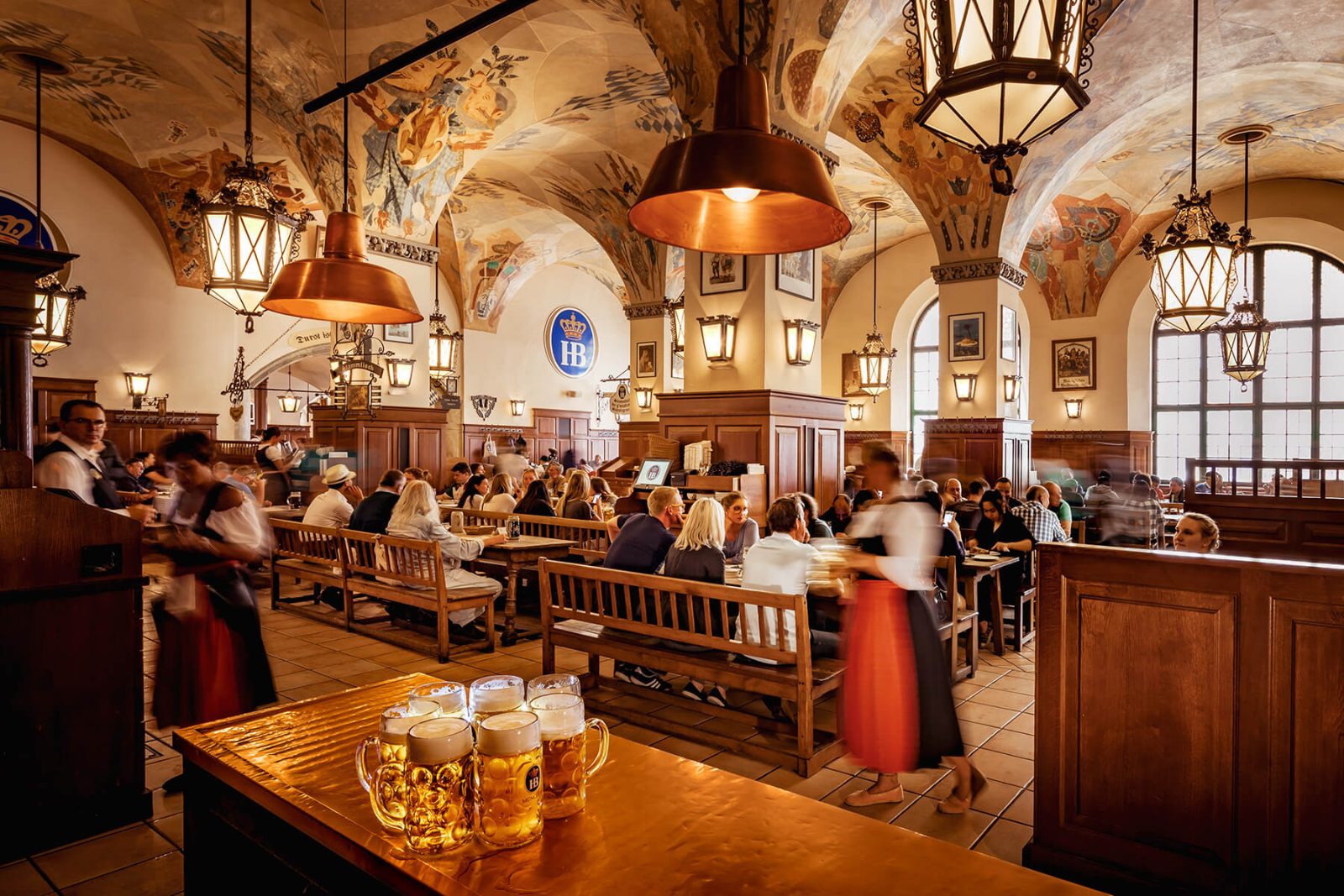
The route moves through the Altstadt, past frescoed guild houses and into a traditional beer hall. Inside, the vaulted ceiling amplifies the din of conversation. You settle at a communal table as platters arrive: obatzda with radishes, schweinebraten with potato dumplings, weisswurst with sweet mustard. Each course comes with its designated beer—dunkel with the roast pork, weissbier with the sausage. Your guide explains the pairing logic between bites, tracing ingredient origins to specific Bavarian regions.
The final stop brings you to a smaller brewery with copper kettles visible behind glass. Here, you taste an unfiltered zwickl straight from the tank, its yeast still cloudy, its carbonation gentler than the filtered versions. The brewer describes the malt roasting process, how a few extra minutes in the kiln shifts a beer from helles to märzen. You leave with the knowledge that Munich's brewing tradition is not nostalgia—it is a living, evolving discipline practiced daily across the city.
All the details about your upcoming adventure in one place
Munich's brewing heritage stretches back to 1040, when Benedictine monks at Weihenstephan developed fermentation techniques that would define Bavarian beer for the next millennium. By 1487, the Reinheitsgebot—the world's oldest food purity law—codified what could enter a beer: water, barley, hops. Nothing else.
This singular obsession with ingredient integrity transformed Munich into Europe's brewing capital, a city where six major breweries still operate within medieval walls and where the annual consumption of beer exceeds 150 liters per resident.
Today, a beer and food tour Munich offers reveals how deeply brewing culture shapes the city's culinary identity. The Viktualienmarkt, a six-acre public market square operating since 1807, anchors the experience. Here, 140 permanent stalls sell everything from alpine cheese aged in mountain caves to white asparagus harvested before dawn in Schrobenhausen. The market's central biergarten—shaded by chestnut trees and serving rotating brews from Munich's six traditional breweries—functions as the city's democratic living room, where construction workers and bankers share communal benches over radishes, pretzels, and half-liter steins.
The architectural counterpoint arrives in Munich's beer halls, vast cathedral-like spaces where vaulted ceilings rise above rows of wooden tables. Hofbräuhaus, founded by Wilhelm V in 1589 as the ducal brewery, seats 3,000 guests across three floors. Its ground-floor Schwemme retains the original stone floors worn smooth by five centuries of foot traffic. Augustiner-Bräu, Munich's oldest independent brewery since 1328, still delivers beer in wooden barrels rather than steel kegs, preserving a flavor profile that modern equipment cannot replicate. These halls operate as functional monuments, spaces where brewing tradition and daily ritual converge.
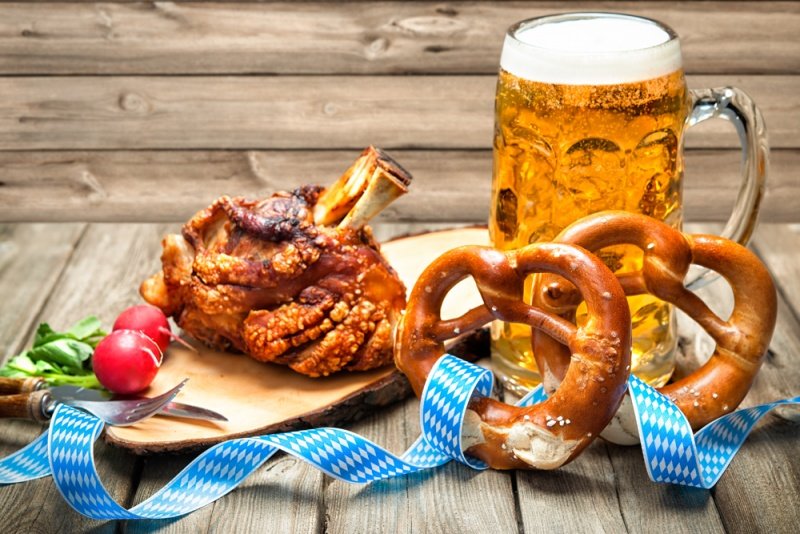
Bavarian cuisine orbits the brewery. Schweinshaxe—roasted pork knuckle with crackling skin—pairs with dunkel lager. Obatzda, a camembert-based cheese spread spiked with paprika and onion, balances the hop bitterness of a helles. Weisswurst, the breakfast sausage that must never hear the noon church bells, demands wheat beer and sweet mustard. The food is engineer-precise in its pairing logic, each dish calibrated to complement specific beer styles developed in the same kitchens over generations.
The Reinheitsgebot of 1487 codified what could enter a beer: water, barley, hops—nothing else.
Casual and comfortable attire is recommended for every beer and food tour munich. Wear sturdy, flat footwear suitable for walking on historic cobblestone market grounds.
There are no formal security checkpoints for accessing the public square. Keep personal belongings secure as the market is often crowded during lunch hours.
Photography is permitted in the market square. Professional filming or commercial photography requires prior permission from the Munich Market Halls administration.
The area is family-friendly and open to visitors of all ages. Many beer and food tour munich options include non-alcoholic beverage alternatives and traditional snacks.
The market is a public square and is generally accessible to visitors with limited mobility. Some historical sections may have uneven surfaces, so caution is advised.
Visitors can purchase fresh food from over 100 stalls. In the central beer garden, you are welcome to consume food purchased from surrounding market stalls.
Opening Hours
Mon–Sat 08:00–20:00
Address
Viktualienmarkt 3, 80331 München, Germany
Accessibility
Public square with level cobblestone paths
Best Time
08:00–11:00 arrival window for calm
Services
Restrooms available for a small fee
Info
Market Supervision Office on-site
Public transport · 5 min walk · Varies
Use S-Bahn or U3/U6 lines to Marienplatz station.
Taxi · Variable · Variable
Request drop-off at the edge of the market square.
Cancellation terms depend on the specific beer and food tour munich provider selected. Most operators offer full refunds if cancelled at least 24 hours prior to the scheduled tour start.
Recommended time
1-3.5 hours
A self-guided walk through Viktualienmarkt takes about an hour if you are just browsing stalls and grabbing a snack, while a proper beer and food tour munich itinerary that pairs brewery stops with food tastings runs 1 to 3.5 hours depending on the option you book. Add time if you plan to sit down at the beer garden tables or linger over multiple tastings; subtract time if you only want a quick sampling pass. Arriving in the 08:00-11:00 window keeps queues at food stalls short, since the market fills in steadily once late morning hits. There is no ticket gate here, so the only real wait is at popular stands during peak hours.
Weather · crowds · average price — dots go green to amber to red as each metric rises.
Mild weather perfect for outdoor walking tours and fresh market produce.
Warmest months; ideal for enjoying the open-air beer garden atmosphere.
Cooler temperatures bring seasonal specialties and harvest-themed tastings.
Atmospheric market visits with warming soups and traditional seasonal treats.
Visit between 08:00 and 11:00 to avoid the heavy Saturday and lunch crowds.
While many stalls accept cards, traditional vendors often prefer cash for smaller items.
You can bring your own food into the beer garden if you purchase drinks there.
Each vendor sets their own hours, so some may close earlier than the official market time.
Viktualienmarkt 3, 80331 München
Central location near Market Supervision
Get directionsMunich's beer and food tour munich culture traces its roots to 1807, when King Maximilian I ordered the city's chaotic produce stalls moved from Marienplatz to create the Viktualienmarkt. The new square opened as a farmers' market on May 2, 1807, occupying former fortification grounds. Within decades it became the city's culinary heart, drawing vendors from surrounding Bavaria with cheese, sausages, and fresh bread. The market's proximity to six major Biergärten München breweries—Hofbräuhaus, Augustiner, Paulaner, Hacker-Pschorr, Löwenbräu, and Spaten—cemented a pairing that defines Munich gastronomy today. The 1945 Allied bombing campaign destroyed 80 percent of the Viktualienmarkt's structures. Reconstruction began in 1946 under architect Karl Meitinger, who preserved the open-air layout while adding permanent covered stalls. The Biergarten at Viktualienmarkt opened in 1977 to honor the market's 170th anniversary, rotating taps among Munich's six traditional breweries every six weeks. This cooperative model became the template for beer and food tour munich tours, which pair brewery cellars with market tastings. The maypole erected in 1980 depicts local trades and market traditions, anchoring seasonal festivals that draw both residents and visitors. By 2000, Munich's culinary tours had formalized into structured experiences combining Viktualienmarkt stops with brewery visits and traditional Bavarian Brotzeit spreads. Tour operators began licensing access to brewery archives and historic beer halls, transforming what had been informal pub crawls into curated tastings. Today the market hosts 140 permanent stalls selling Weißwurst, Obatzda cheese, and Leberkäse alongside regional produce. The beer garden serves 1,000 guests under chestnut trees, operating from May through September. This fusion of 19th-century market tradition and brewing heritage makes Munich the only German city where beer and food tour munich tickets consistently outsell standalone brewery tours.
King Maximilian I relocates Munich's produce vendors from Marienplatz to create Viktualienmarkt on former fortification land.
Market expands to 140 permanent stalls as Munich's six major breweries establish distribution agreements with vendors.
Allied bombing destroys 80 percent of Viktualienmarkt structures during World War II.
Architect Karl Meitinger rebuilds market with covered stalls while preserving open-air layout.
Viktualienmarkt Biergarten opens with rotating taps from Munich's six traditional breweries.
Decorated maypole erected to honor local trades and market folklore.
Structured beer and food tour munich tours emerge, pairing market tastings with brewery cellar visits.
The striped Maibaum towers over the market's central beer garden, framed by market stalls and the beer garden's chestnut trees. Stand near the beer garden benches facing the pole for a shot that captures market stalls, the maypole and locals having an early beer together. Weekday mornings on a beer and food tour munich itinerary give a quieter frame without stall crowds.
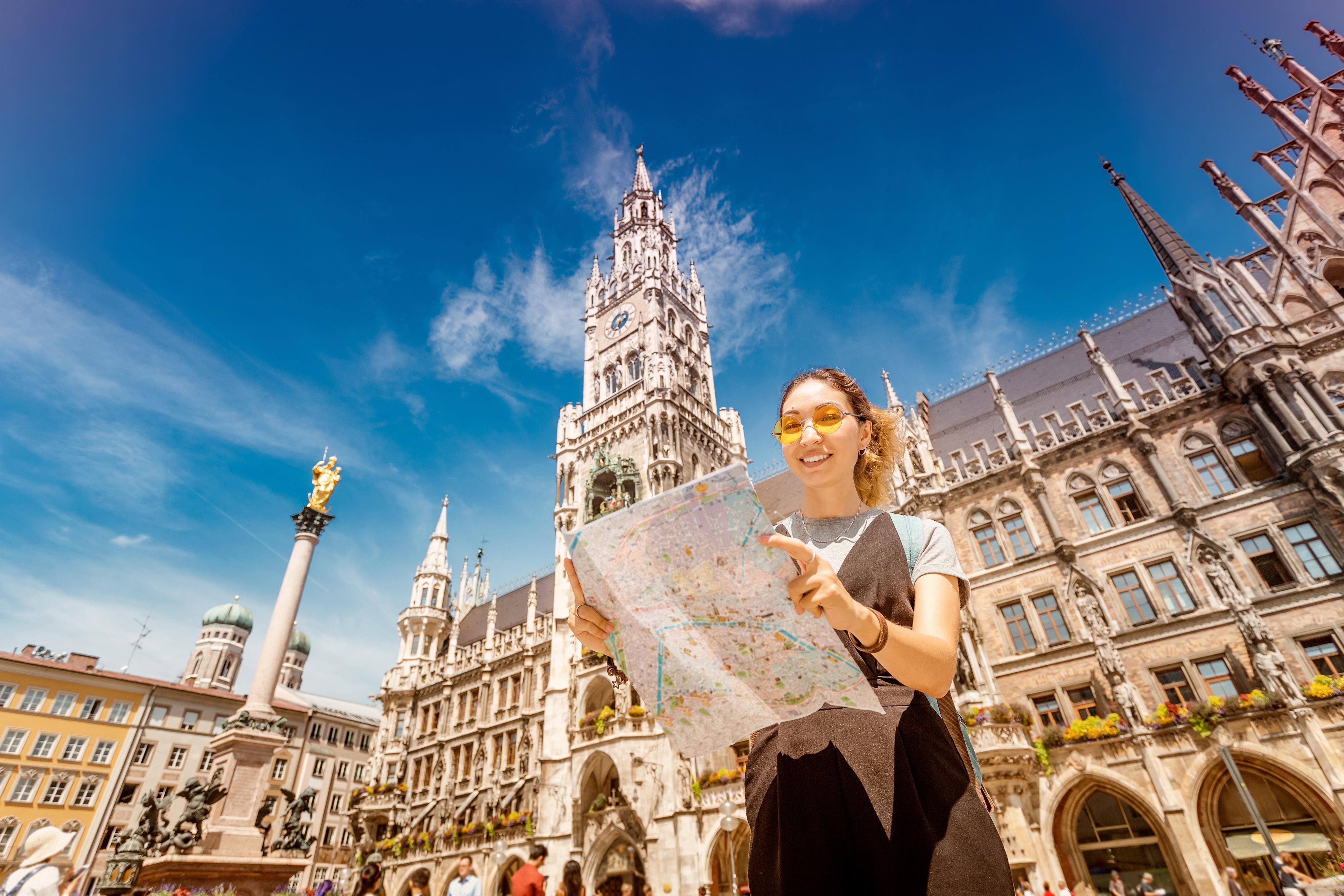
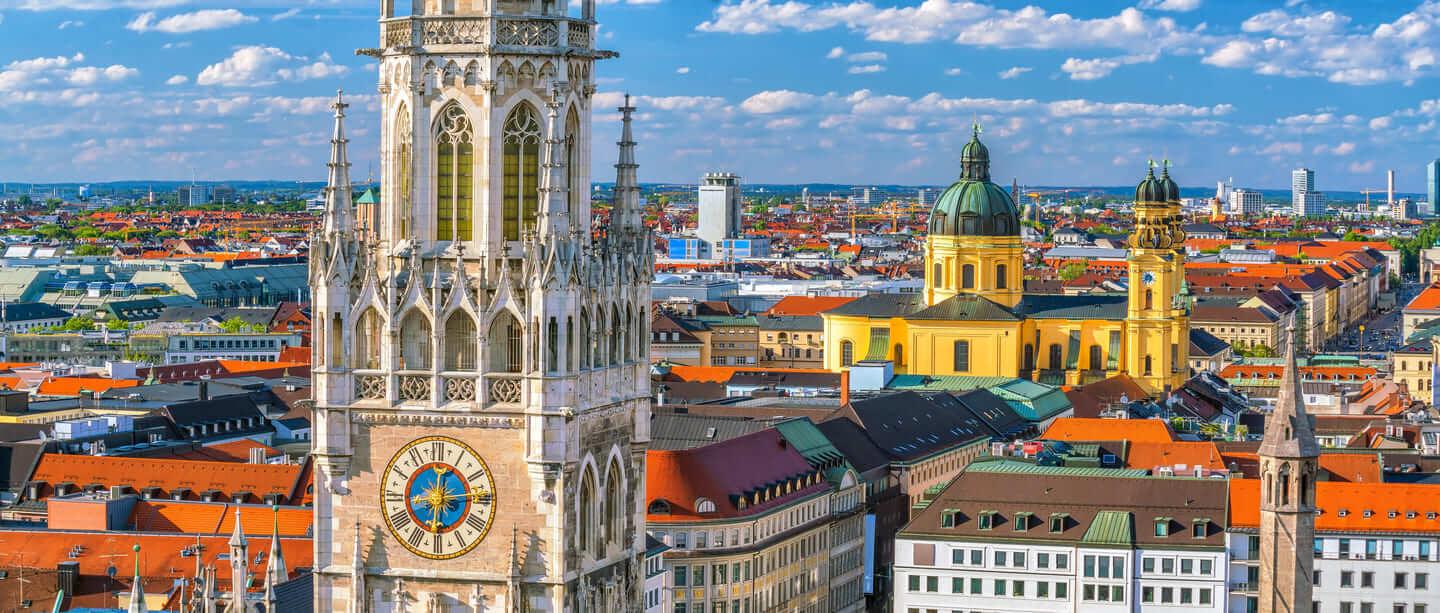
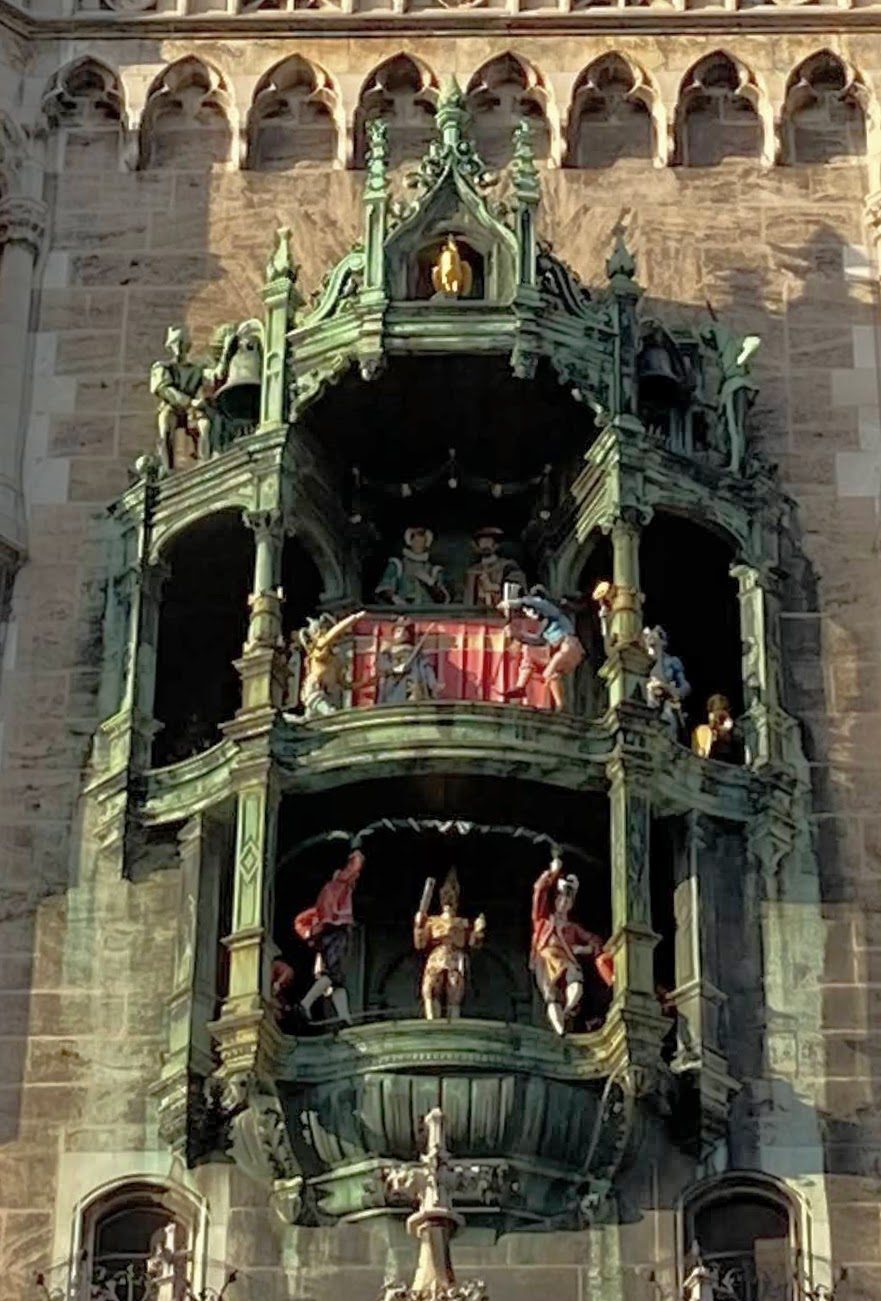
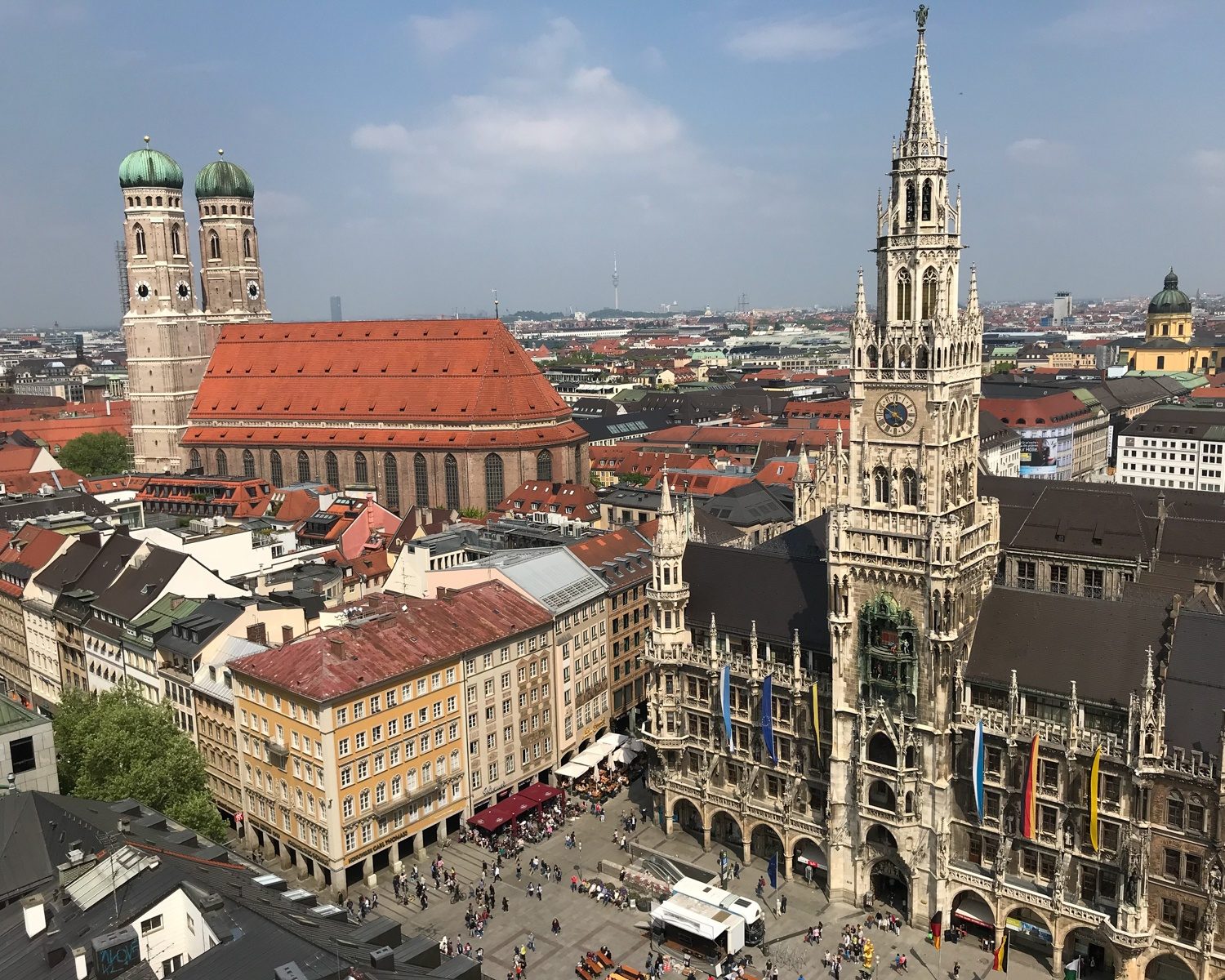
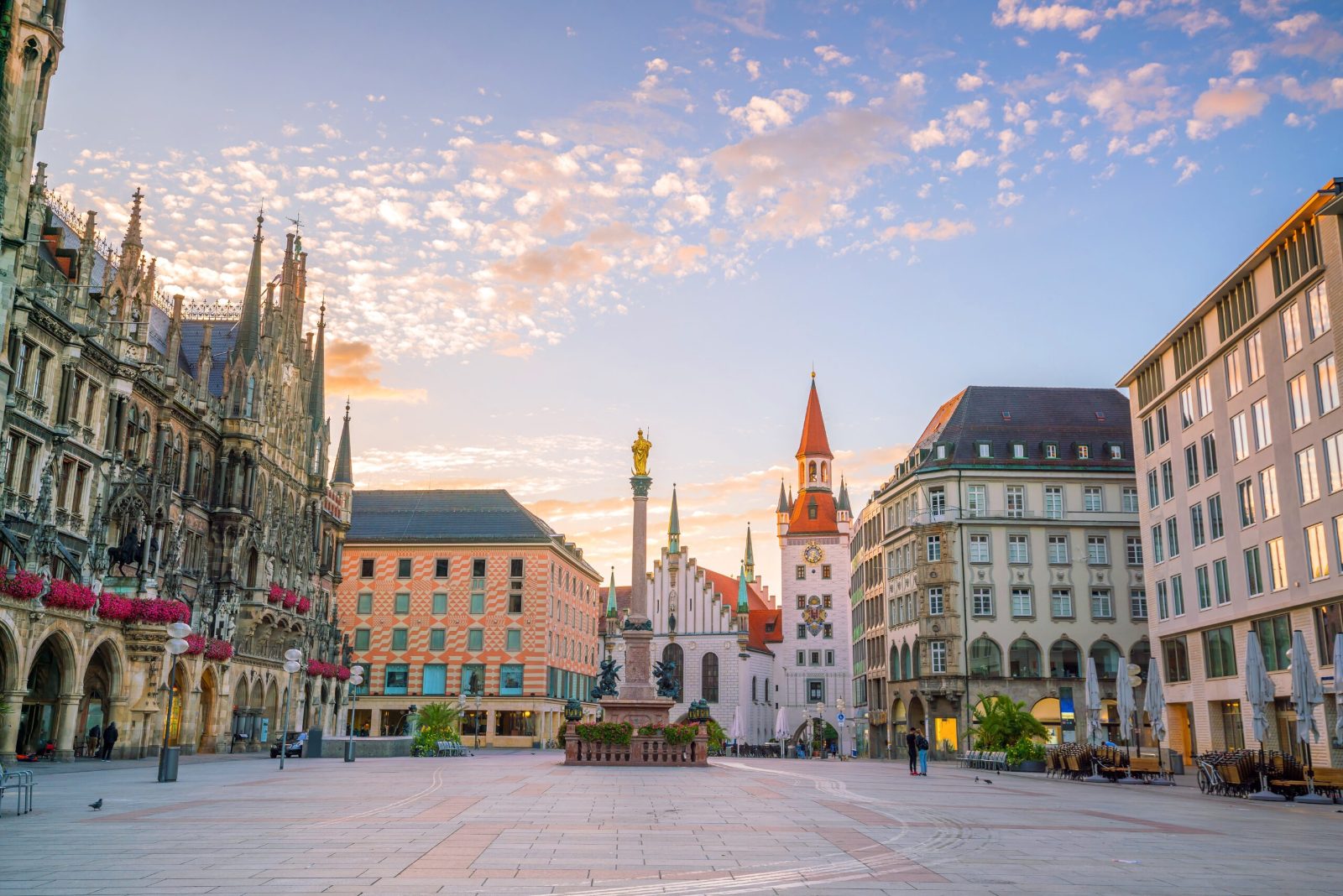
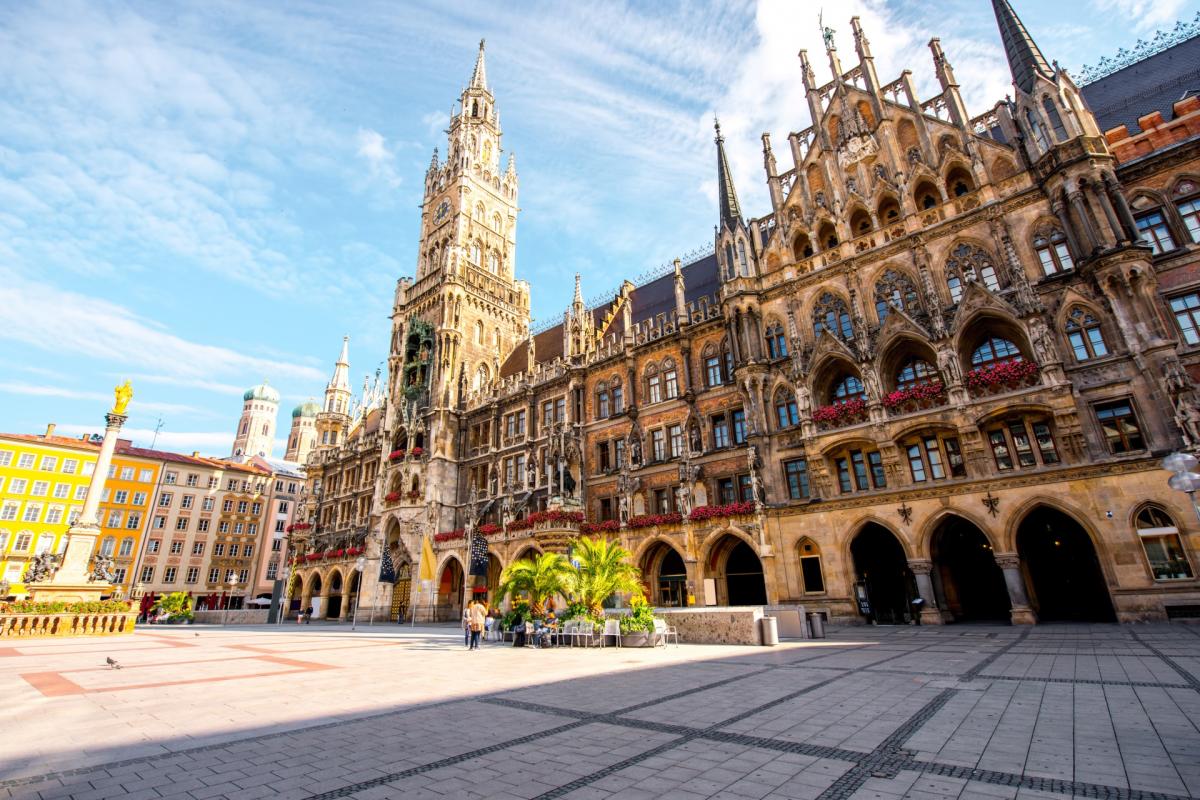
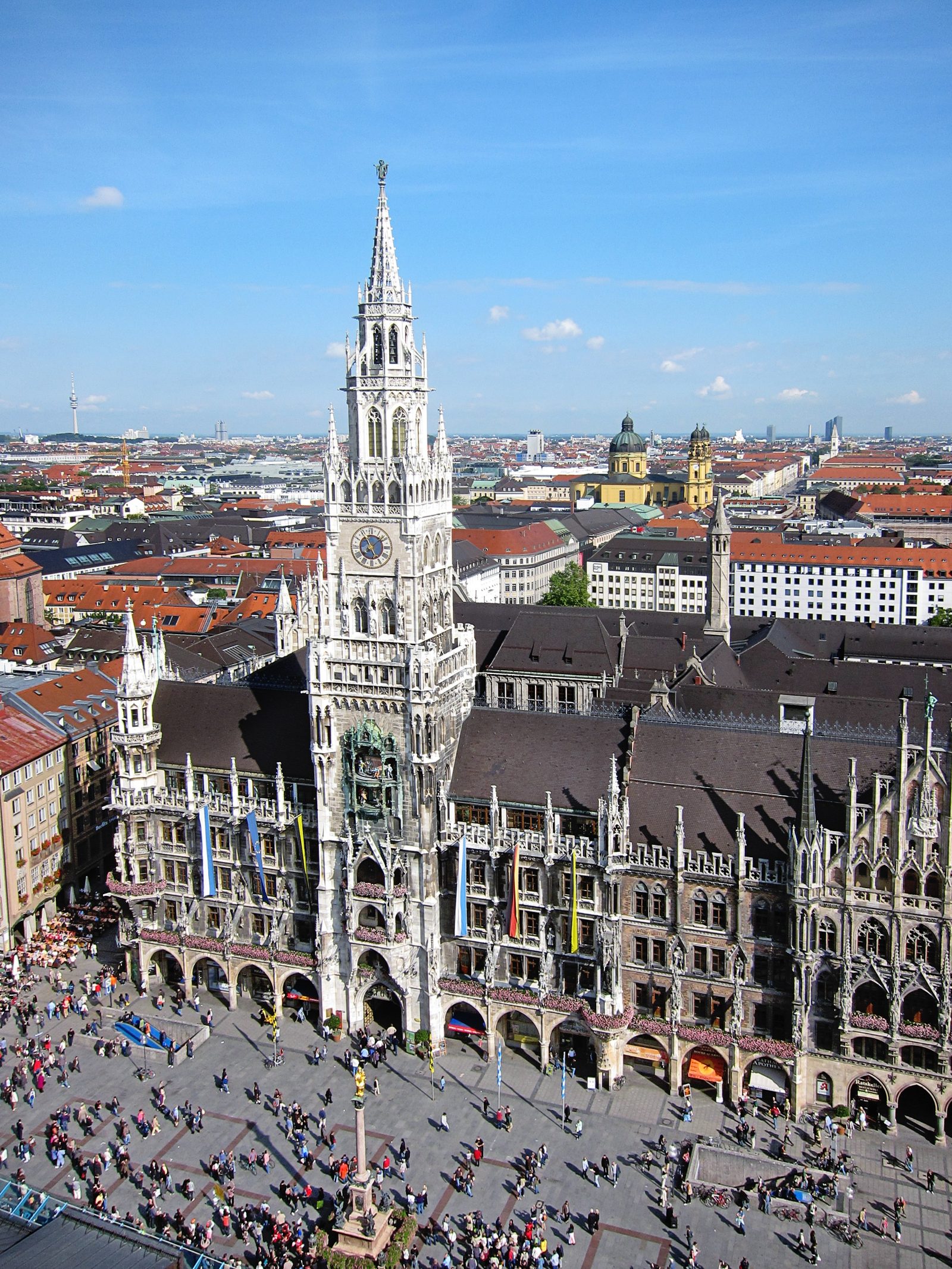
The neo-Gothic town hall facade with its tiered balconies and clock figures makes a strong wide shot from the square's center, with Marienplatz's fountain and surrounding facades in the foreground. Position yourself opposite the tower entrance for a straight-on angle that avoids lens distortion. Golden hour light warms the sandstone facade nicely.
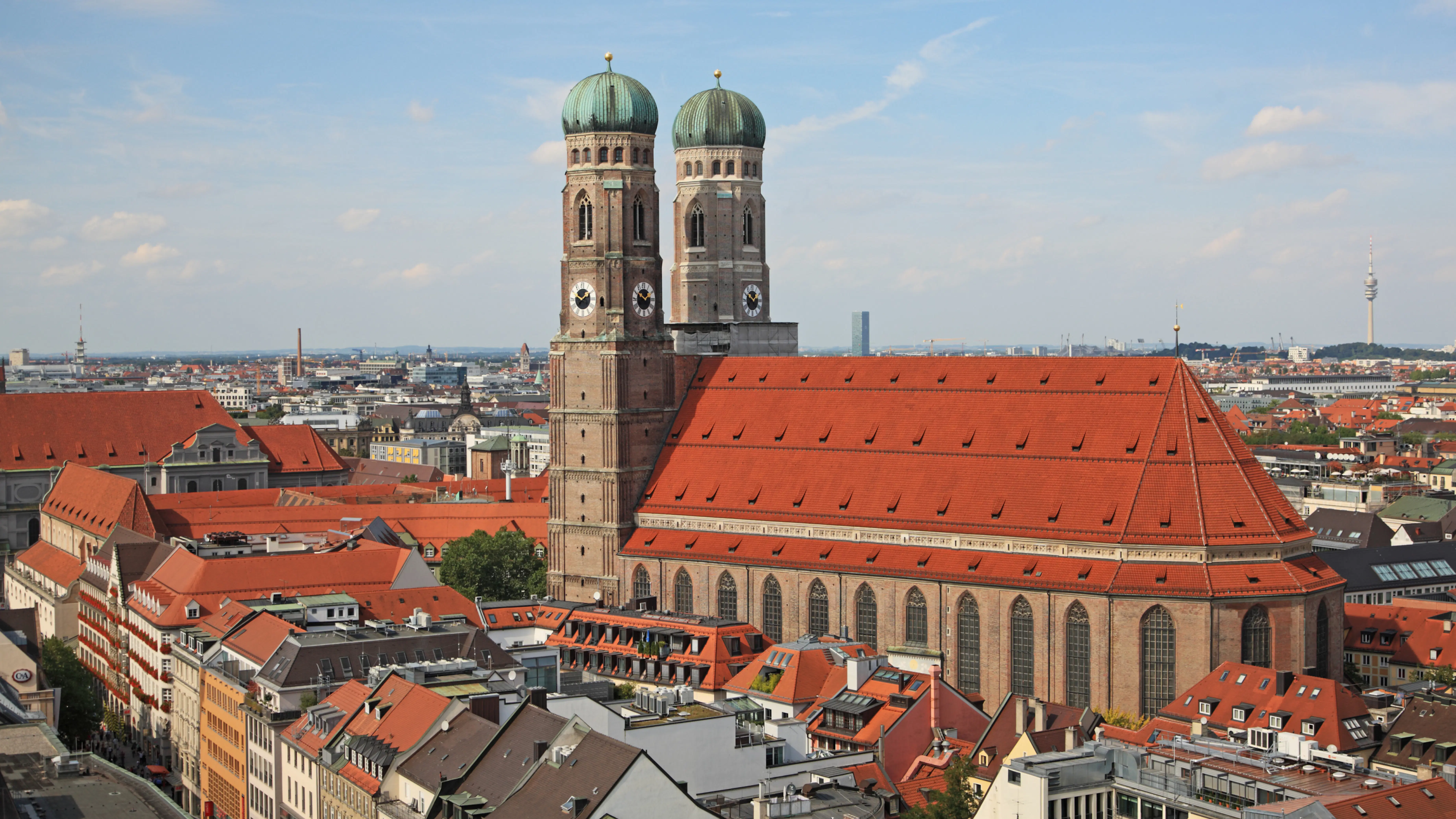
The onion-domed towers rise above the rooftops and can be framed from the open plaza near the Rathaus for a classic skyline shot. Standing back near the fountain gives enough distance to fit both towers in frame without tilting the camera. Clear autumn mornings offer the sharpest sky contrast.
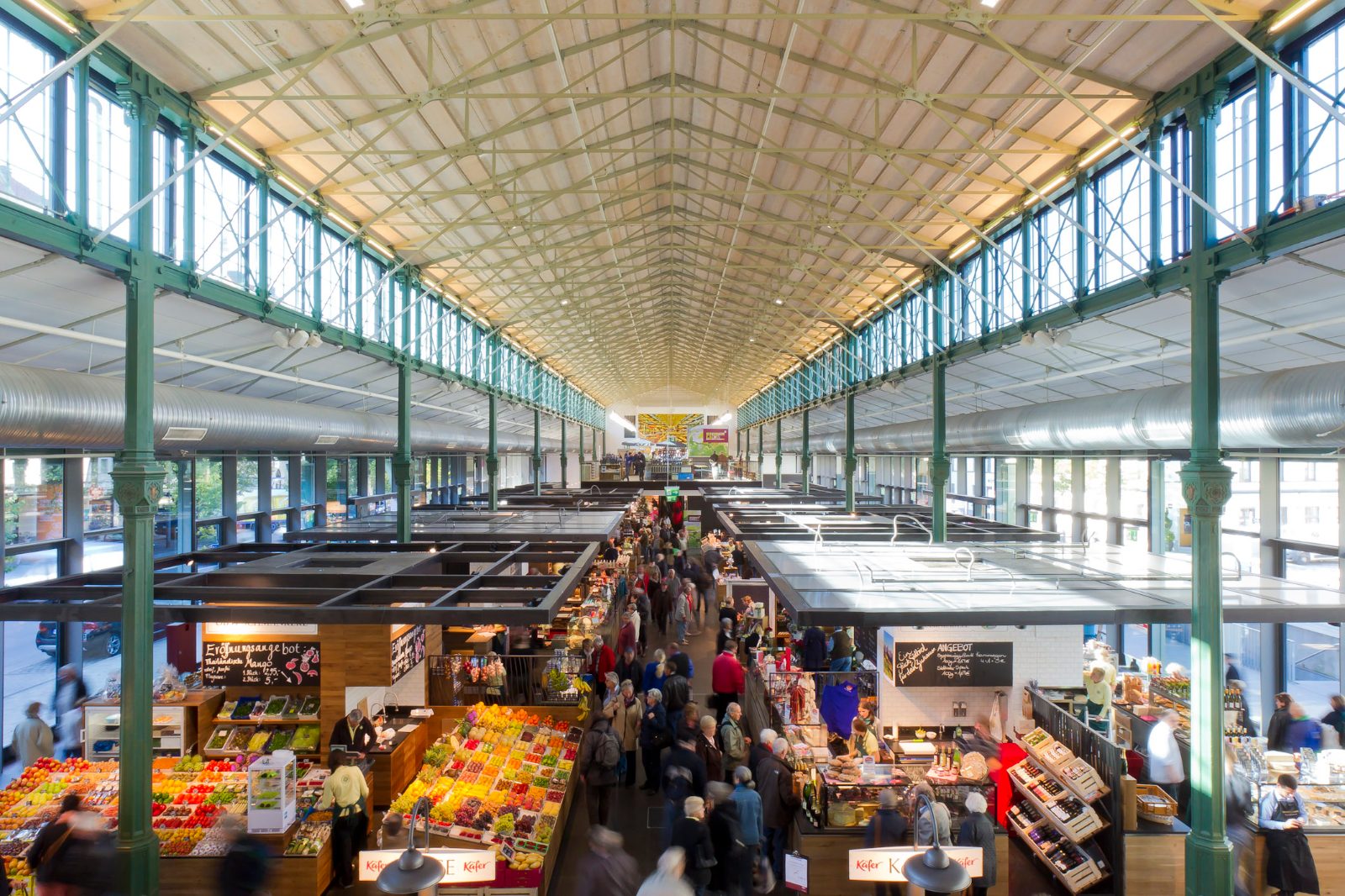
The narrow lanes between fruit, flower and deli stalls create a colorful corridor shot, especially where hanging produce and awnings frame the walkway. Shoot from the center of a lane looking down its length for depth, keeping close to opening time before foot traffic fills the aisle. This angle also captures the everyday texture of Munich's food scene, distinct from any staged brewery tasting stop.
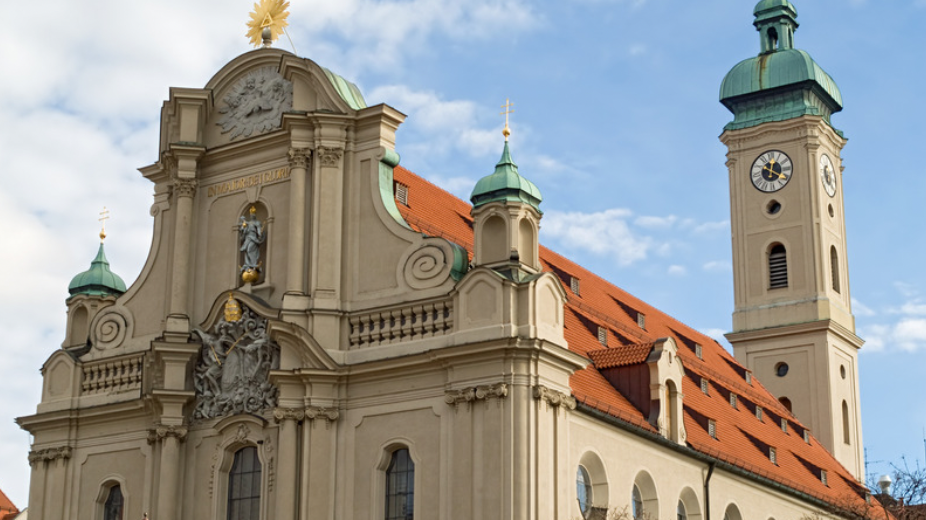
The baroque church facade rises directly behind the market's southeastern stalls, giving a layered shot of produce crates against ornate stonework. Stand near the market's edge closest to Frauenstraße to align the church tower with the stalls in the foreground. Soft light in the early window suits the stone detail.
A beer and food tour munich itinerary through Viktualienmarkt works well with kids since it's an open-air market rather than a formal venue, so families can wander at their own pace between stalls, though most guided brewery-tasting segments are designed for adults.
The market square has cobblestones and gravel paths between stalls, so a stroller with sturdy wheels works but expect some jostling; carriers are easier for toddlers who want a closer look at the food counters.
The market square itself is the food court: dozens of named stalls sell ready-to-eat snacks, so there is no need to bring your own, and a beer and food tour munich itinerary typically threads through here before continuing to nearby beer halls.
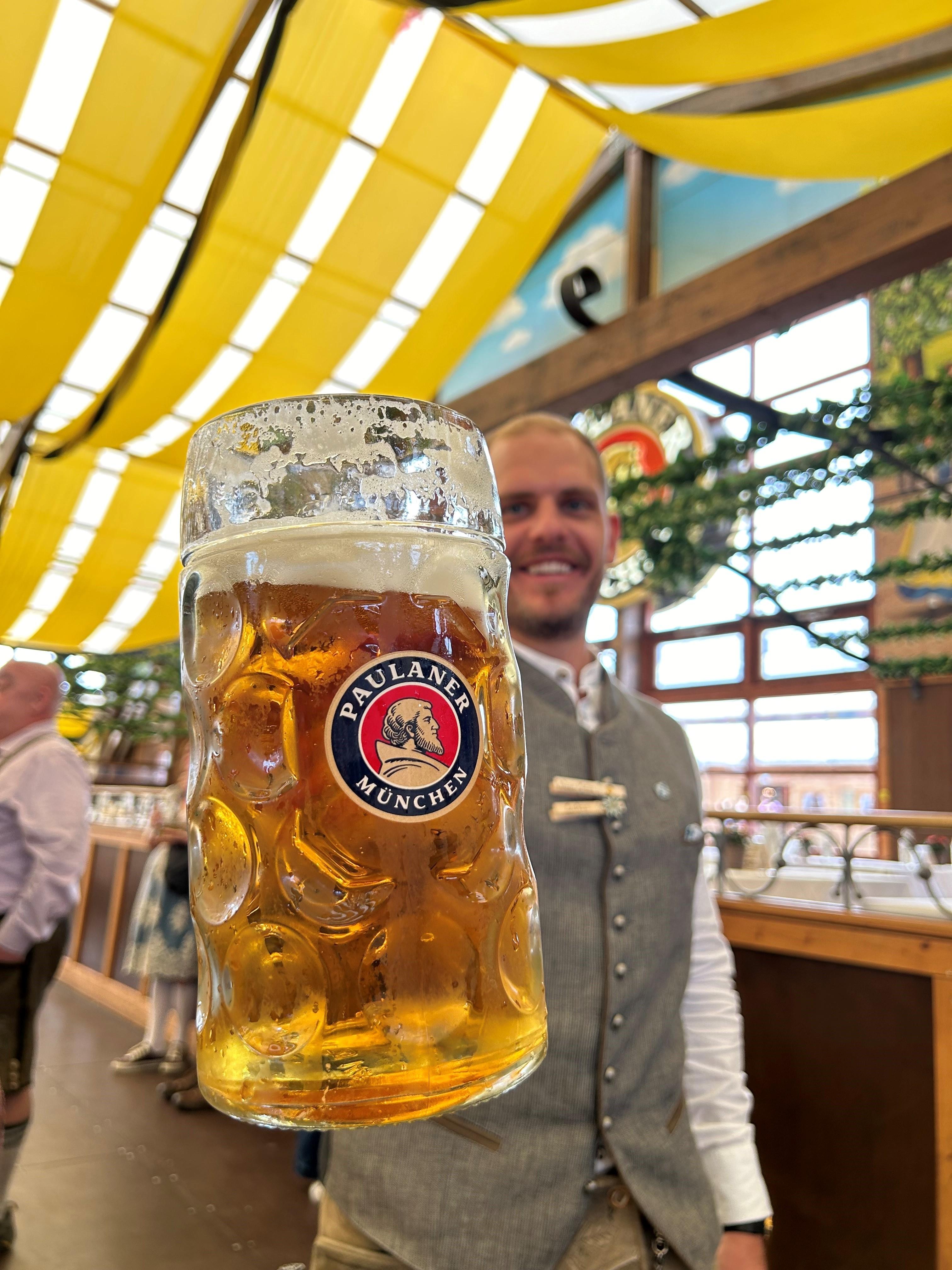
Communal tables under chestnut trees with a rotating tap from Munich's six major breweries. Order a half-liter and a pretzel from the self-service stand; fills up fast around midday, so an early stop suits a quick grazing break.
Grilled and fried fish sandwiches served from a stand near the market's south side. Popular with locals on lunch break, so expect a short queue; good for a fast, light bite between stalls.
Bavarian cheeses, cold cuts and prepared salads sold by weight, with small tasting portions available. Best visited earlier when selection is freshest; suits those assembling a picnic-style spread to eat at the market tables.
A small counter pouring Italian wines alongside cured meats and olives, tucked among the market's permanent stands. Quieter than the beer garden, making it a decent pause for a slower, seated snack.
The best-known beer hall in the city, serving liter steins and roast pork with dumplings in a large vaulted hall. Consistently crowded with visitors, especially evenings, so a midday visit is calmer.
A monastery-brewery tap room near Frauenkirche pouring Andechs beer with a full menu of schnitzel and roasts. Smaller and less touristy than the Hofbräuhaus, good for a sit-down meal after the market.
Everything you need to know for your journey
The general market hours are 08:00–20:00, Monday to Saturday, which guides most tour timing.
Booking beer and food tour munich tickets in advance is highly recommended to secure your spot during busy seasons.
The market is closed on Sundays, so most beer and food tour munich options operate Monday through Saturday.
Yes, children are welcome, though food and drink options for minors should be verified with the tour operator.
Bring comfortable shoes, cash for small purchases, and a water bottle for your beer and food tour munich.
Take the S-Bahn or U3/U6 to Marienplatz, then walk 200m to the market square for your beer and food tour munich.
While you can buy food at the market, your tour may have specific included tastings.
The market square is a public area with mostly flat paths, making it accessible for most visitors.
Most operators offer a 24-hour cancellation window for beer and food tour munich tickets; check your specific booking.
Historical heart of the city featuring the New Town Hall
Historic church located adjacent to the market
Historic hall currently housing Italian delicatessens
Iconic twin-domed cathedral of Munich
Centrally located hotels within easy reach of the market
Convenient hotels near public transport hubs
Join thousands of happy travelers who have discovered this incredible experience
Book Your Experience Now