2 hr 30 min
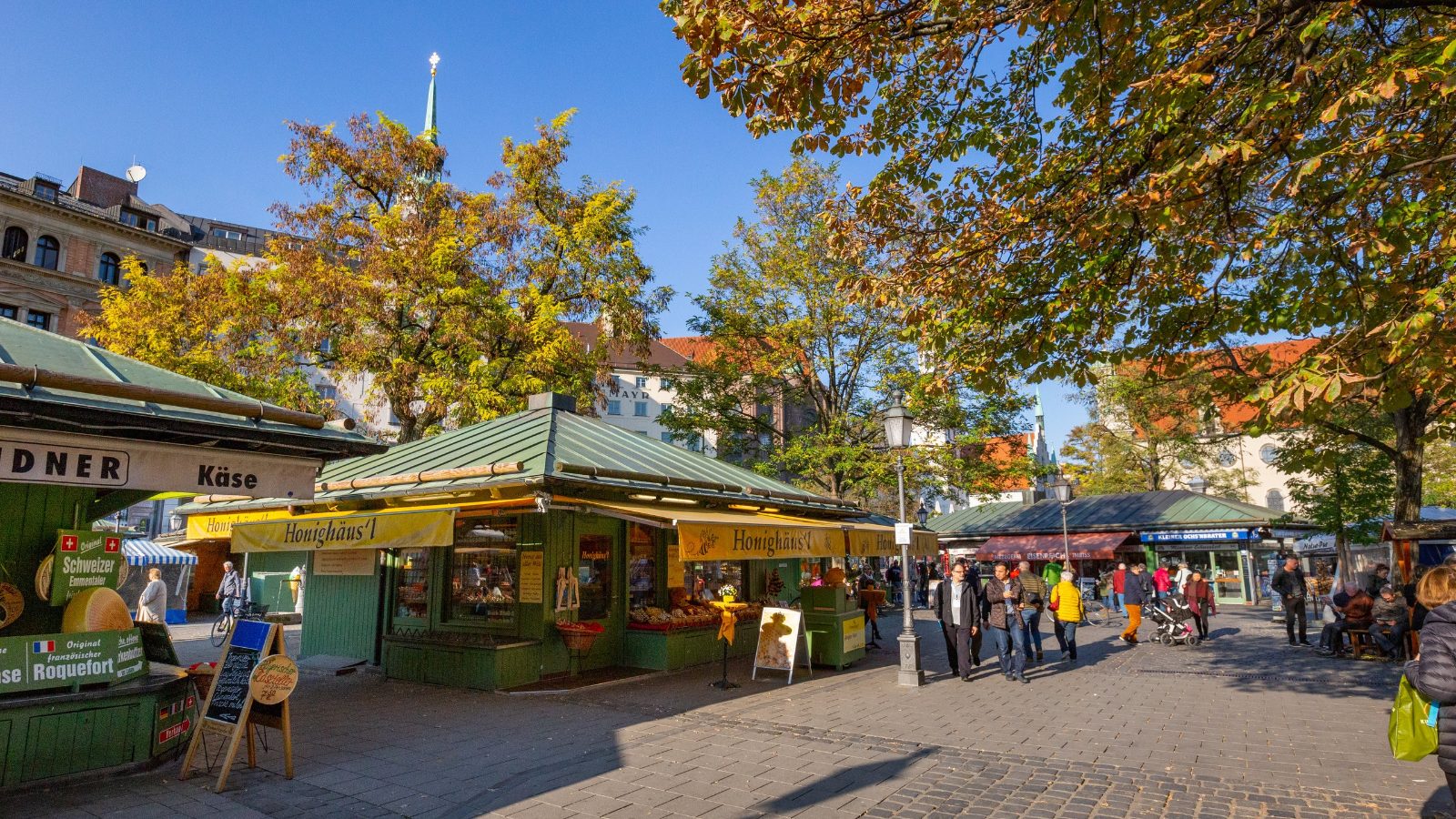
Viktualienmarkt Food Walking Tour
- Expert local guide
- Small group
- Skip-the-line access
- Free cancellation
Private Food Tour Munich — Curated Bavarian Tastings & Market Walks
Expert-led routes through historic stalls, ten-plus tastings at your pace
Compare fares, pick the fit — all bookings are mobile-voucher and eligible for free cancellation where shown.
2 hr 30 min
3 hr 30 min
3 hr 30 min
| Experience | Duration | Rating | Pickup | Guide | Small group | Free cancel. | Price | |
|---|---|---|---|---|---|---|---|---|
|
Guided Experience
Most popular
Viktualienmarkt Food Walking Tour
|
2 hr 30 min | ★ 4.5 | ✓ | ✓ | ✓ | ✓ | €43 | Book → |
|
Standard Entry
Munich Beer & Food Evening Tour with Oktoberfest Museum
|
3 hr 30 min | ★ 4.7 | — | ✓ | ✓ | ✓ | €72 | Book → |
|
Premium Combo
Bavarian Food Walk with Beer & 10+ Tastings
|
3 hr 30 min | ★ 4.8 | — | ✓ | ✓ | ✓ | €100 | Book → |
Worth it for food-focused travelers seeking insider access
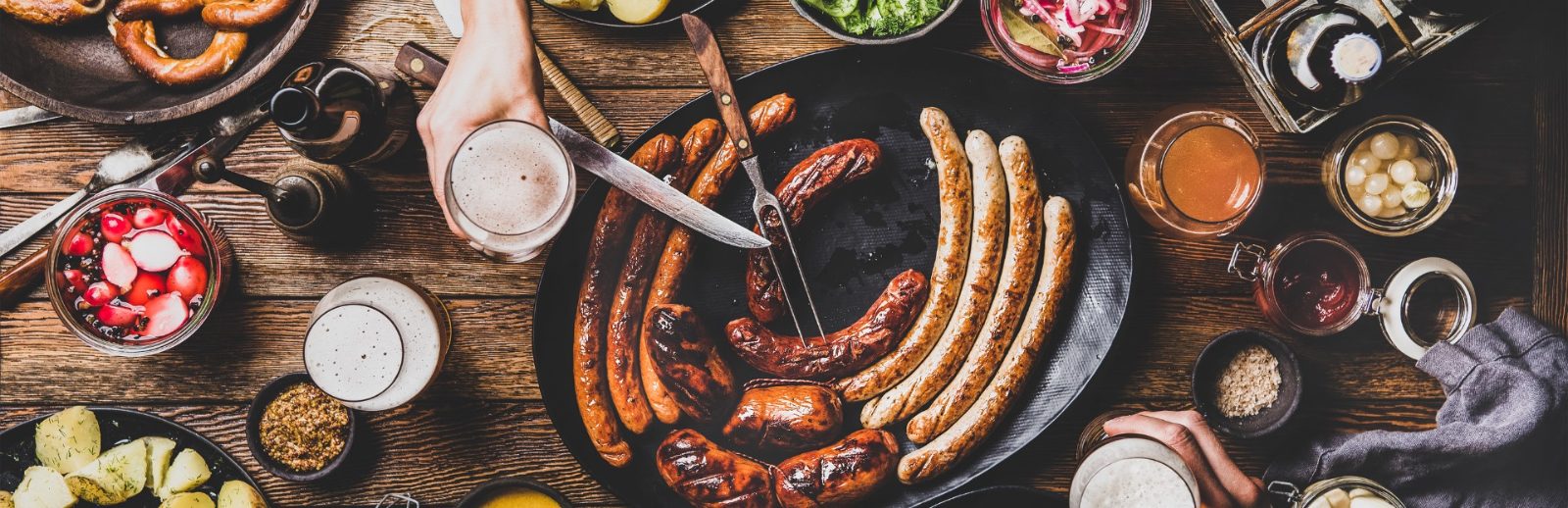
A private food tour munich delivers concentrated value if you want to navigate Viktualienmarkt and Munich's beer halls with expert curation. Tours typically run €75–120 per person for 3–4 hours, covering 8–10+ tastings—Weisswurst, pretzels, artisan cheeses, local sausages, and traditional Bavarian beer pairings. The Bavarian Food Walk includes access to vendor stories and hidden stalls that solo visitors miss, while evening tours pair brewery visits with the Oktoberfest Museum. You're paying for efficiency: a guide condenses what would take multiple research hours into a single walk, avoids tourist traps at Viktualienmarkt, and explains Munich culinary traditions in real time. Private food tour munich tours justify the cost for first-timers short on time or travelers who prioritize tasting quality over independent exploration. If you're comfortable navigating markets solo and researching beer halls independently, the free-entry Viktualienmarkt (open Monday–Saturday 08:00–20:00) offers the same ingredients without the premium.
Bottom line: Private food tour munich tickets pay off when curated access and cultural context matter more than the cost of solo exploration.
They complement each other, but most visitors who do both call the guided experience the more insightful method for discovering the Munich culinary scene. Choosing a private food tour munich provides a structured narrative, whereas self-guided exploration offers total spontaneity.
|
Top pick Private Tour |
Self-Guided | |
|---|---|---|
| Content depth | Curated historical and cultural storytelling | Superficial browsing of stalls |
| Cost | Paid service per person | 0 EUR (Free entry to market area) |
| Flexibility | Fixed schedule and route | Complete freedom to wander at will |
| Learning opportunities | Expert-led cultural education | Minimal and incidental observation |
| Local insights | Access to hidden vendors and traditions | Limited to visual market experience |
| Social interaction | Engaged dialogue with guide | Primarily independent with transient vendor contact |
| See tickets & prices |
Verdict: If you prioritize deep context and narrative, secure your private food tour munich tickets, but choose self-guided access if you prefer an unscripted pace.
Hand-picked experiences loved by thousands of travelers
3 hours
Free Cancellation
Taste your way through Munich's culinary traditions with white sausage, meatloaf sandwiches, and beer
3 hours 30 minutes
Free Cancellation
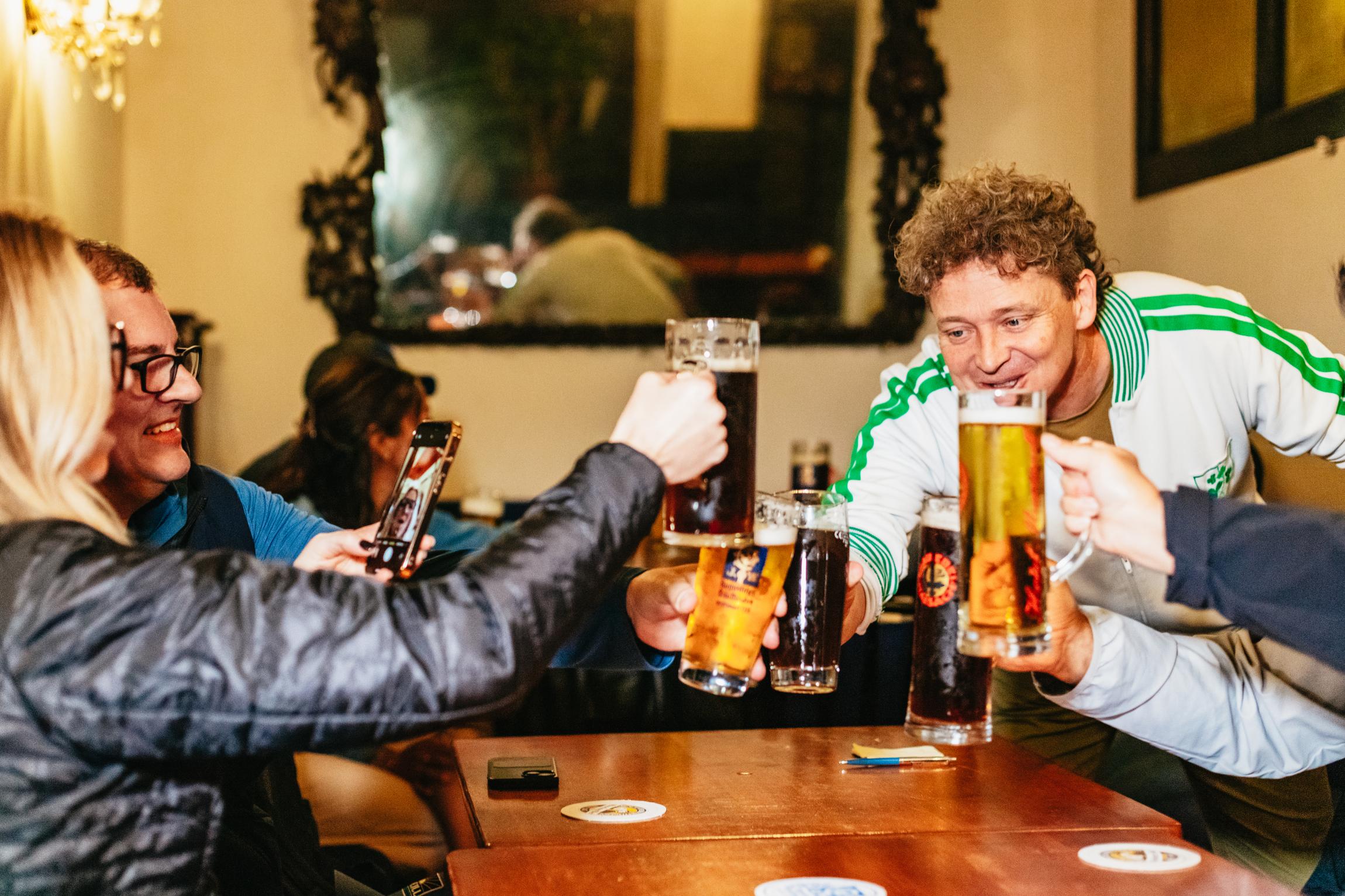
Discover Bavaria's brewing heritage through historic taverns and working breweries in the beer capital
3 hours 30 minutes
Free Cancellation
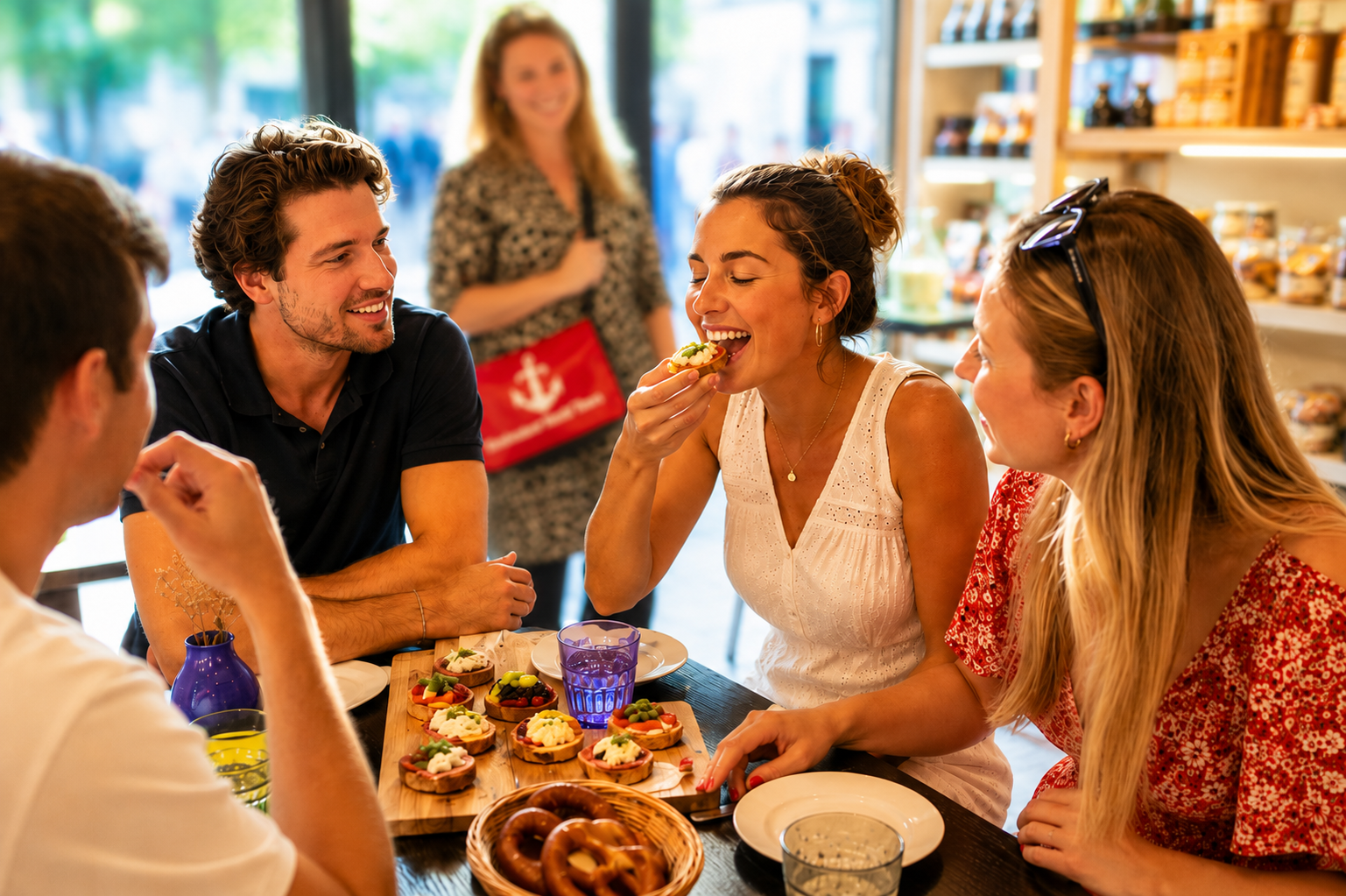
Taste your way through Munich's culinary heritage on a guided walking tour with local specialties and drinks
3 hours
Free Cancellation
Discover Bavarian cuisine through five authentic tastings while exploring historic landmarks and local tales
3 hours
Free Cancellation
Three-hour culinary journey through Munich's historic Haidhausen neighborhood with tastings
2 hours 30 minutes
Free Cancellation
Intimate culinary adventure combining historic landmarks, local brews, and authentic Bavarian treats
3 hours 30 minutes
Free Cancellation
Explore Munich's historic market with 20+ tastings of Bavarian specialties and local delicacies
2 hours
Free Cancellation
Discover Munich's first certified organic urban brewery with guided tastings and authentic local cuisine
Enter via Marienplatz side and orient near the central Maypole (Maibaum)
Walk the main aisles past fruit, cheese, and spice vendors
Guided or self-directed stops at bakery, sausage, and cheese stands
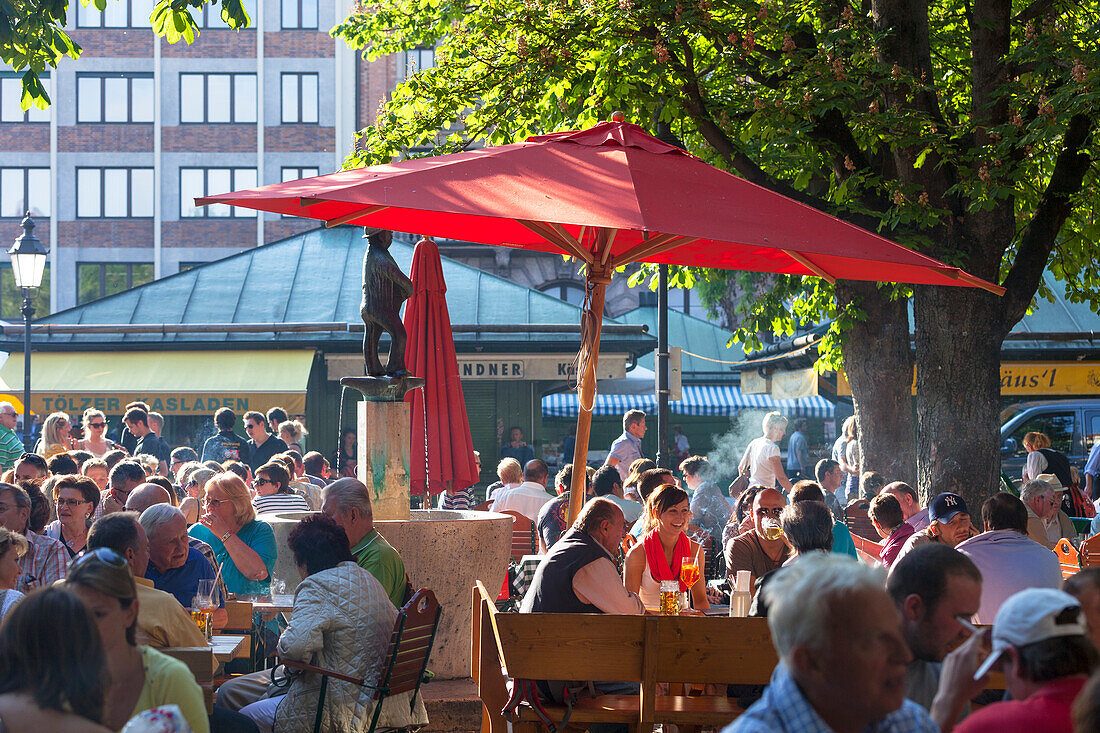
Sit under the chestnut trees with a Bavarian snack or drink
Wander adjoining lanes toward Peterskirche and Marienplatz
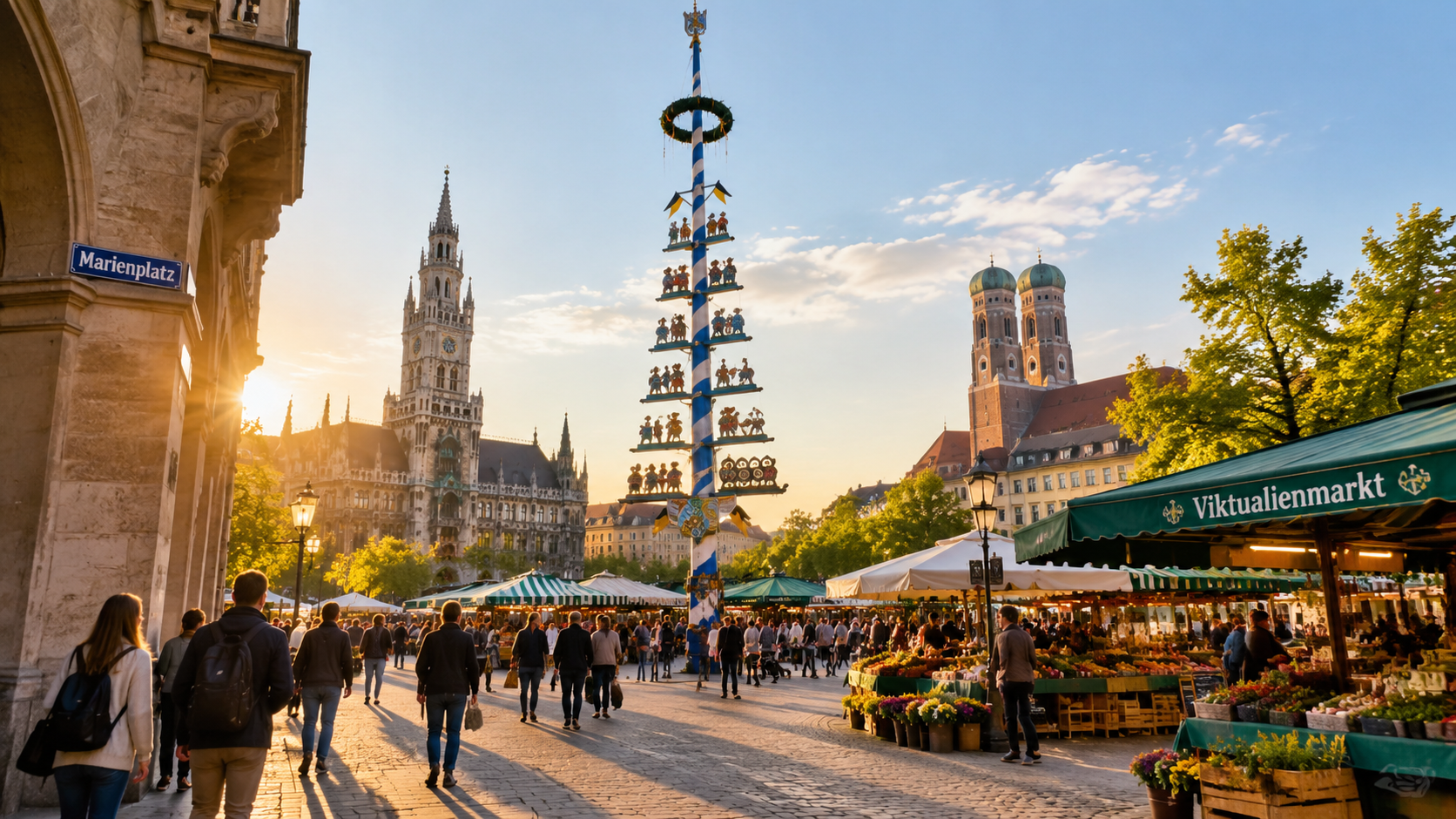
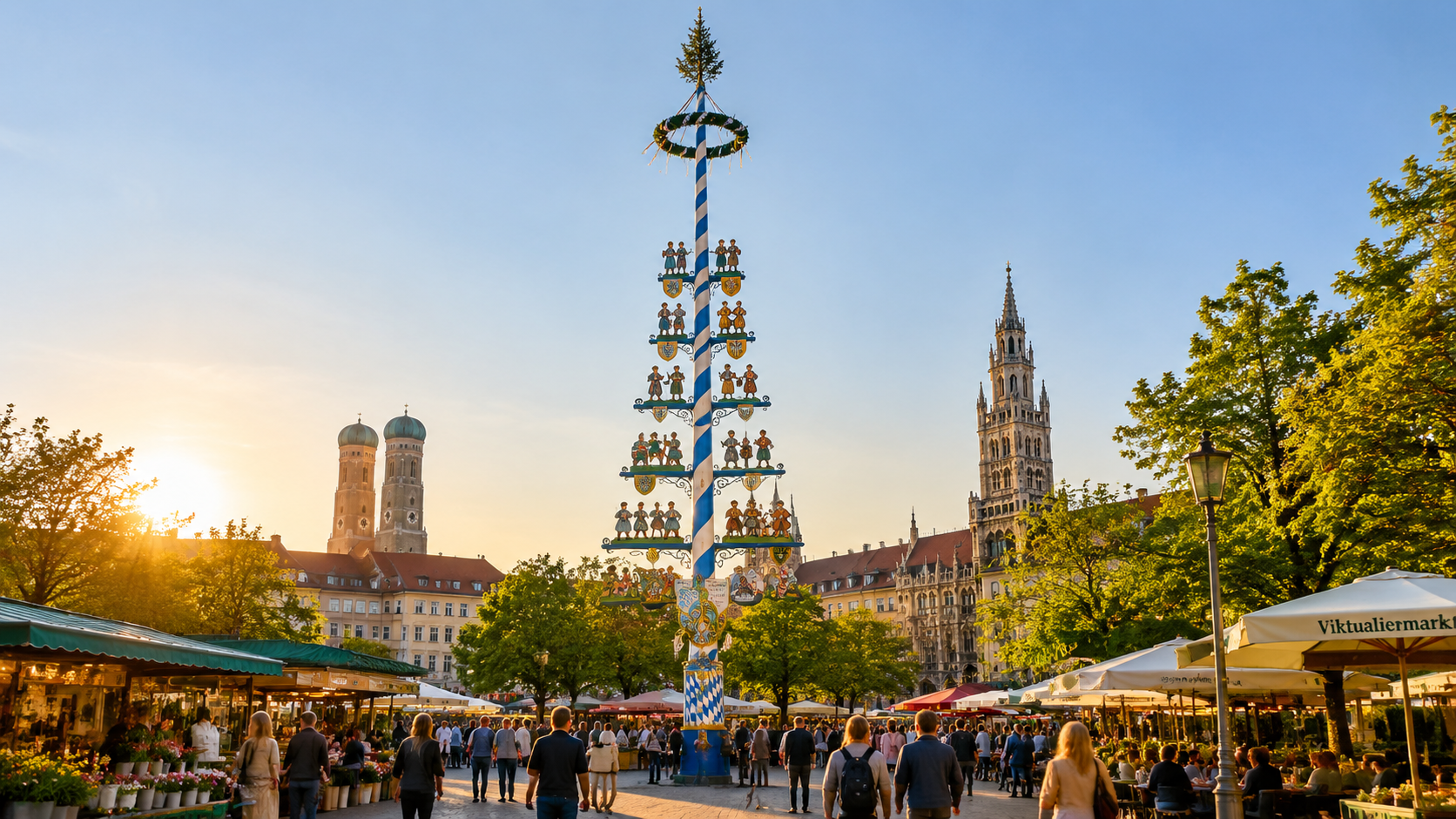
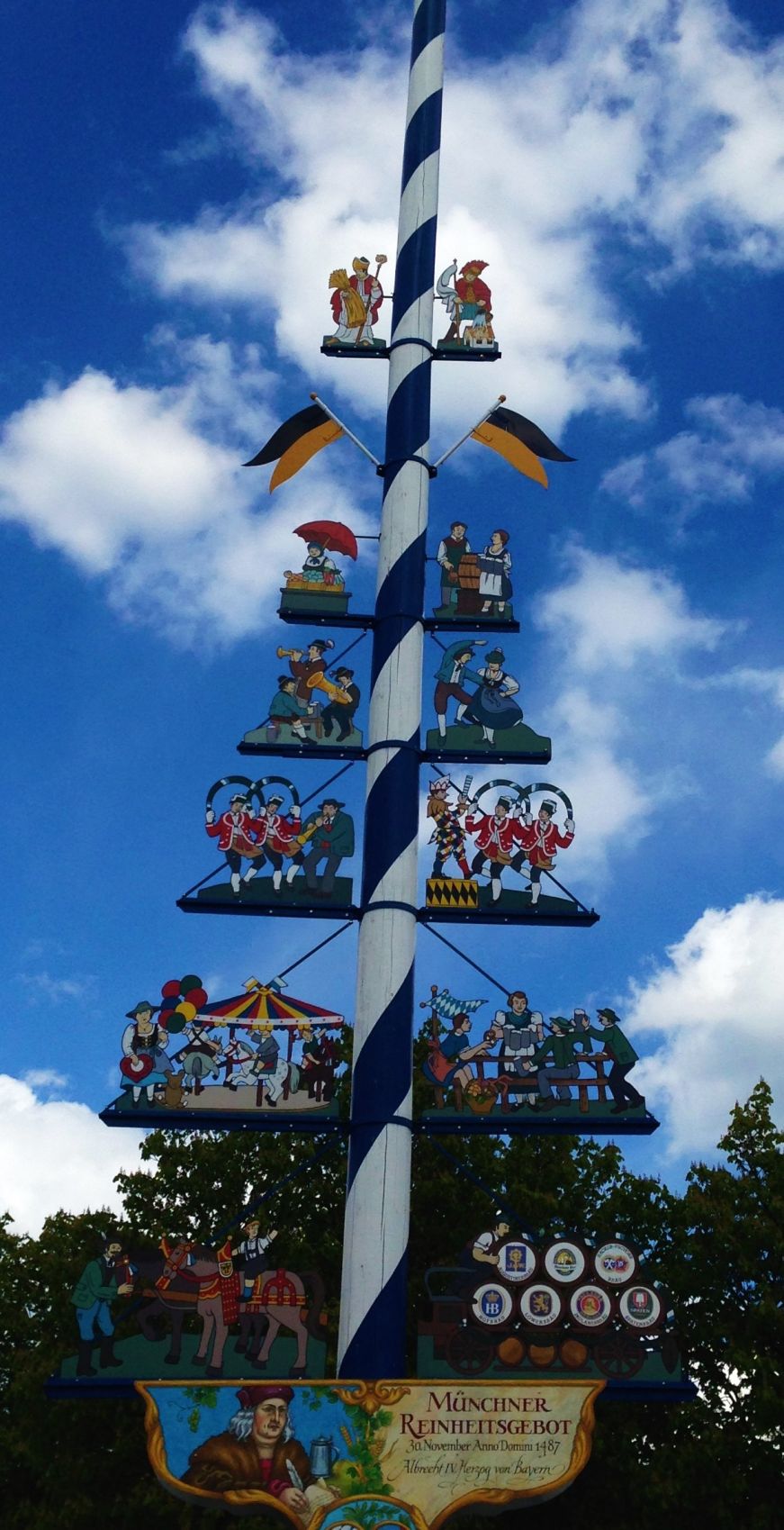
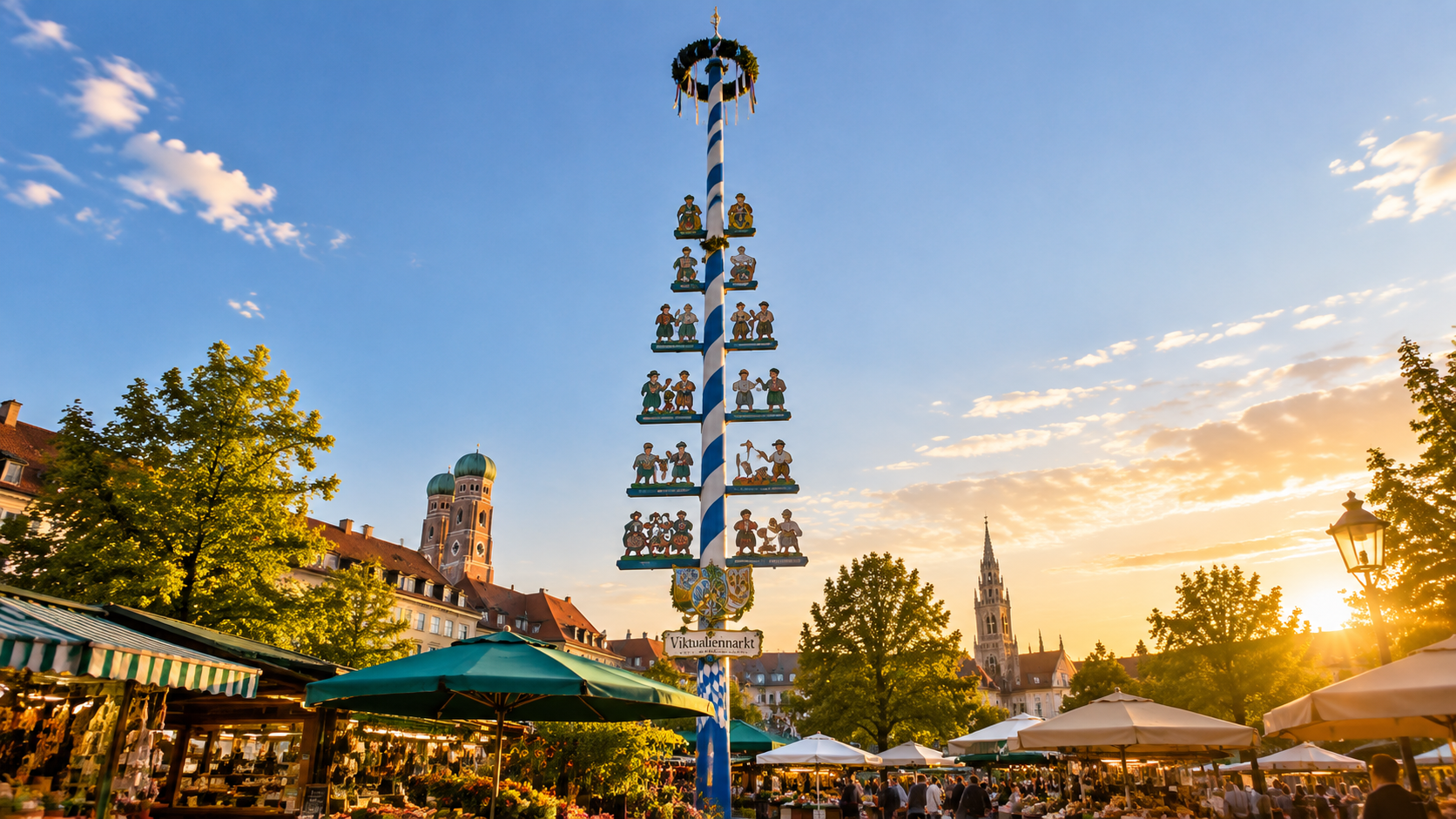
A brightly painted 29-meter maypole stands at the heart of the market, repainted and adorned with guild emblems representing Munich trades. It serves as the traditional meeting point and centerpiece of the square's layout.
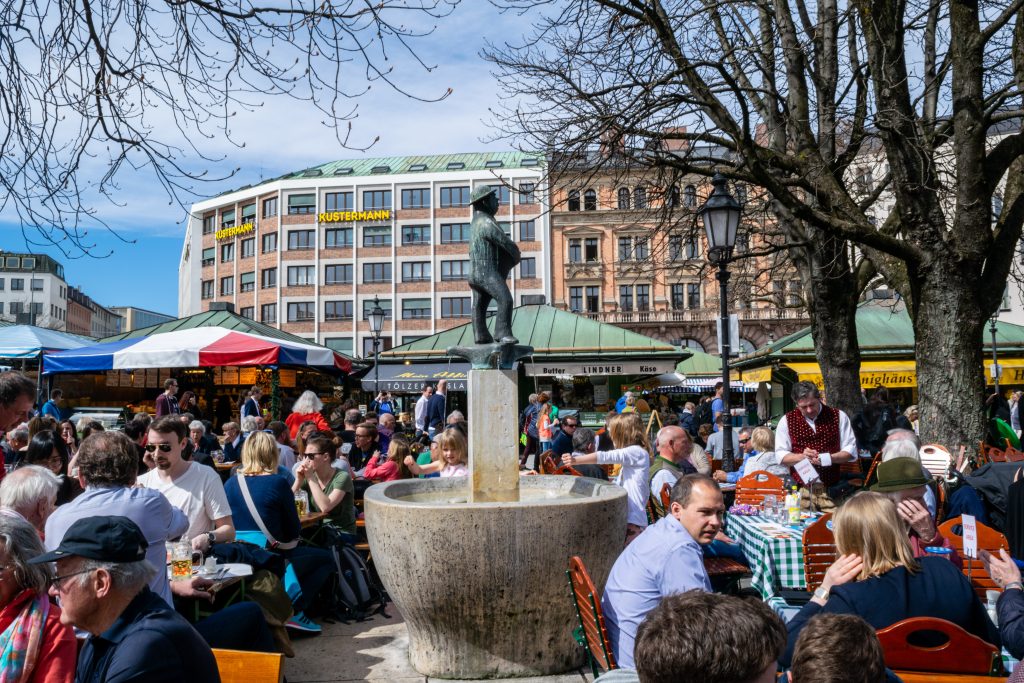
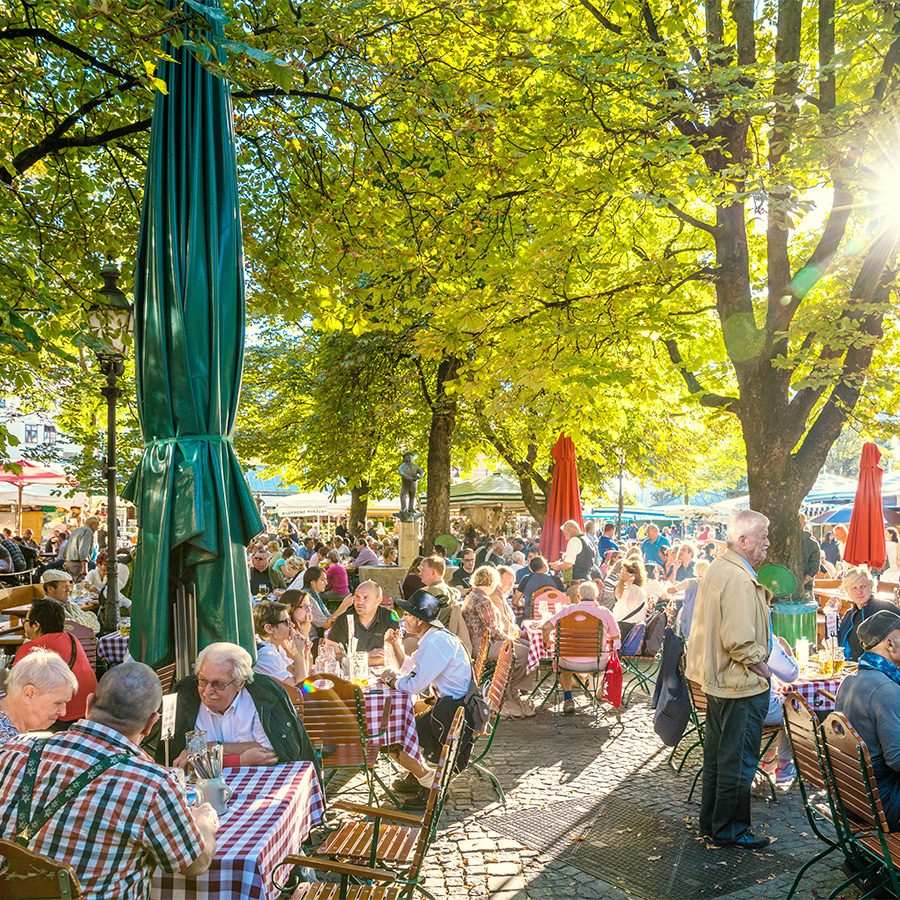
A shaded communal seating area beneath old chestnut trees hosts one of Munich's most popular informal beer gardens, seating several hundred visitors on busy afternoons. It rotates seasonal beers from Munich's major breweries throughout the year.
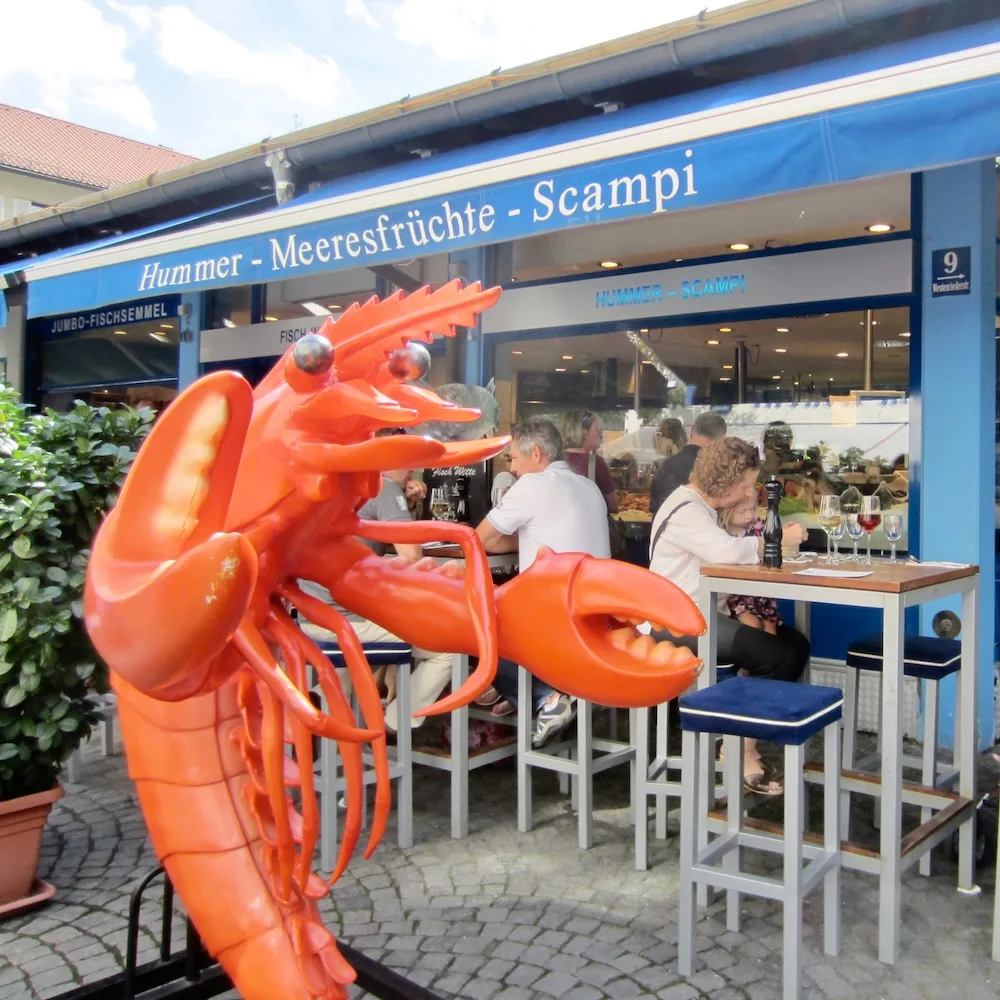
A dedicated section of stalls specializes in fresh and smoked fish, including Bavarian lake fish and North Sea imports, some family-run for multiple generations. Several stands prepare fish sandwiches to eat standing at the counter.
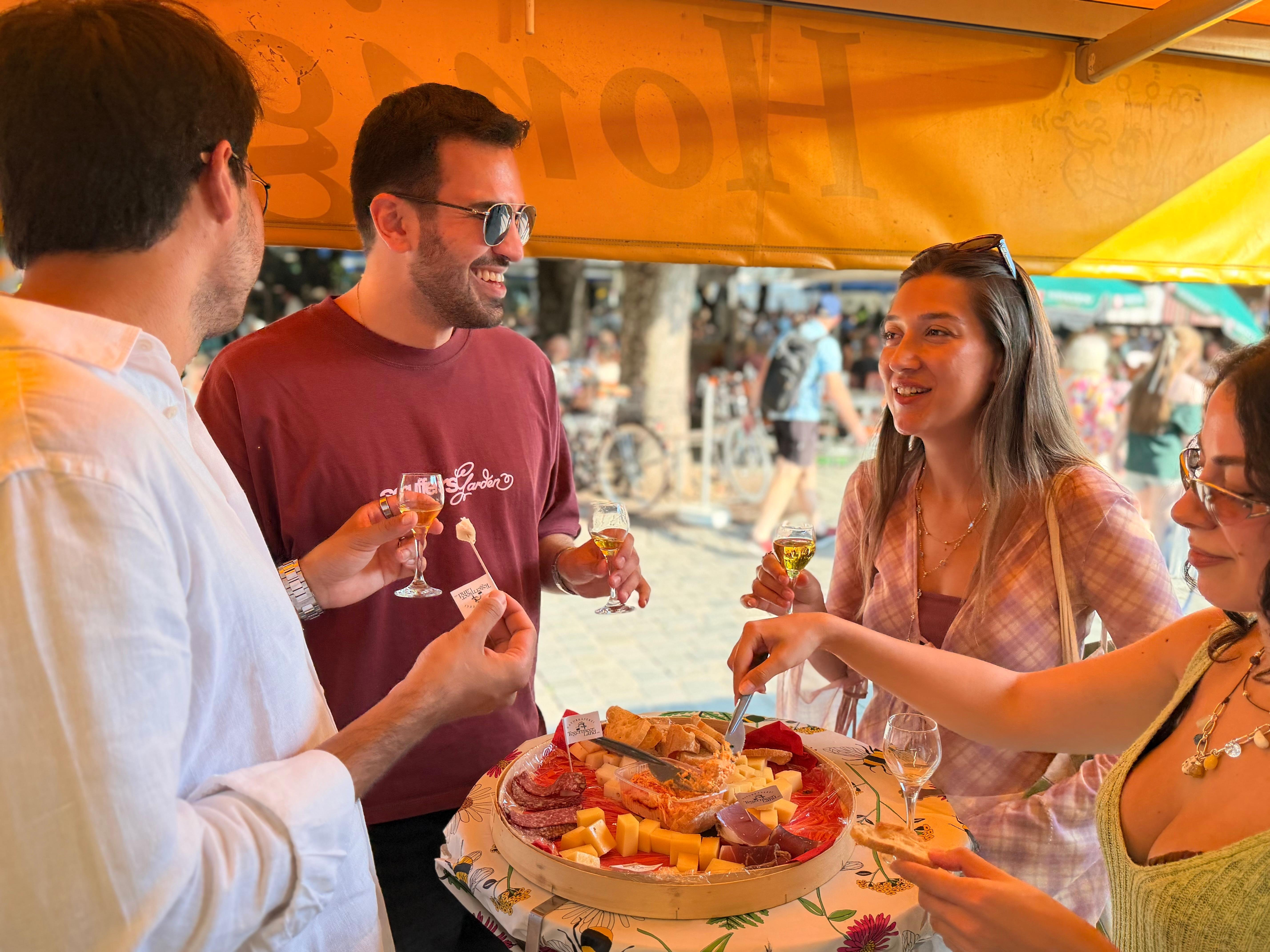
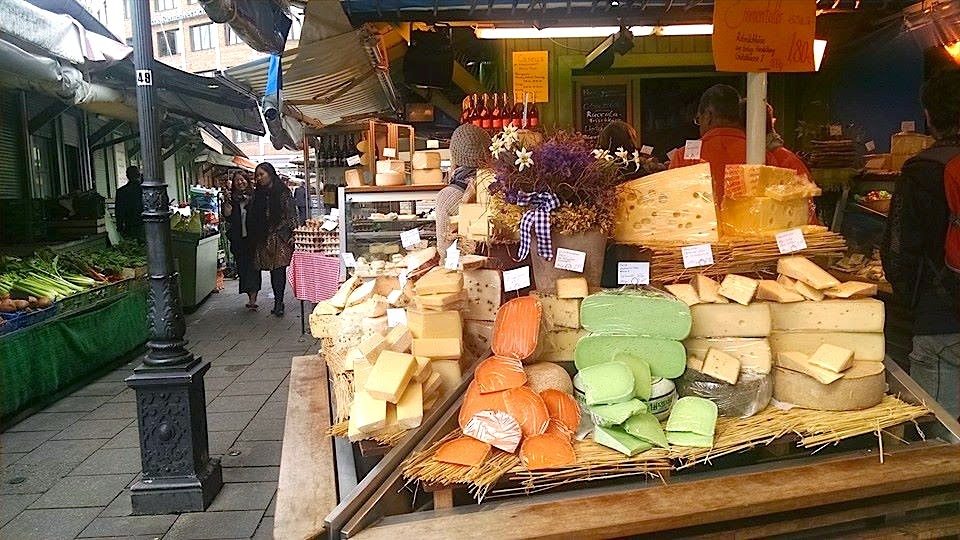
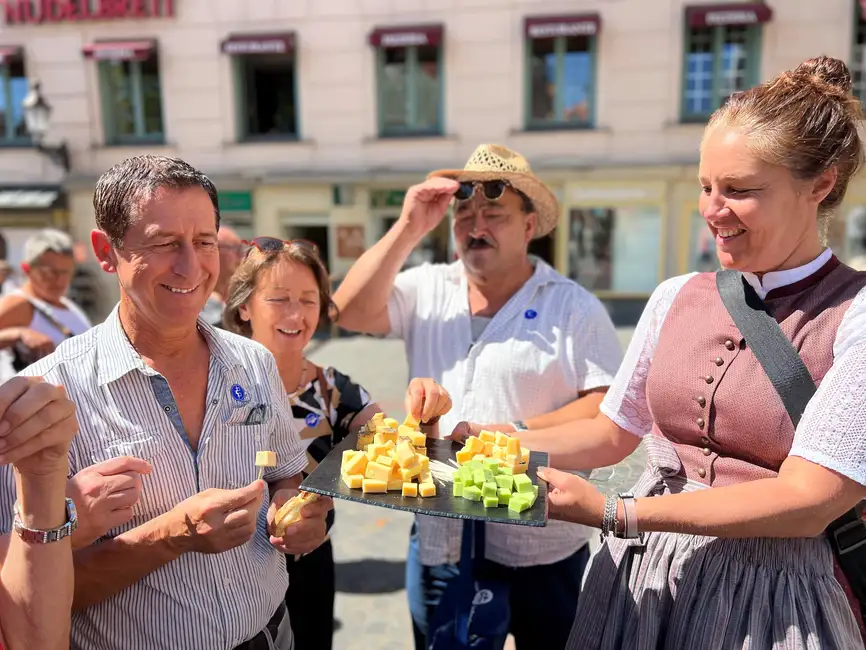
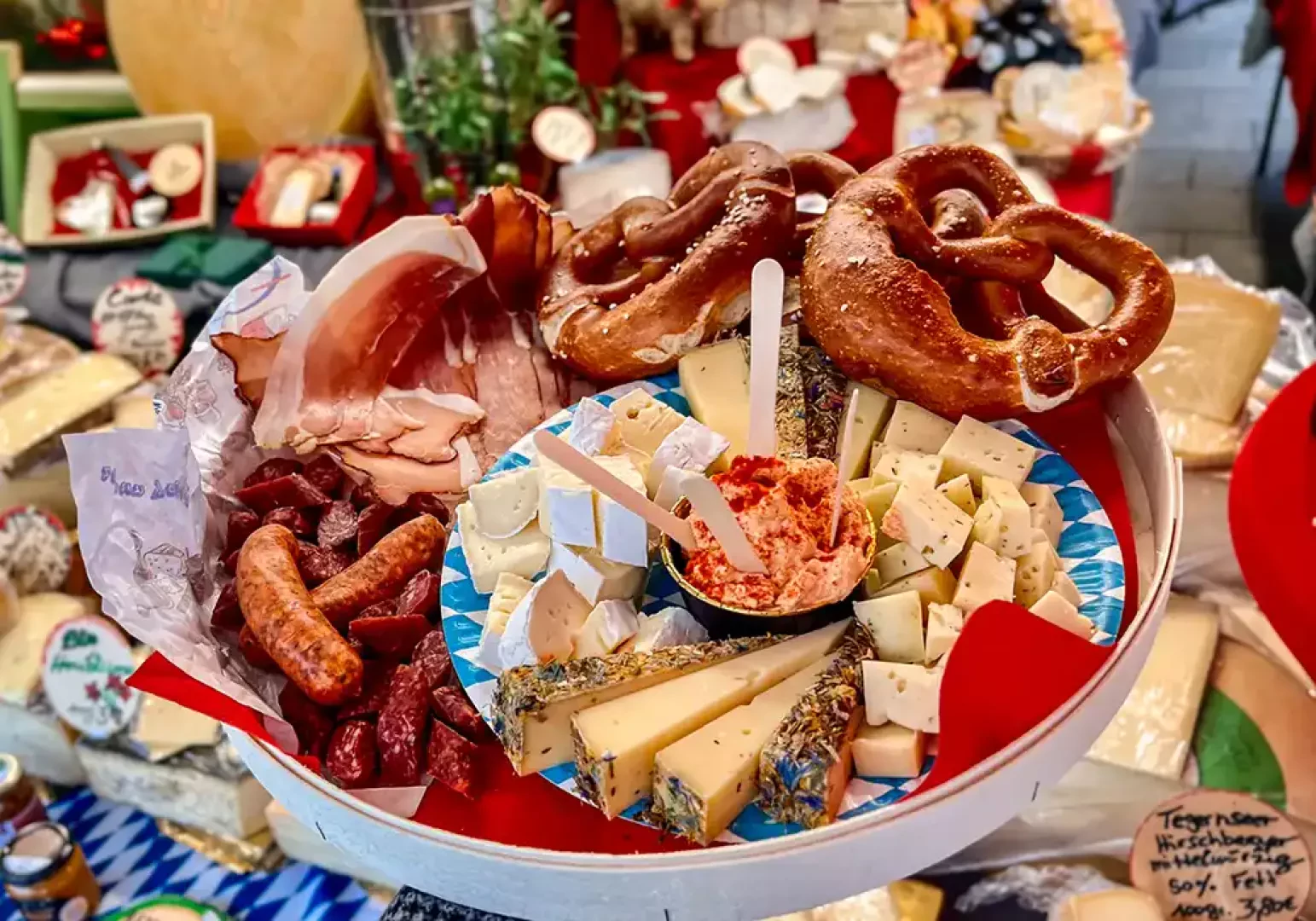
Multiple specialty vendors sell Bavarian and Alpine cheeses alongside butter and fresh dairy, with some stalls tracing their business back over a century. Tasting samples are occasionally offered before purchase.
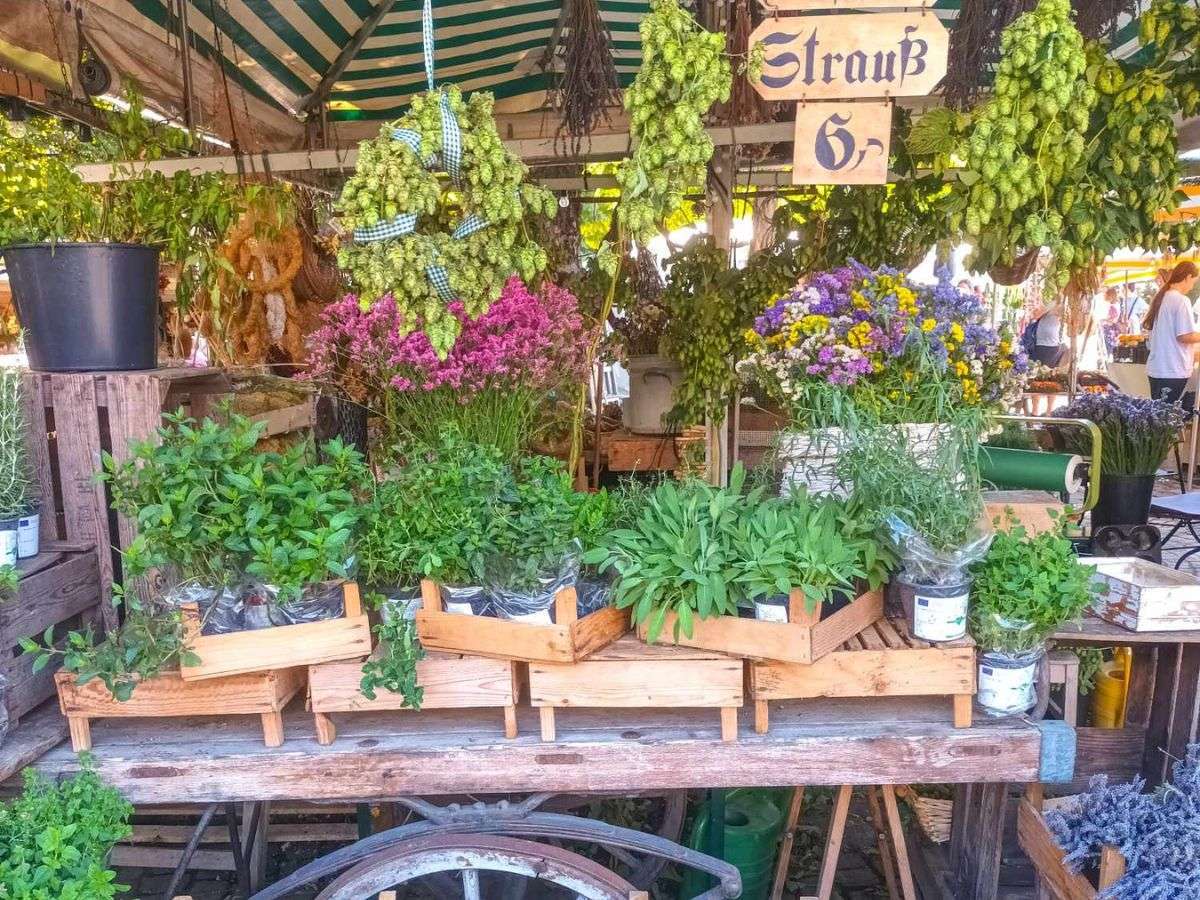
A colorful cluster of flower stalls borders the food section, selling seasonal Bavarian blooms and potted plants year-round. It marks one of the market's original 19th-century trading functions alongside food.
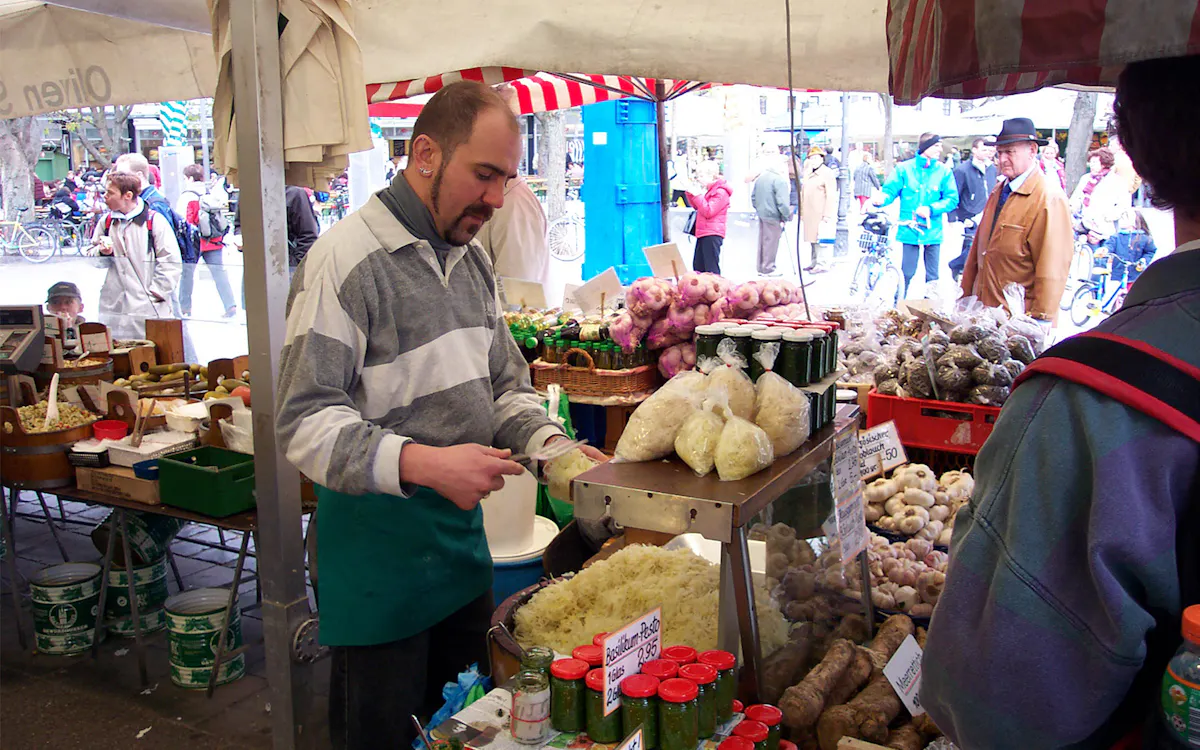
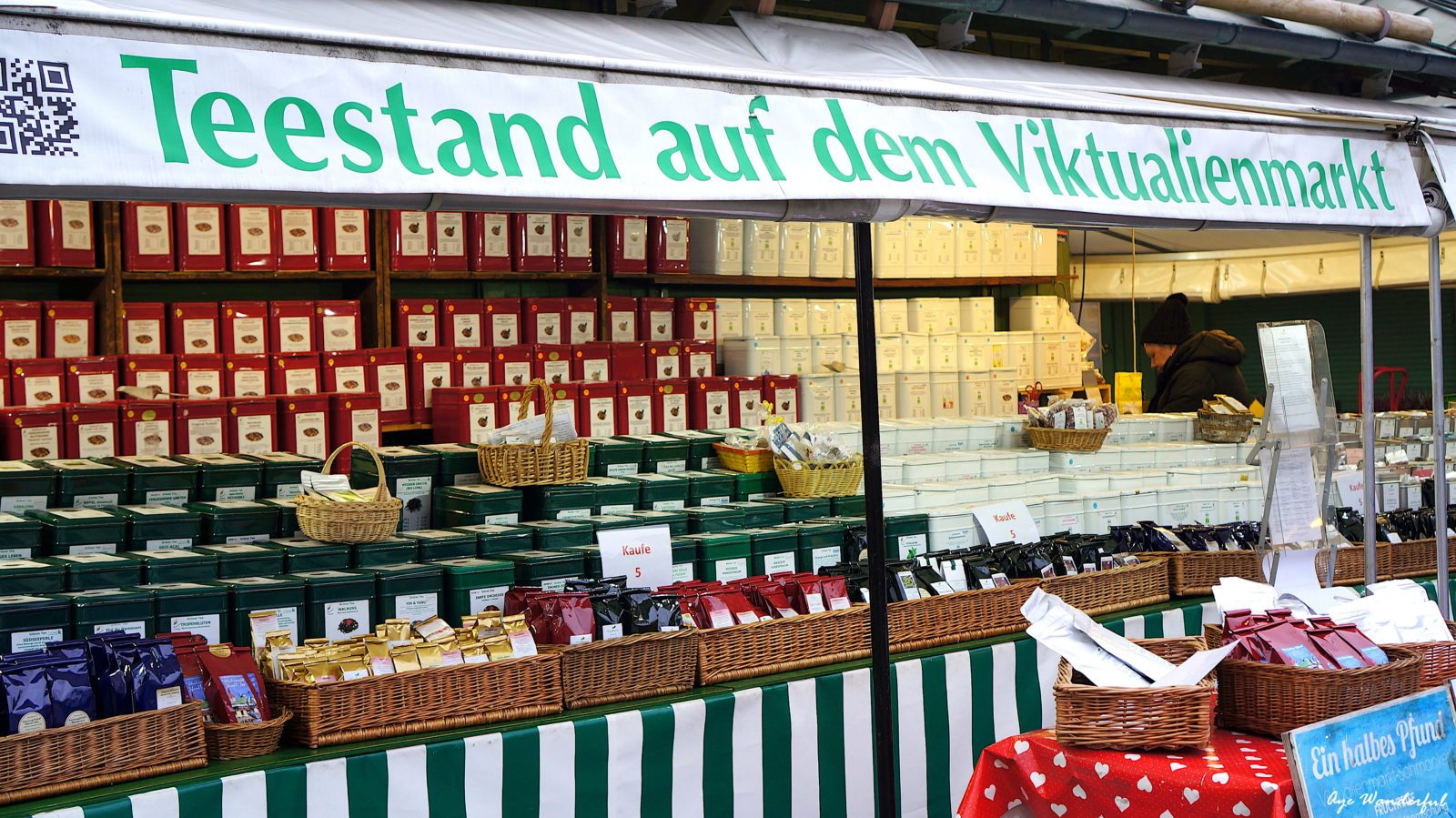
Stalls stacked with dried spices, teas, nuts, and preserved goods offer a dense sensory contrast to the fresh produce sections nearby. Many vendors source specialty spice blends unique to Bavarian cooking traditions.
You arrive at Viktualienmarkt's northwest gate at 9:15, when the cobblestones are still damp from morning hosing and the flower vendors are arranging dahlias in zinc buckets.
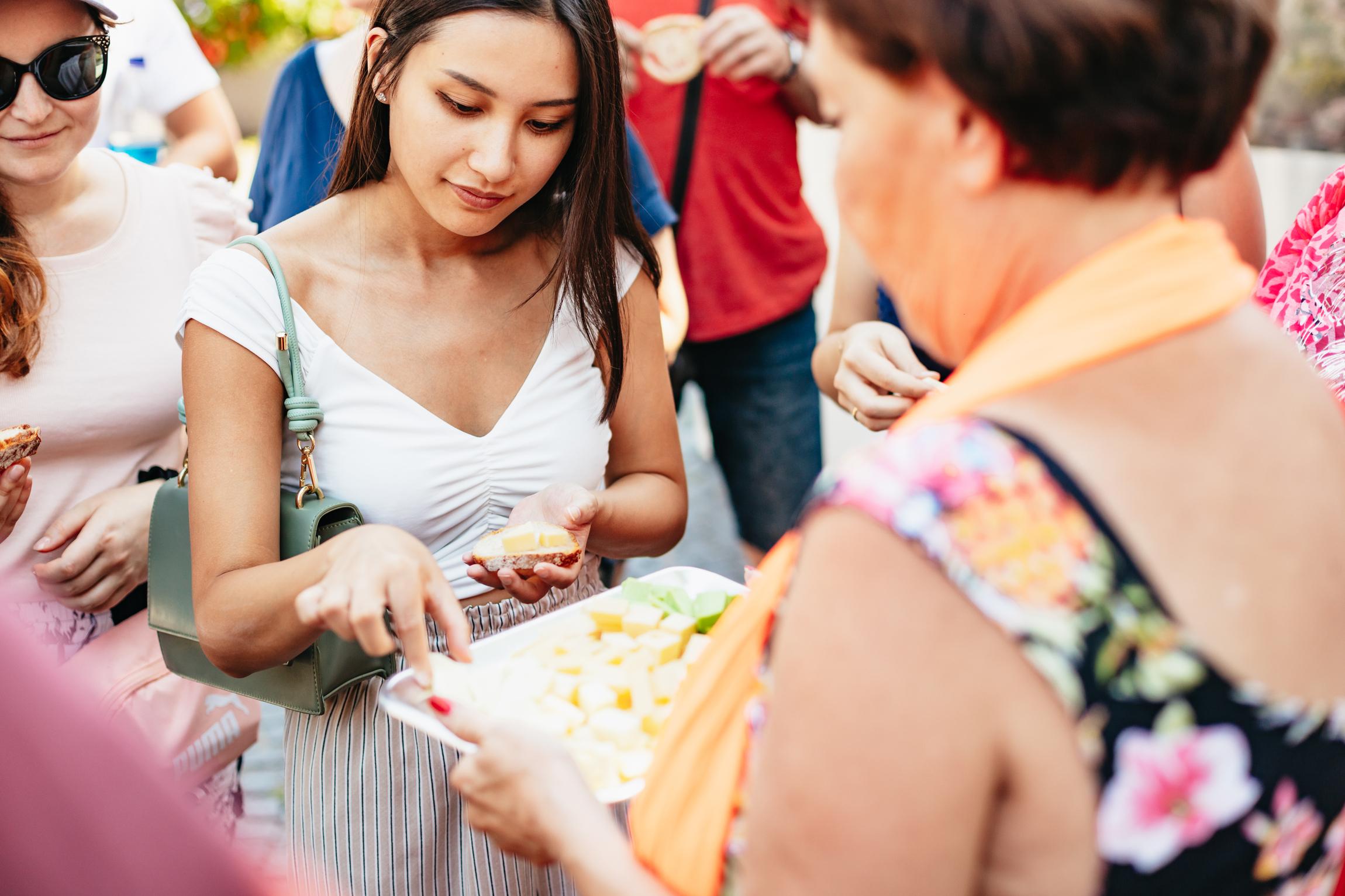
Your guide greets you near the Schrannenhalle archway, holding a woven basket for samples, and walks you past the first three cheese stalls to a corner stand where the owner slices six varieties of alpine cheese onto a wooden board — you taste each in sequence, from mild Allgäu Emmentaler to eighteen-month Bergkäse with crystalline salt veins. At the butcher three stalls over, you receive a palm-sized Leberkäse wedge, still warm, paired with sweet mustard and a pretzel the size of your forearm.
You pause at the Radieschen stand, where the vendor spirals a white radish into paper-thin ribbons using a hand-crank machine, salts the pile, and hands it to you with a slice of dark bread and butter. You drink Augustiner Helles from a glass mug at the biergarten's standing tables, beneath the chestnut canopy, while your guide explains the monthly brewery rotation and points out Karl Valentin's fountain. You finish at the honey stall, tasting acacia, chestnut, and forest varieties spooned directly from ceramic crocks, then walk south past the herb vendors toward Sendlinger Tor, your basket holding three types of sausage, a wedge of cheese, and a jar of mountain honey you bought for 12 euros.
All the details about your upcoming adventure in one place
Munich's Viktualienmarkt has operated continuously since 1807, when King Maximilian I relocated the city's crowded Saturday market from Marienplatz to a patch of former monastery land south of Frauenkirche.
The 22,000-square-metre market grid now holds 140 permanent stalls, each specializing in a narrow vertical — alpine cheese from Allgäu dairies, cured meats from Franconian smokeries, radishes harvested that morning in Dachau's black soil. A private food tour Munich operators curate typically covers eight to twelve vendors in two hours, with the guide negotiating sample plates in Bavarian dialect and explaining why Obatzda cheese spread requires room-temperature Camembert and why Weisswurst sausage must be consumed before noon.
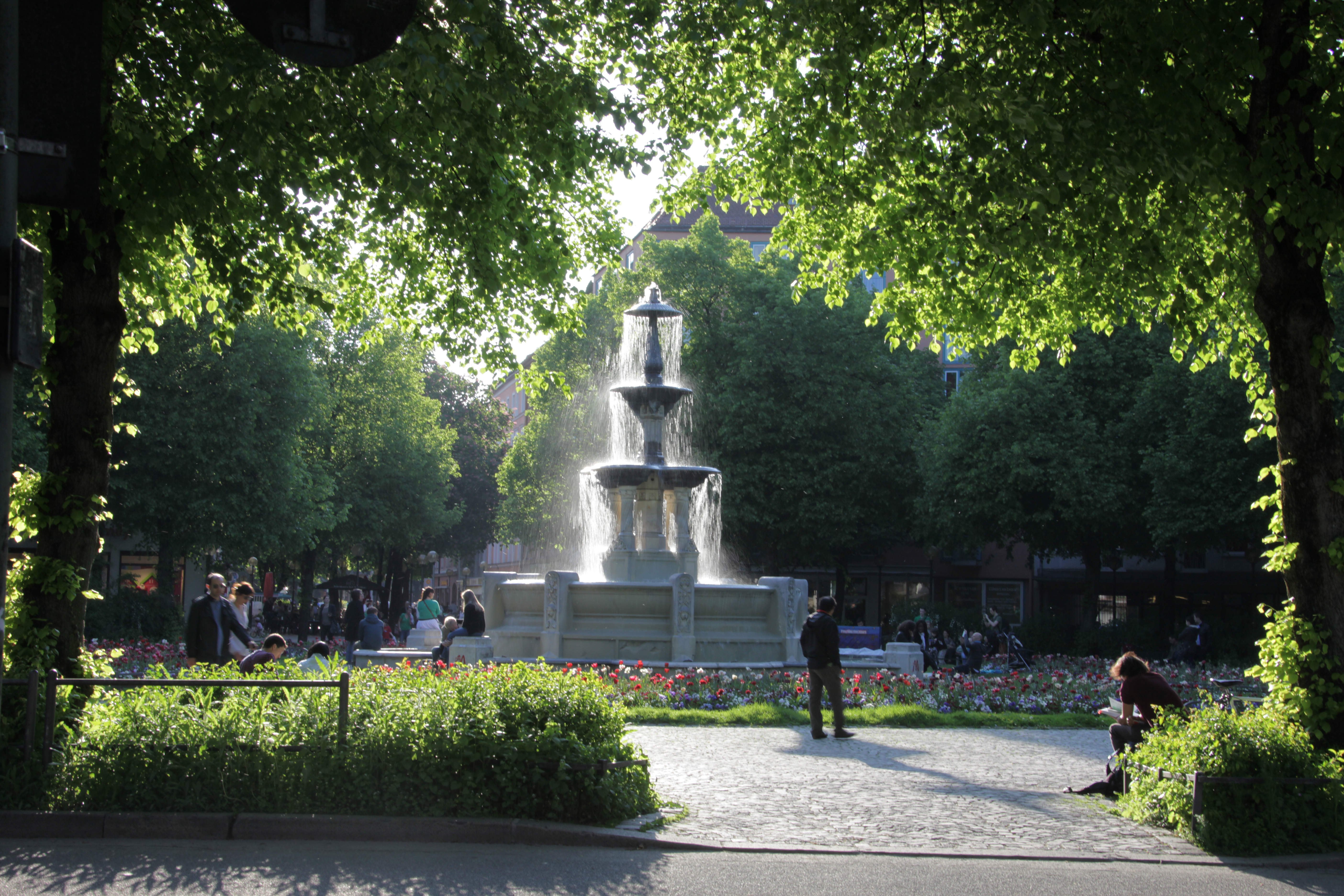
The market's biergarten, shaded by chestnut trees and anchored by a maypole painted in blue and white lozenges, seats 400 beneath the gaze of six fountains honoring Munich's folk heroes — the comedian Karl Valentin, the singer Roider Jackl, the actress Ida Schumacher. Each fountain pours year-round, and visitors fill steins with beer from rotating taps supplied by the city's six major breweries on a monthly schedule. The arrangement dates to 1972, ensuring no single brewery monopolizes the space. Guides on culinary walking tours time their routes to arrive mid-morning, when stall owners are restocking displays and willing to discuss provenance — the difference between Bavarian Bergkäse aged in limestone caves and industrial variants wrapped in plastic, or why true Leberkäse contains no liver despite its name.
Bavarian food culture hinges on hyper-regional sourcing and seasonal discipline. Asparagus appears only between late April and June 24; strawberries vanish by mid-July; white radish spirals — Radi — accompany every Brotzeit from September through March. The market enforces these rhythms through stall租contracts that penalize out-of-season imports. A private food tour Munich guides lead often includes a stop at Eataly's rival, the 140-year-old Herrmannsdorfer stand, where organic pork from the family's Glonn farm is dry-aged for three weeks and sliced to order. Tastings pair the meat with house-baked rye, horseradish shaved tableside, and cornichons fermented in oak barrels. The ritual is unchanged since the 1880s, and the method is the content.
Munich's Viktualienmarkt has operated continuously since 1807, when King Maximilian I relocated the city's crowded Saturday market from Marienplatz to a patch of former monastery land south of Frauenkirche.
Comfortable walking shoes are essential since a private food tour Munich itinerary typically covers cobblestone paths and standing at multiple stalls. Munich's climate shifts quickly in autumn, so a light jacket or layers are recommended even on mild days. There is no formal dress requirement for the market itself.
The Viktualienmarkt is an open-air public square with no bag checks or security screening at entry. Stallholders may ask guests to keep large backpacks close during busy periods to avoid crowding narrow aisles between stands. Private food tour Munich guides typically recommend a small crossbody bag rather than a large suitcase or hiking pack.
Photography of the market stalls, produce displays, and the central Maypole (Maibaum) is generally welcome for personal use. Some vendors prefer that customers ask before photographing them directly or their specific product displays up close. Tripods and professional filming setups are discouraged during peak trading hours since aisles are narrow and busy.
Children generally enjoy the open stalls selling fruit, pretzels, and sweets, and the market's beer garden under the old chestnut trees has bench seating suited to families. A private food tour Munich guide can tailor tastings to avoid alcohol-heavy stops when children are part of the group. Strollers move fine on the main paths but may need lifting over occasional curb edges.
The market square is mostly flat and paved, though some sections retain traditional cobblestones that can be uneven for wheelchairs or strollers. Pathways between stalls are generally wide enough for mobility devices, but Saturday crowds can make navigation slower. There are no dedicated accessible restrooms directly on the square, though nearby cafes typically offer facilities.
Food and drink purchased from Viktualienmarkt stalls may be consumed at the communal beer garden tables in the center of the square, but outside food and drink brought from elsewhere is discouraged at those tables. Alcohol is sold and consumed only within designated seating areas, not while walking through stalls. Sampling at individual stands is generally by purchase only, not free tasting, unless arranged as part of a guided tour.
Stalls fully stocked early morning
Quietest weekday
Busier ahead of weekend
Heaviest foot traffic all week
Market hours
Mon–Sat 08:00–20:00, closed Sunday
Address
Viktualienmarkt 3, 80331 Munich, Germany
Step-free access
Paved market square, mostly flat with cobblestone patches
Best arrival window
09:00–11:00, before lunch crowds arrive
Storage
No lockers on-site; carry only a small bag or daypack
Getting there
5-minute walk from Marienplatz U-Bahn/S-Bahn station
Public transport · 5–10 min · Single ticket around €3.90
Take U3 or U6 to Marienplatz station, then walk about 5 minutes south to the market square. S-Bahn lines also stop at Marienplatz.
Walk · 5 min · Free
From Marienplatz square, the market is a short walk along Petersplatz.
Car · 10–15 min to park · Garage rates typically €3–4/hour
Limited street parking nearby; nearest public garage is at Rathaus/Marienplatz.
Taxi · 10–20 min depending on origin · Metered fare, city center range
Taxis can drop off near Rindermarkt on the market's edge.
Entry to the Viktualienmarkt itself is free and requires no booking or cancellation. For a booked private food tour Munich guests should check the specific operator's terms, as most private culinary tours require 24–48 hours' notice for a full refund and may charge a partial fee for late cancellations.
Recommended time
2-3 hours
A private food tour munich itinerary typically runs 2 to 3 hours, enough time to move between stalls, taste specialties, and hear vendor stories without rushing. Starting within the 09:00-11:00 arrival window means shorter waits at popular stalls, since the market fills up fast once office workers arrive for lunch. Add 30 minutes if your group wants extra stops at a Munich market tour highlight like a cheese or sausage vendor, or trim time if you're doing a tighter skip-the-line tasting route. Queues are rare early on but stalls can bottleneck by midday, especially near the flower hall and prepared-food counters.
Crowd levels through the day
Weather · crowds · average price — dots go green to amber to red as each metric rises.
Mild temperatures around 10–18°C with fewer tourists than summer. Stalls feature early asparagus and fresh herbs starting in April. Weekday mornings are notably quiet.
Warmest months, often 20–28°C, with the beer garden at its busiest and longest opening use. Tourist crowds peak, especially around Oktoberfest lead-up in late August.
Currently in season, with cooler temperatures near 10–16°C and stalls stocked with mushrooms, pumpkins, and game meats. Oktoberfest (mid-September to early October) drives heavier weekend crowds nearby.
Cold, often near freezing, with a festive atmosphere and seasonal items like mulled wine appearing at select stalls. Crowds thin considerably except during the pre-Christmas weeks.
Some smaller stalls still prefer cash for quick purchases under a few euros, even though card use has grown. ATMs are available nearby around Marienplatz.
Cobblestone sections and standing at multiple stalls make sturdy footwear more comfortable than sandals or heels.
Free tastes are not standard at most stalls, so ask the vendor directly or join a guided tasting stop instead.
Basic greetings like Guten Tag help with smaller family-run stalls that may have limited English.
Different vendors specialize in items like Bavarian cheeses, cured meats, or dried spices, so scanning several stalls before buying pays off.
Tables are communal; it's common to share seating with strangers during busy periods.
Handy for carrying produce or packaged goods purchased across multiple stalls.
Viktualienmarkt 3, 80331 Munich, Germany
Main landmark for group meetups, visible from most entrances
Get directions
Viktualienmarkt, 80331 Munich, Germany
Common start point for guided walks from the old town
Get directionsThe Viktualienmarkt emerged in 1807 when King Maximilian I Joseph ordered Munich's central food market relocated from Marienplatz after a devastating fire. The new square became the city's provisioning heart, where Bavarian farmers sold root vegetables, grain, and preserved meats to a population of 40,000. By the 1860s, permanent wooden stalls replaced temporary carts, and the market expanded to accommodate butter merchants, poultry vendors, and the first dedicated beer garden. The site survived Allied bombing in 1944 that destroyed surrounding blocks, though sixty percent of its structures required reconstruction by 1946. Post-war scarcity transformed the market into a black-market hub until currency reform in 1948 restored legitimate trade. The 1950s brought the maypole tradition and the first international vendors—Italian olive oil, French cheese, Hungarian paprika—challenging the Bavarian monopoly. Private food tour Munich offerings began informally in the 1980s when culinary journalists led small groups through the stalls, explaining regional specialties like Obatzda and Leberkäse. By 2003, the city formalized guided tastings as licensed private food tour Munich tours, linking the historic market to Munich's emerging gastronomy tourism sector. Today the Viktualienmarkt anchors nearly every culinary walking route, serving as the physical archive of Bavarian foodways. The 140 permanent vendors include fourth-generation fishmongers, organic game suppliers, and spice importers whose inventory reflects Munich's transformation from agrarian capital to cosmopolitan food destination. Private food tour Munich tickets now grant access not just to samples but to vendor narratives—stories of postwar rationing, the slow food movement, and the tension between tradition and innovation that defines the contemporary Munich table.
King Maximilian I Joseph relocates Munich's central food market from Marienplatz to a new square after fire destroys the old site.
Permanent wooden stalls replace temporary carts as the market expands to include butter merchants and the city's first dedicated beer garden.
Allied bombing destroys sixty percent of market structures, requiring full reconstruction while trading continues in temporary shelters.
Currency reform ends black-market activity and restores legitimate food commerce after three years of postwar scarcity.
The market installs its traditional maypole and welcomes the first international vendors selling Italian, French, and Hungarian specialty goods.
Culinary journalists begin leading informal tasting groups through the stalls, creating the prototype for modern food tours.
Munich formalizes guided market tastings as licensed commercial food tours, integrating the Viktualienmarkt into the city's tourism infrastructure.
The tall blue-and-white striped maypole rises above the market stalls, ringed by painted guild emblems. Stand near the central stall row with the pole filling the frame against the sky, stalls and umbrellas in the foreground.
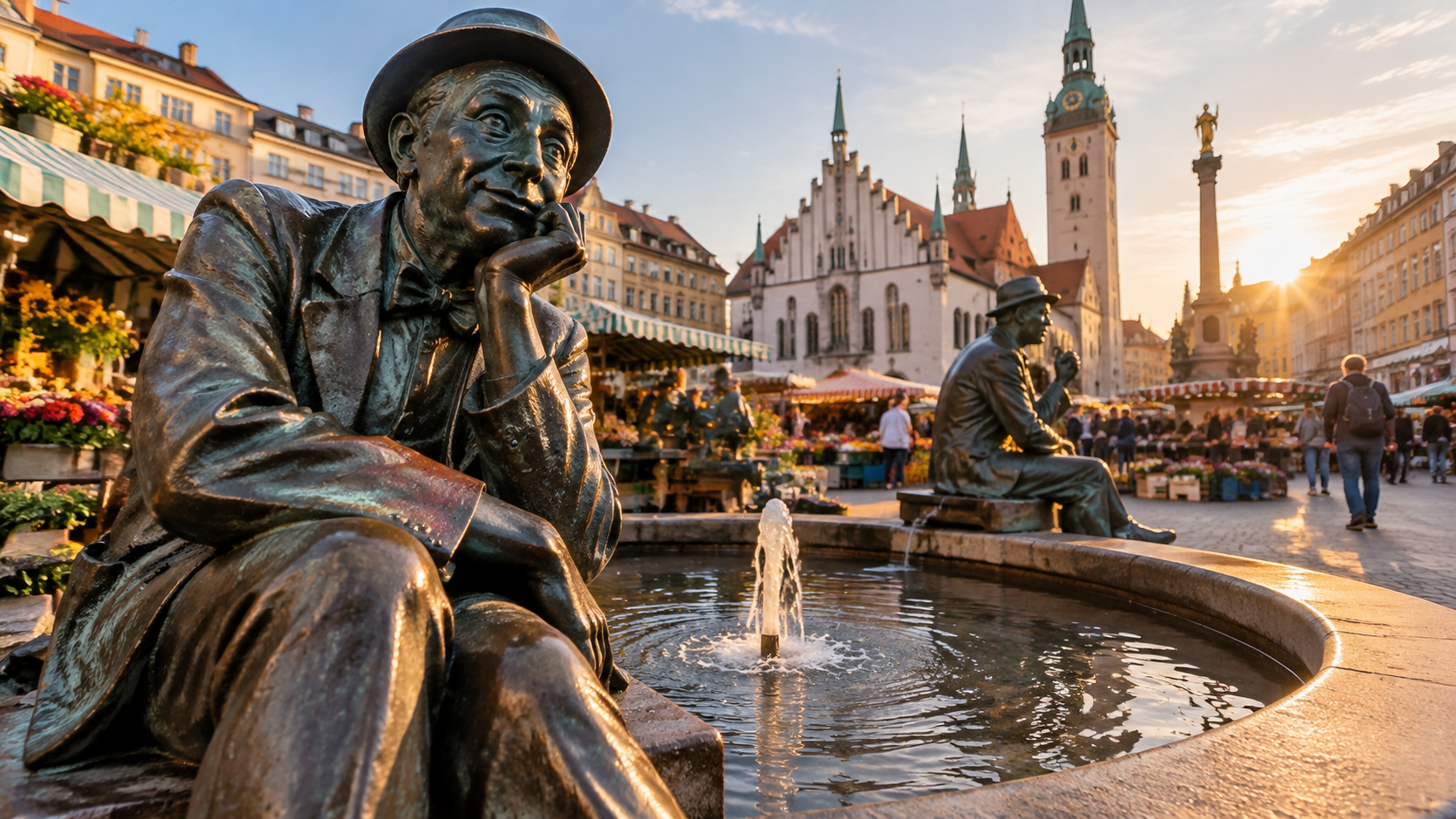
Bronze statues of Munich comedians and entertainers like Karl Valentin sit at small fountains scattered through the market. Shoot low and close to catch the weathered bronze detail with market stalls blurred behind, useful for a private food tour munich itinerary that includes local folklore stops.
Wide chestnut trees shade the communal beer garden tables at the market's edge, with the Biergarten sign and long wooden benches in view. Stand at the low fence line to frame the trees, tables and glimpses of the market roofs beyond.
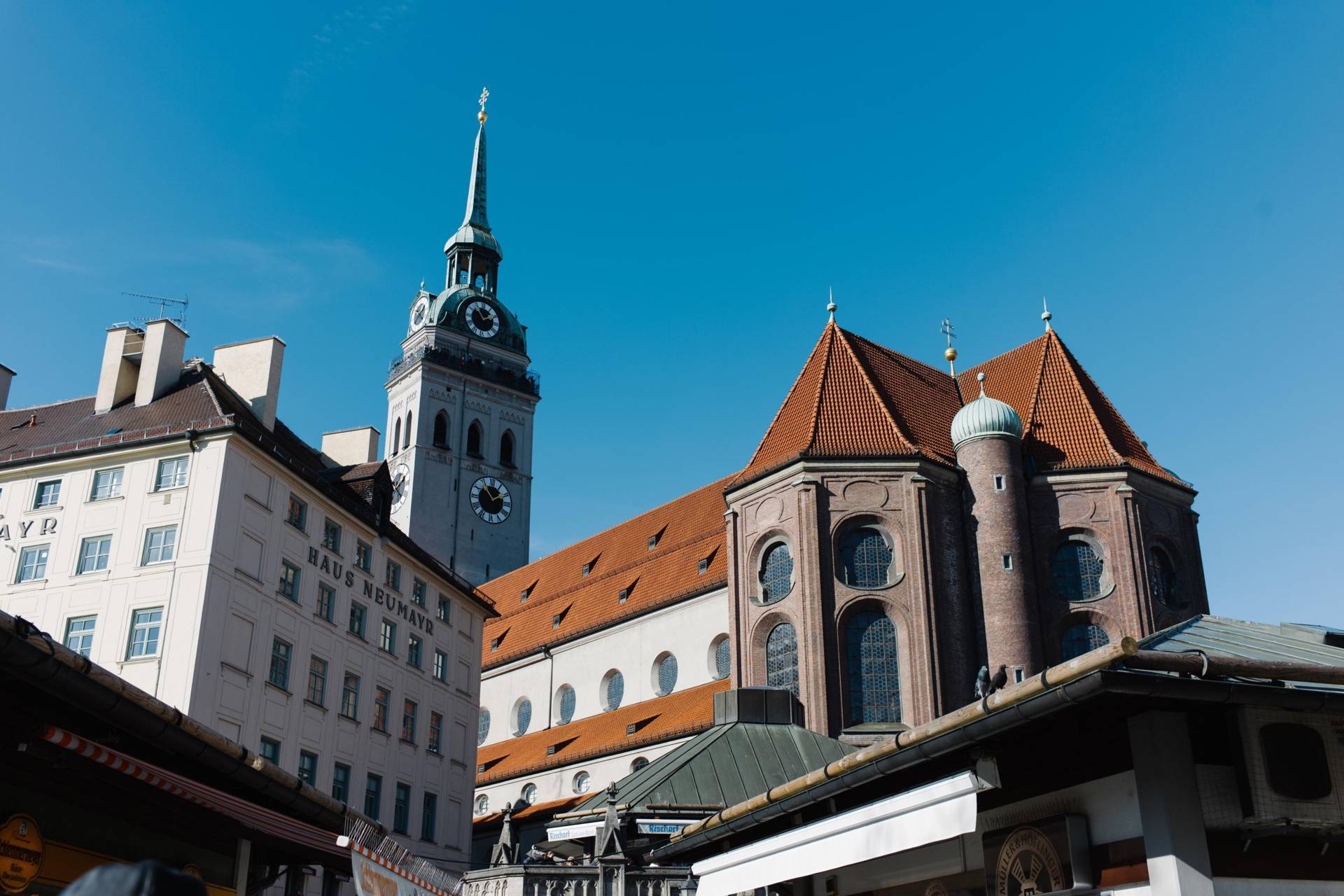
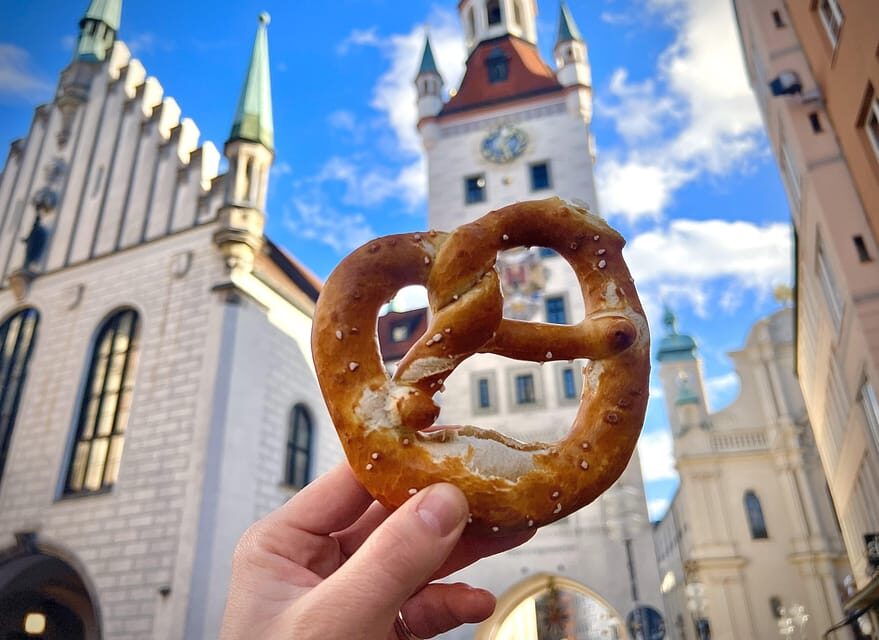
From the open market lanes near the produce stalls, the tower of St. Peter's church (Alter Peter) frames the background above the striped awnings. Position between two stall rows so the tower centers between the canopy edges.
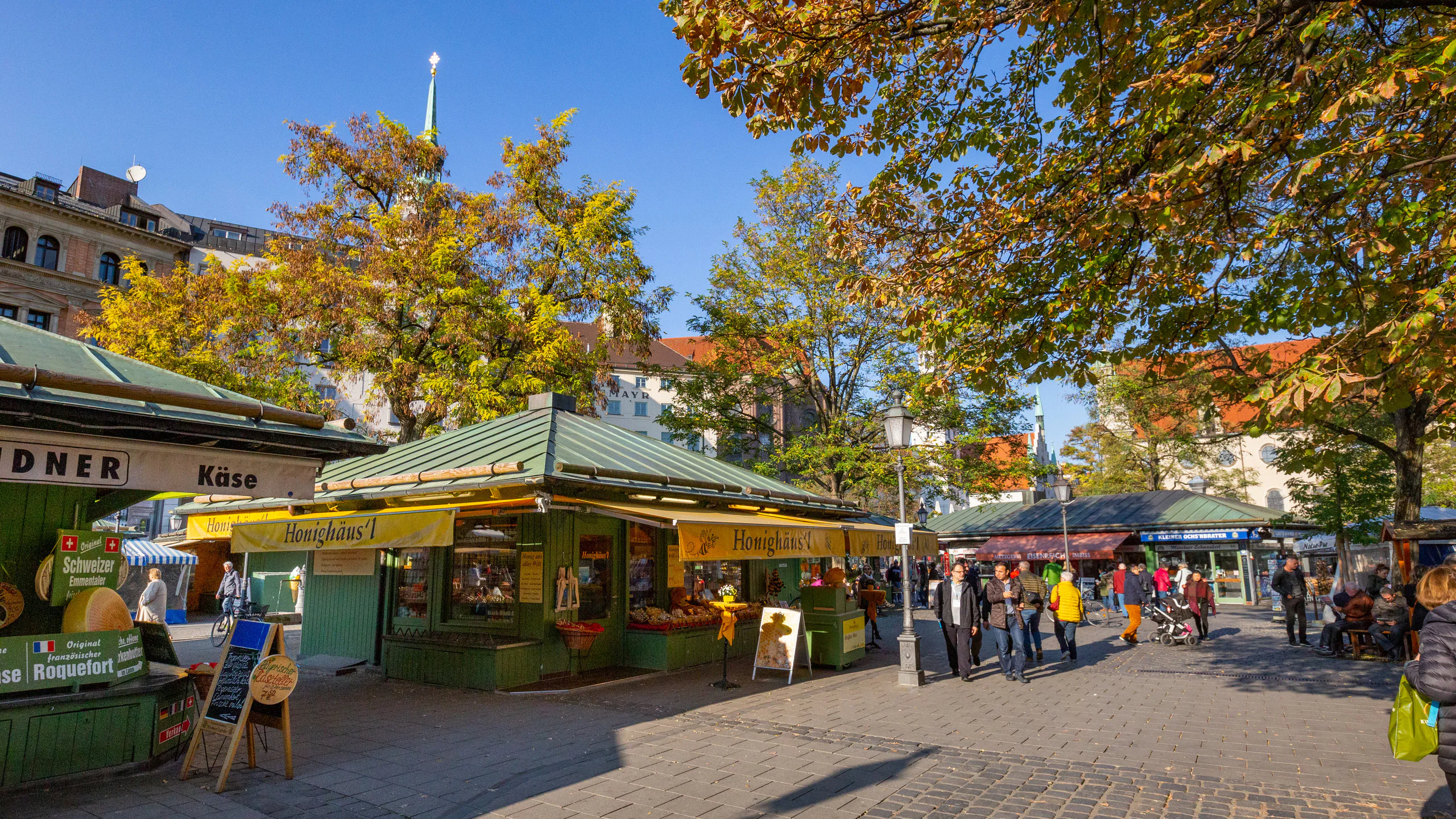
The corner where the covered hall meets the open-air produce stalls shows layered awnings, hanging signage and stacked crates in classic market composition. Stand across the lane at the flower stand corner for the widest, least obstructed angle.
A private food tour munich itinerary through Viktualienmarkt works well for families since guides can slow down, skip stalls with long queues, and tailor tastings to picky eaters. Kids tend to enjoy the open-air stalls and market bustle more than a formal sit-down meal, especially with a guide narrating what's being sampled.
The market's cobblestone paths and gravel areas are uneven, so a compact stroller or baby carrier moves easier than a full-size pram between stalls.
Guides generally tailor tastings for kids from about 6 up, since younger children may find the walking and unfamiliar foods (cheese, cured meats, offal-based specialties) less engaging.
There's no dedicated baby-change room on-site at Viktualienmarkt, so ask your guide in advance about the nearest café or department store restroom with changing facilities.
Private guides can steer tastings toward bread, pretzels, and fruit stalls for fussier eaters, and most are happy to slow the pace or split portions for smaller appetites.
Much of the market has covered stalls and awnings, so a Munich food tour can continue in light rain, though a guide can also shift toward indoor deli stops if it's heavier.
Exploring the Munich culinary scene offers a diverse array of options near your private food tour munich meeting point at Viktualienmarkt. While many visitors enjoy the bustling stalls, several established venues provide excellent sit-down experiences for those continuing their Bavarian gastronomy journey.
Famous for their generous gourmet sandwiches and local delicacies, this stall is ideal for a quick, high-quality bite during your Munich gourmet excursion.
Located on-site, this traditional establishment serves authentic regional dishes perfect for those holding private food tour munich tickets who want to sit and soak in the atmosphere.
This artisan coffee roastery provides a refined break from the market bustle, offering premium roasts that complement any local tasting experience.
Situated just steps from the market, this Italian marketplace offers a vast selection of fresh pasta and wine, providing a nice contrast to the nearby Bavarian landmarks on your private food tour munich tour.
Everything you need to know for your journey
The Viktualienmarkt is open Monday through Saturday from 08:00 to 20:00 and closed on Sundays, and most private food tour Munich operators schedule sessions within those hours.
Yes, entry to the market area is free; only booked private food tours or specific tastings carry a separate fee.
Most of the square is flat and paved, though some sections have traditional cobblestones that can be uneven for wheelchairs or strollers.
There are no formal bag checks since it's an open public market, but large suitcases, drones, and open flames are discouraged around the food stalls.
Photography for personal use is generally welcome throughout the market, though it's polite to ask vendors before photographing them directly.
Arriving between 09:00 and 11:00 avoids the busiest lunch rush while stalls are still fully stocked, making it the recommended window for a private food tour Munich visit.
There's no formal dress code, but comfortable walking shoes are strongly recommended given the cobblestone paths and standing tastings.
Food and drink purchased at the stalls can be consumed at the communal beer garden tables, but bringing in outside food is discouraged there.
The nearest stop is Marienplatz, served by U3, U6, and S-Bahn lines, followed by about a 5-minute walk to the market.
Yes, many operators tailor a Munich food tour to include kid-friendly tastings like pretzels and fruit rather than alcohol-focused stops.
Entry to the market itself requires no booking, but a private food tour Munich booking typically follows the operator's own refund window, often 24–48 hours before the start time.
Nearby options include Marienplatz, St. Peter's Church, Asamkirche, and the Munich Residenz, all within a 15-minute walk of the market.
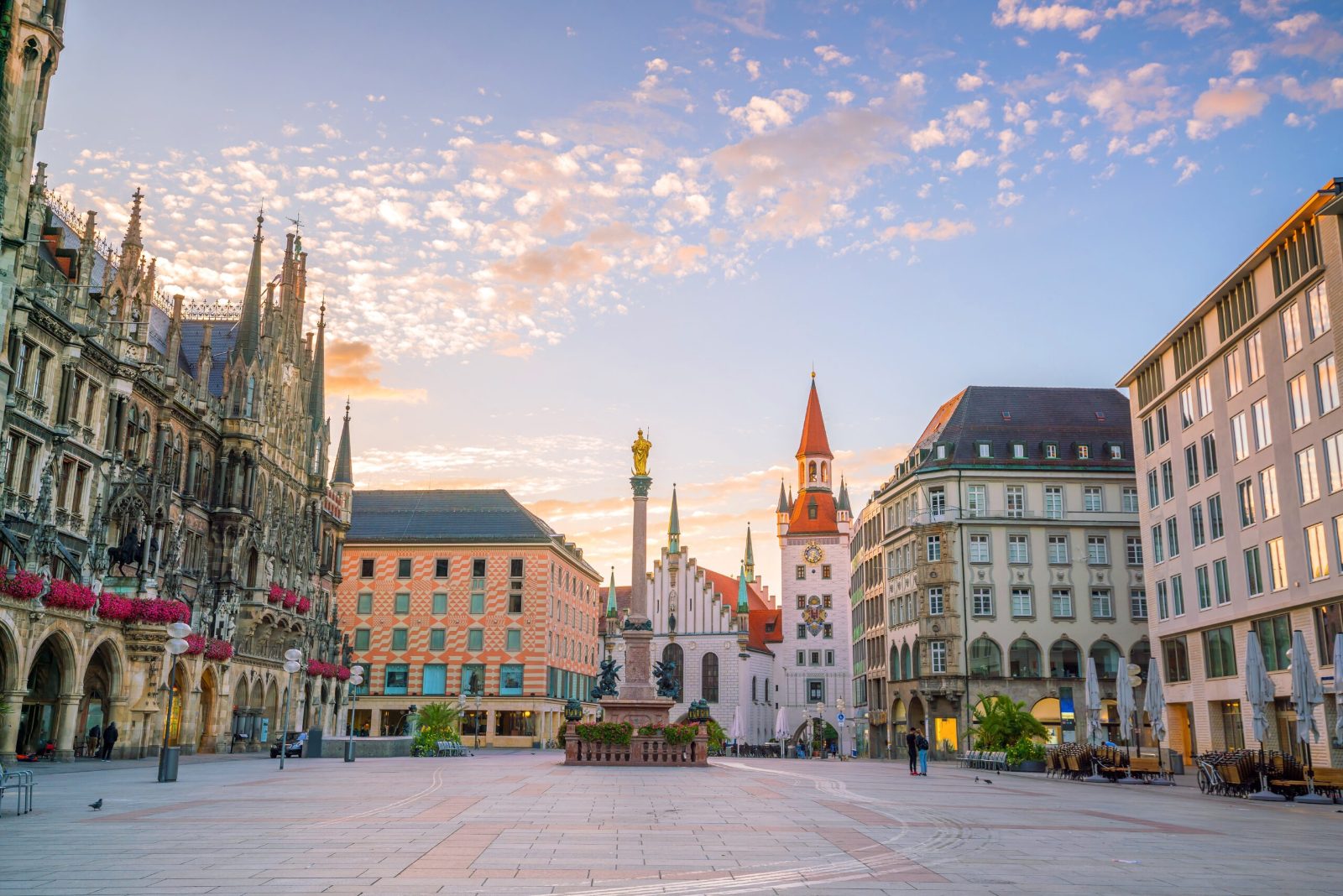
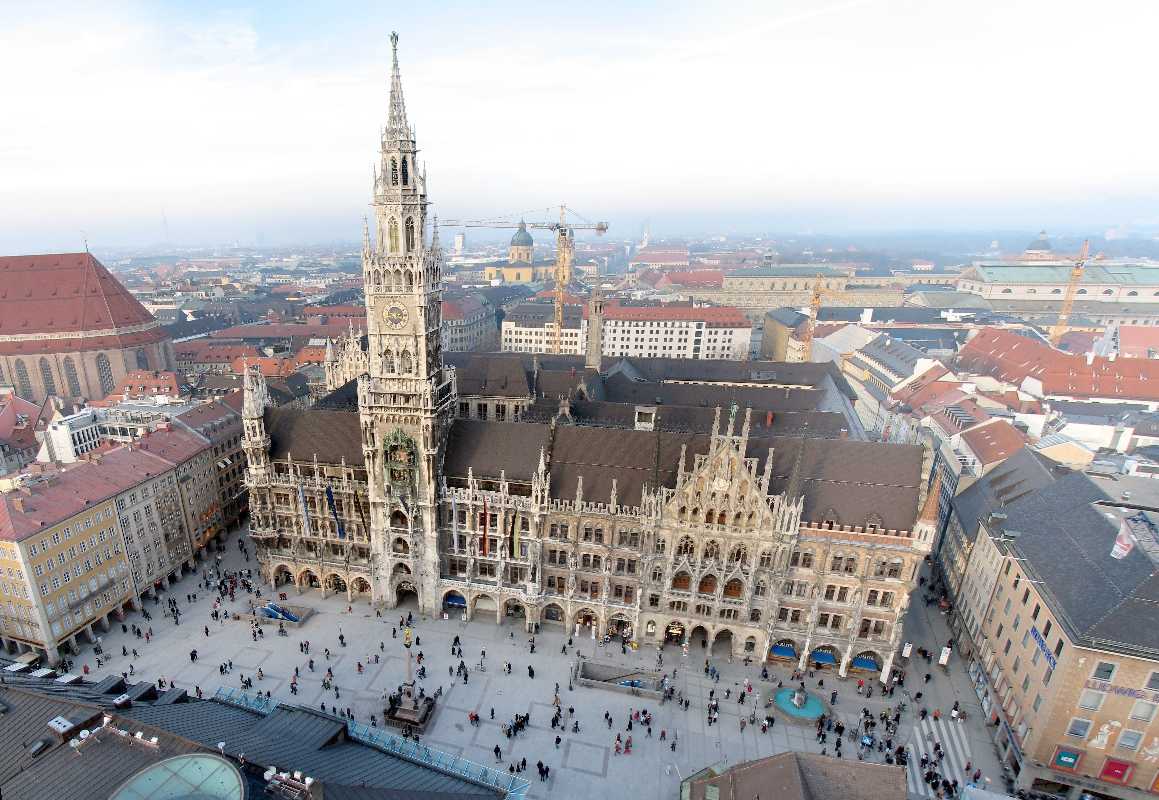
Munich's central square, home to the New Town Hall and its Glockenspiel clock show. It has served as the city's main square since 1158.
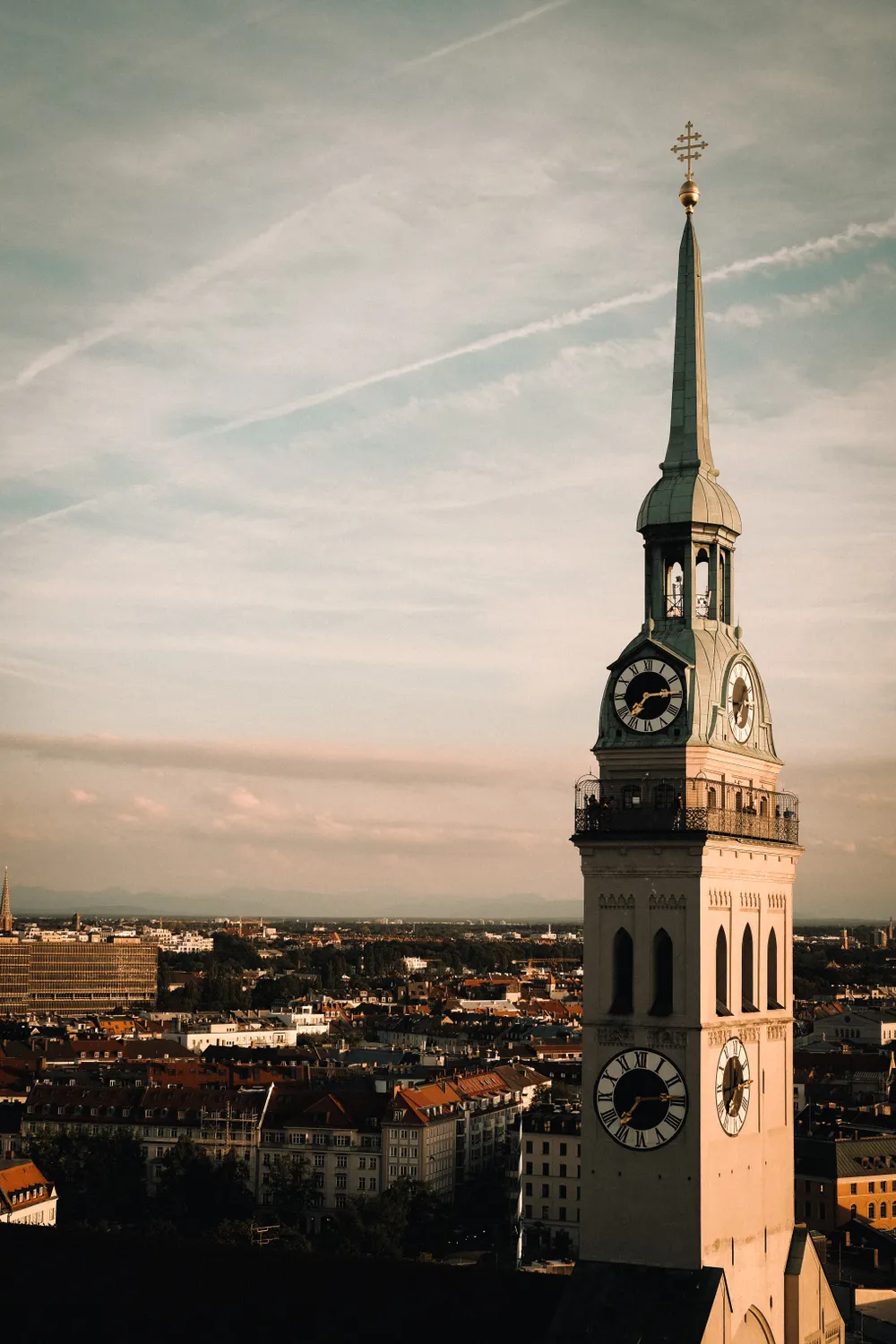
Munich's oldest parish church, known locally as Alter Peter, with a tower offering panoramic city views.
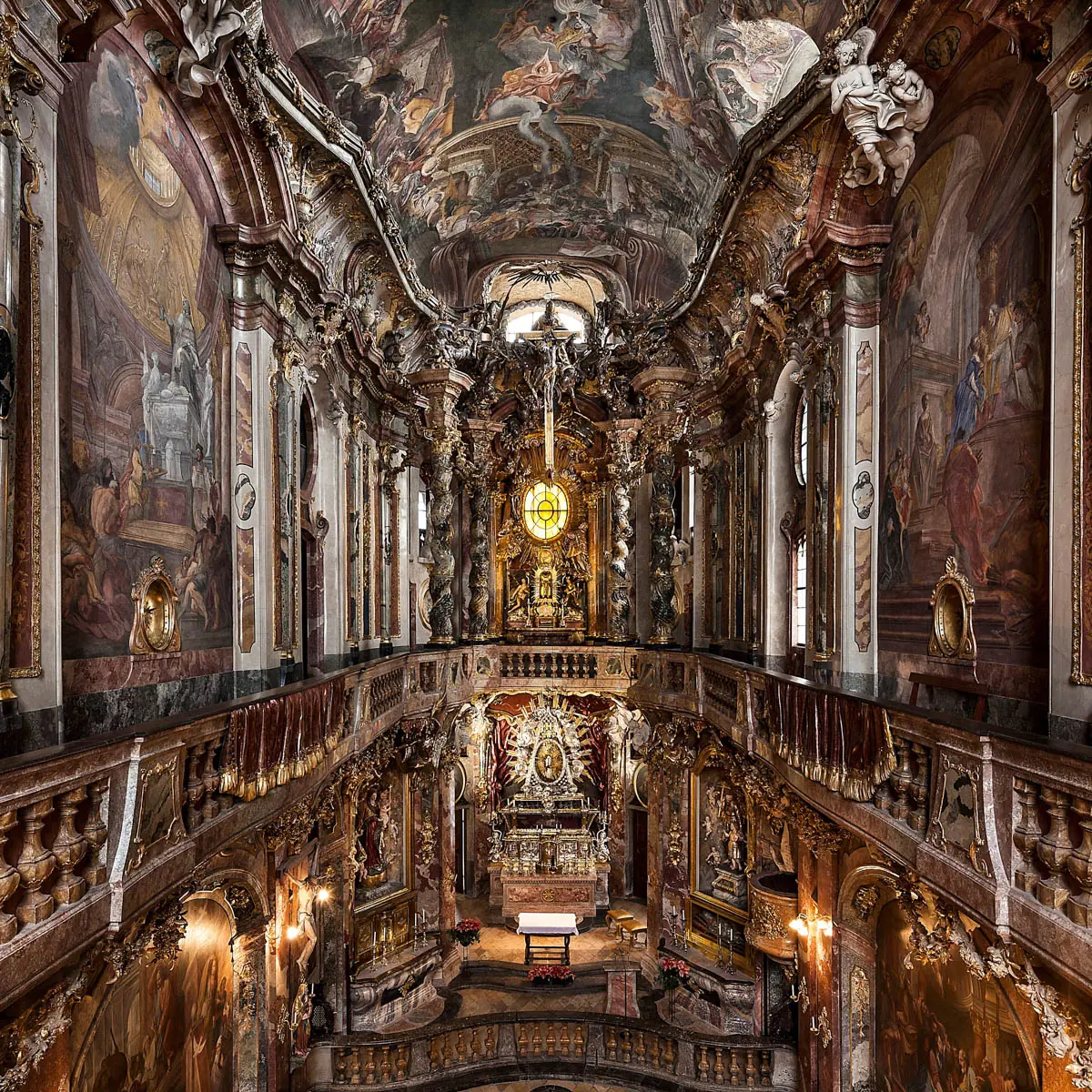
A small but ornate Baroque church built by the Asam brothers in the 1730s, known for its dense gilded interior.
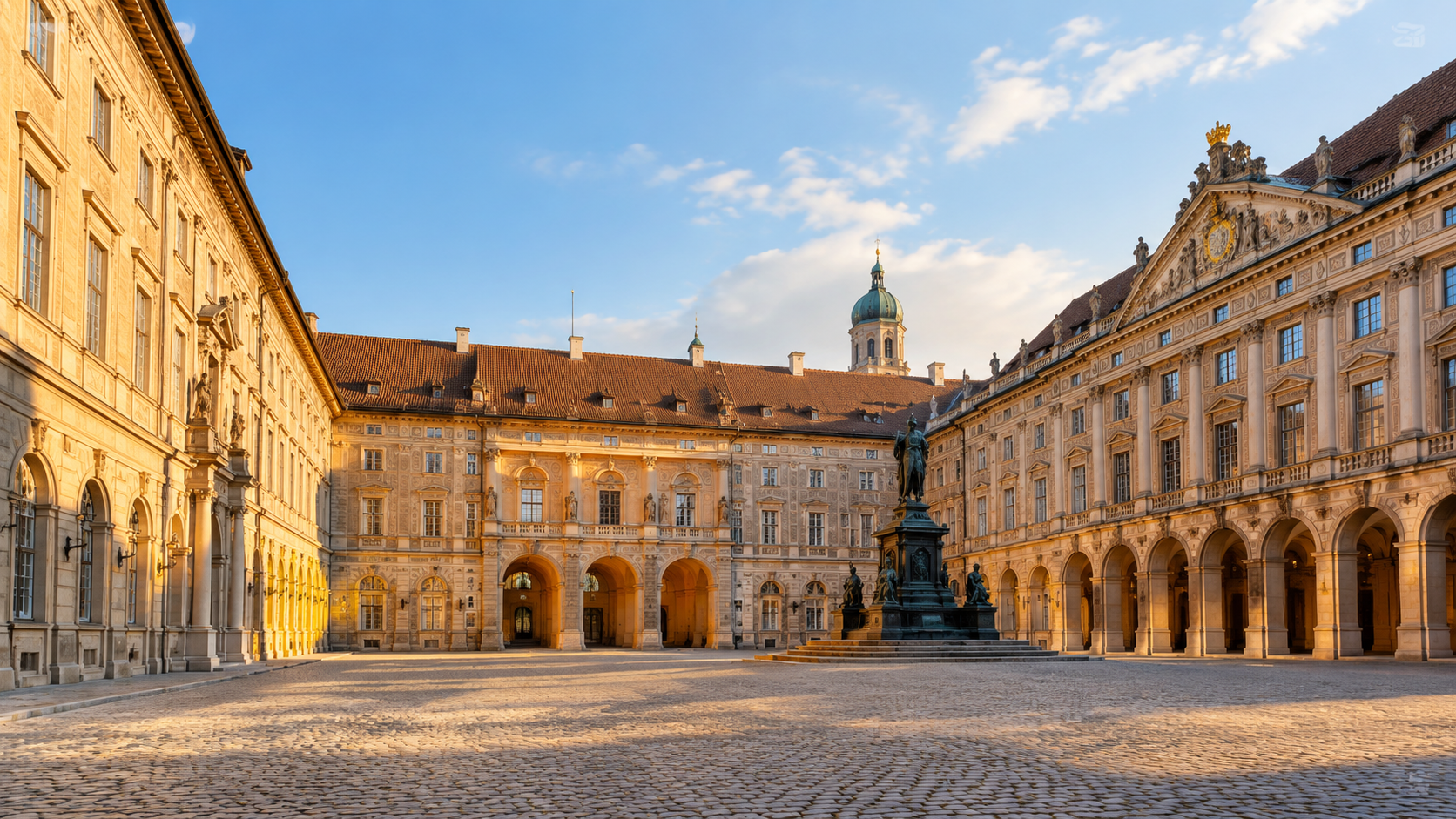
The former royal palace of the Bavarian monarchs, with over 130 rooms open to the public.
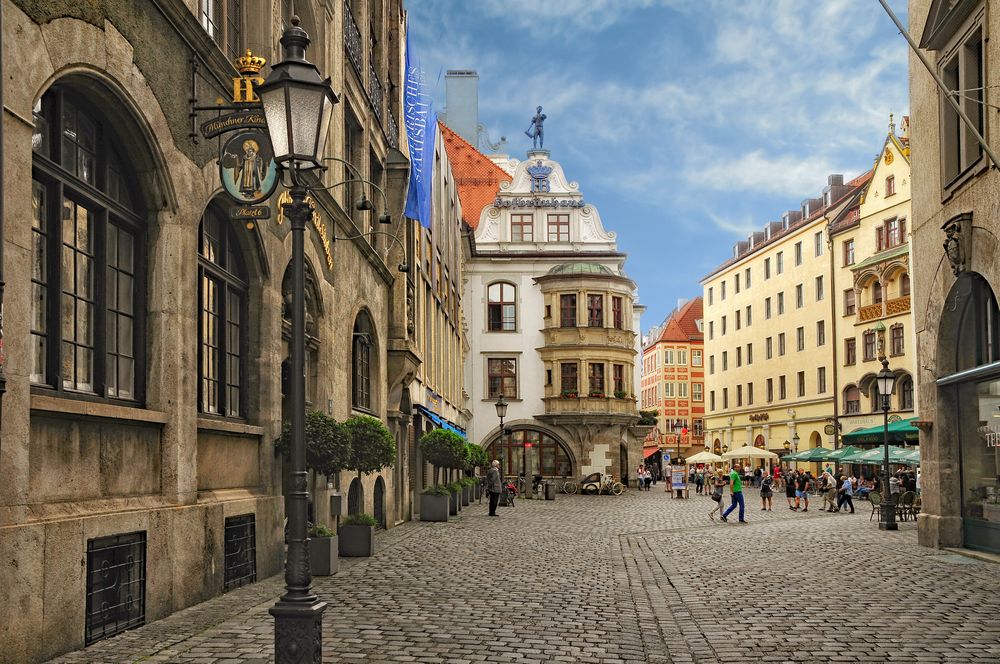
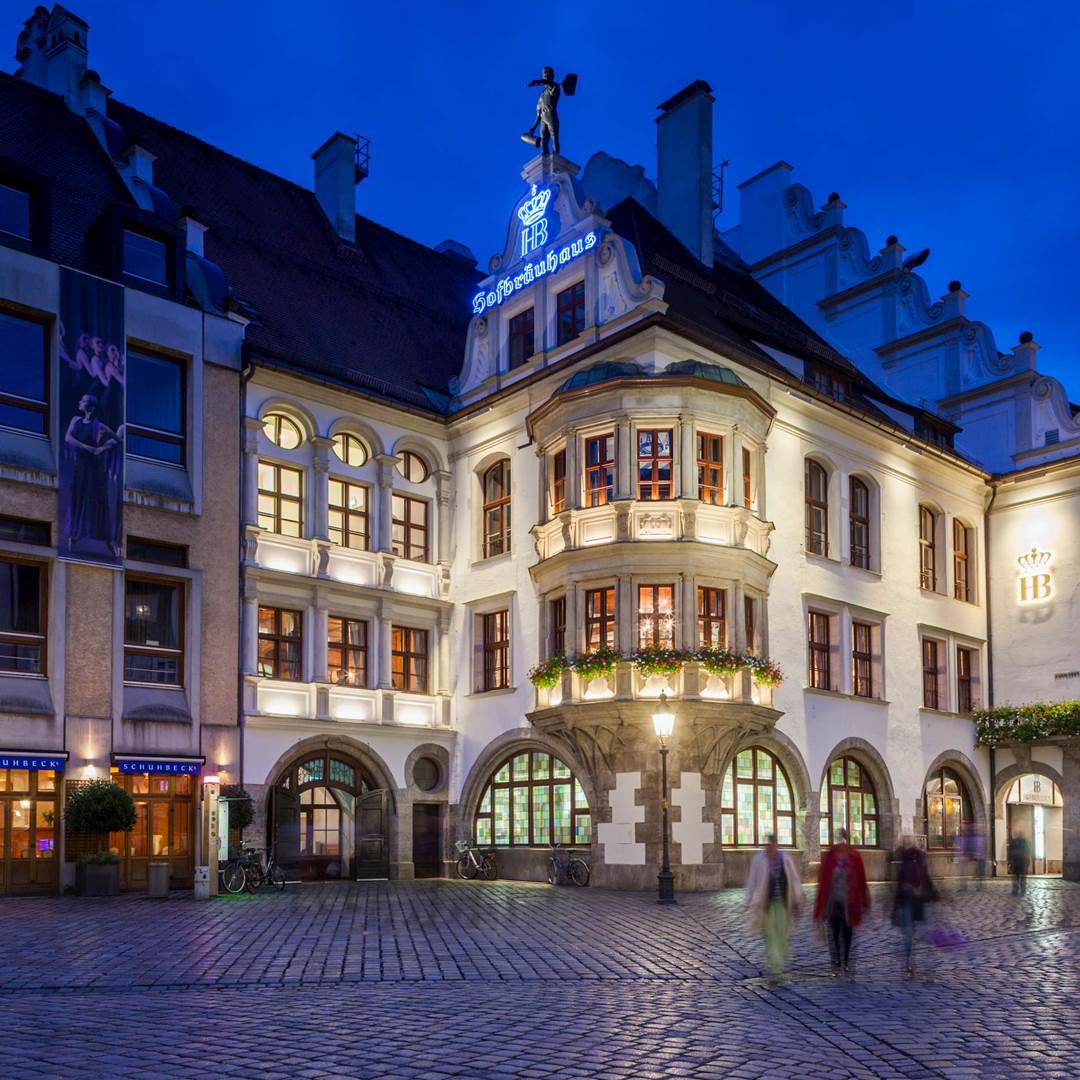
One of the world's most famous beer halls, dating to 1589, near the old town core.
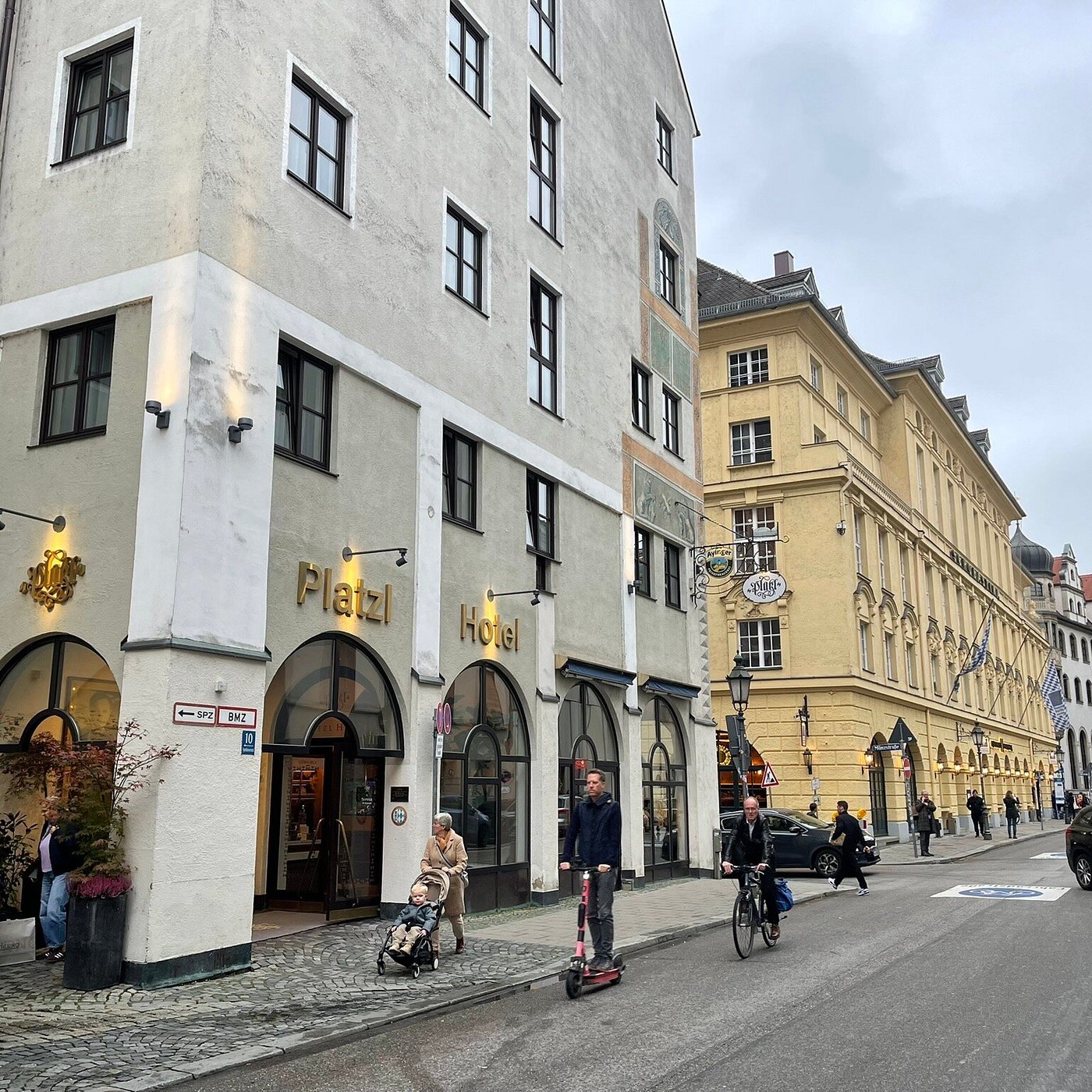
A Bavarian-styled hotel near Hofbräuhaus with traditional decor and central old-town access.
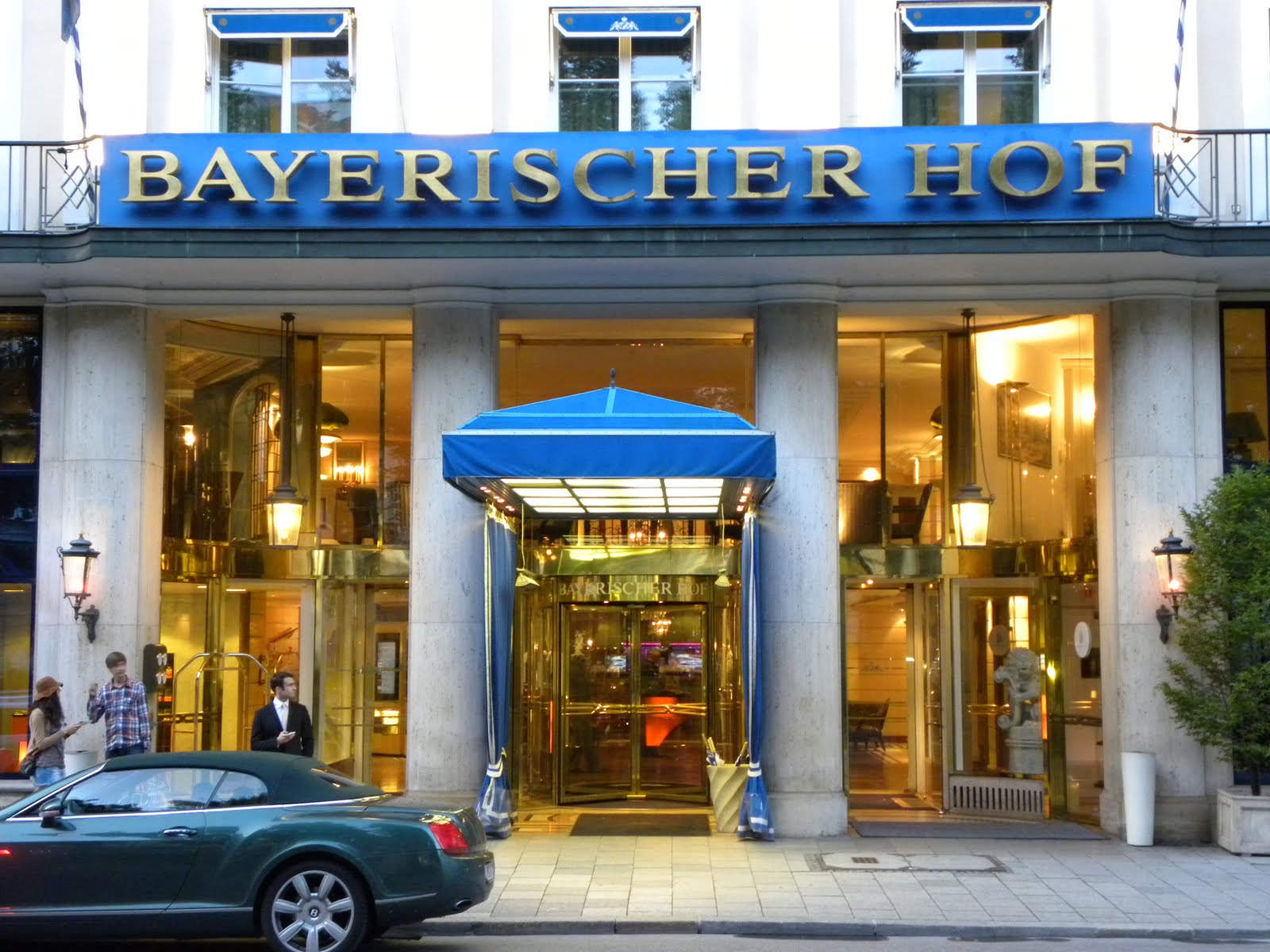
A long-established luxury hotel near Promenadeplatz with multiple restaurants and a rooftop terrace.
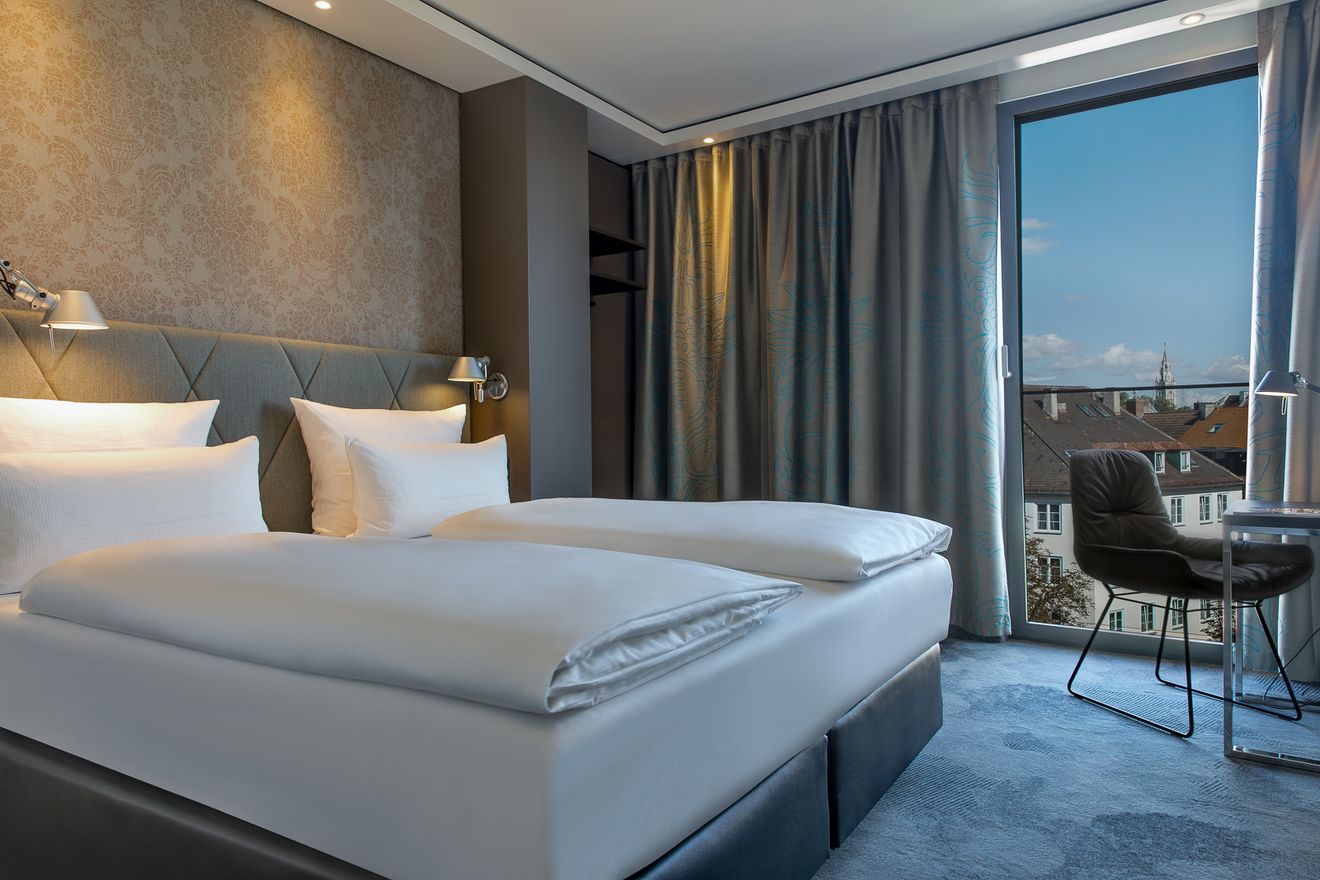
The Altstadt area offers dense mid-range and boutique lodging within walking distance of the market.
A budget-friendly design hotel chain location near Sendlinger Tor with easy tram access.
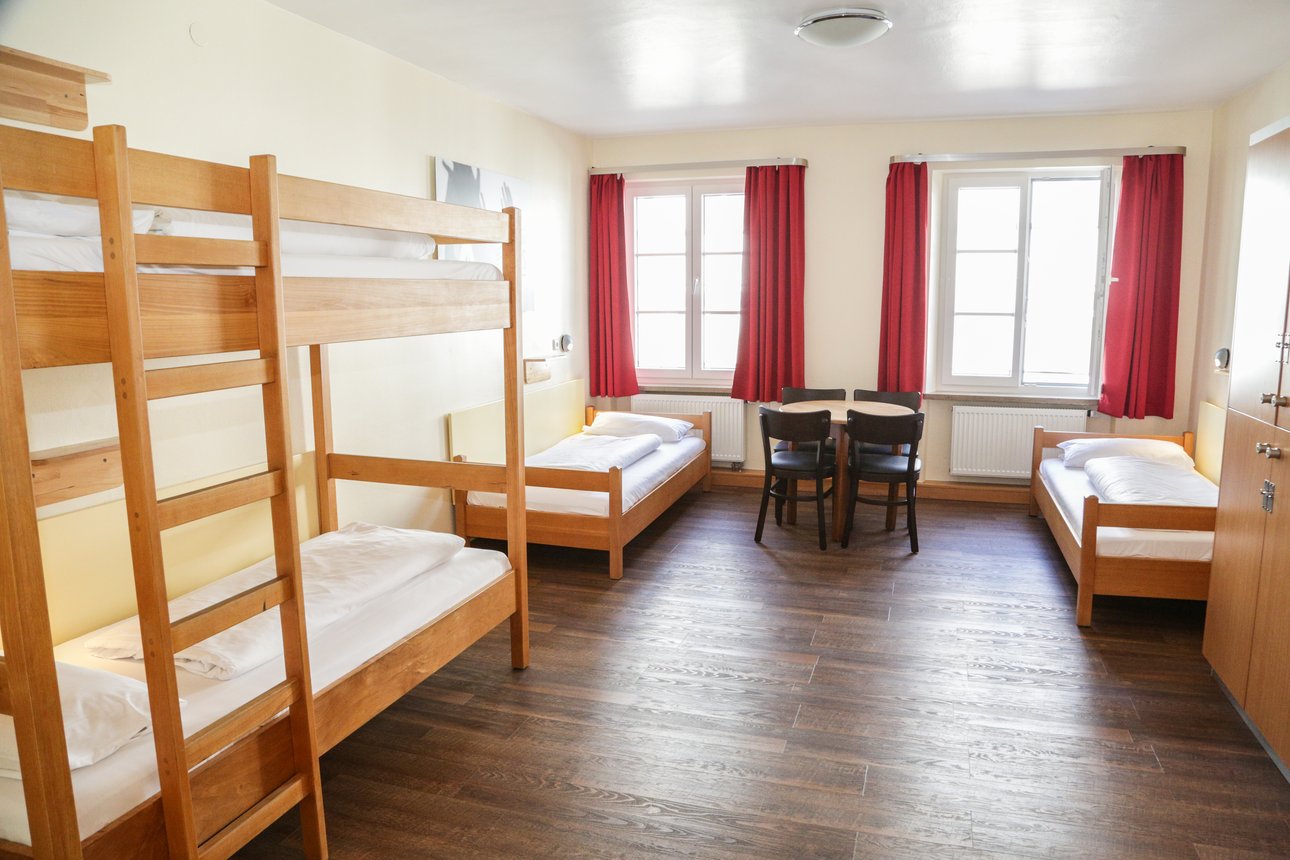
A backpacker-friendly hostel near the main train station with dorm and private room options.
Join thousands of happy travelers who have discovered this incredible experience
Book Your Experience Now